


Wellbeing and natural nutrition
In many cultures it is called the “tree of life” or the “miracle tree” — and not entirely without reason. A single plant whose leaves, seeds and pods are eaten, and which is turned into powder, tablets, tea and oil: moringa is as intriguing as it is appealing. But between the spectacular promises online and what the plant actually offers, there is a gap worth crossing slowly, with the sources in hand.
This in-depth guide from VitalisPro does not sell you a miracle. In plain language and with verifiable references, it explains where moringa comes from, what its leaves really contain, its different forms, how it compares with other plant supplements, and what its precautions are — all of them, with nothing hidden. The goal is that you leave with a clear, reasoned picture rather than the noise of a slogan.
Let us set the frame from the start: moringa is a supportive food supplement, a concentrated plant source of nutrients, not a medicine and not a cure-all. Its nutritional density is real and documented, but it is not magic. It is precisely from this honest angle — that of a food-resource woven into a balanced life — that the subject becomes both fascinating and genuinely useful.
محتوى الصفحة
- 1 In brief: what you will learn
- 2 In this guide
- 3 Where does moringa come from? The story of the “tree of life”
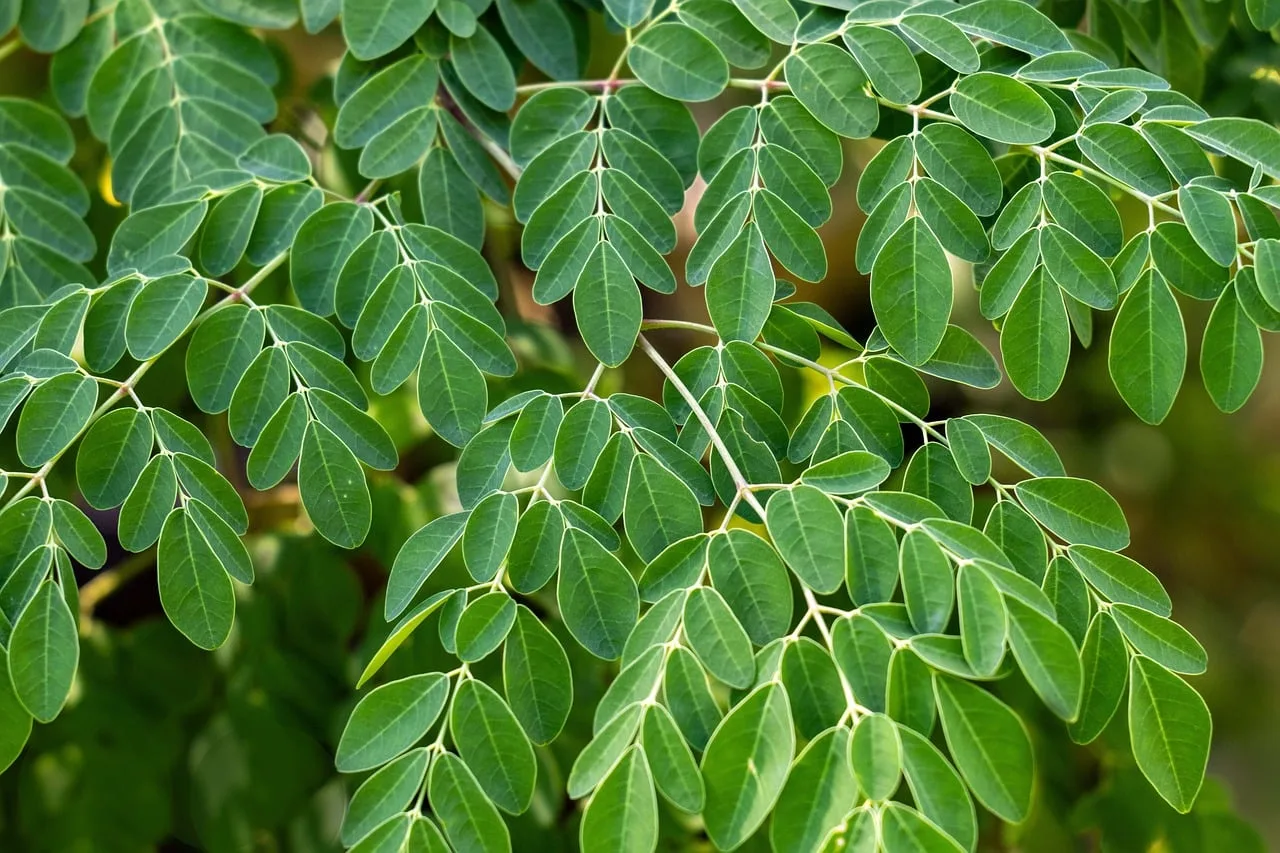
- 4 ID card: what is Moringa oleifera?
- 5 Nutritional value: what do the leaves really contain?
- 6 The forms of moringa: six ways to take it
- 7 Moringa versus the others: spirulina, green tea, spinach
- 8 How to recognise a quality moringa
- 9 Moringa in the Moroccan context
- 10 Full precautions and contraindications
- 11 How to fit it into your routine
- 12 Stories from our readers
- 13 Frequently asked questions about moringa
- 14 Conclusion: one guide, a clear view
- 15 Sources and methodology
In brief: what you will learn
- Moringa is a tropical tree native to north-west India, now grown across the warm regions of the world for its nutrient-dense leaves and its resistance to drought.
- Its leaves are a concentrated source of plant protein, vitamins (A, C, E), minerals (calcium, iron, potassium, magnesium) and antioxidants such as flavonoids.
- It comes in six main forms: powder, tablets, tea, seeds, oil and fresh leaves; for beginners, powder and tablets remain the simplest starting point.
- The leaves are the safest and most studied part; the roots and bark, by contrast, call for real caution and are not recommended.
- VitalisPro moringa is made from the leaves, at a clear dose and ONSSA-authorised, to fit inside a balanced lifestyle; it is not a medicine, and not a substitute for professional advice.
Where does moringa come from? The story of the “tree of life”
Moringa is a tropical tree whose cradle lies on the foothills of the Himalayas, in north-west India. For thousands of years its leaves and pods have been eaten there as food and used in traditional Indian medicine. Over time, its cultivation spread to Africa, Asia and South America: the tree grows fast, tolerates drought and withstands hot climates, which has made it a precious food resource in regions facing malnutrition.
This ability to grow in poor soil with little water is exactly what drew the attention of development organisations. The tree produces rich leaves almost year-round, which earned it the nickname “miracle tree” in agricultural literature. As a scientific review published in Phytotherapy Research documents, nearly every part of the plant — from the leaves to the seeds to the oil — has a food or industrial use.1 It is this versatility, more than any spectacular effect, that explains the lasting fascination with moringa.
That said, the nickname “miracle tree” should be read for what it is: an image born of a food-security context, not a medical promise. A dense food that is easy to grow in arid regions fully deserves its praise; that does not turn it into a remedy. Keeping this nuance in mind is already to approach moringa with the right balance: interest, yes; excess, no.
ID card: what is Moringa oleifera?
The plant’s best-known scientific name is Moringa oleifera: it is the most cultivated and most studied species of the Moringa genus. It is popularly called the “drumstick tree” (after its long pods) or the “horseradish tree” (because of the pungent taste of its roots). Here are its most-used parts:
- The leaves: the most used part and the richest nutritionally; they are dried to be milled into powder or pressed into tablets and capsules.
- The pods (fruit): known as “drumsticks,” they are cooked as a vegetable in Asian cuisines.
- The seeds: a rich oil is extracted from them, and they are traditionally used to clarify water.
- The roots and bark: used in some traditional practices, but to be treated with real caution, as we will detail in the precautions section.
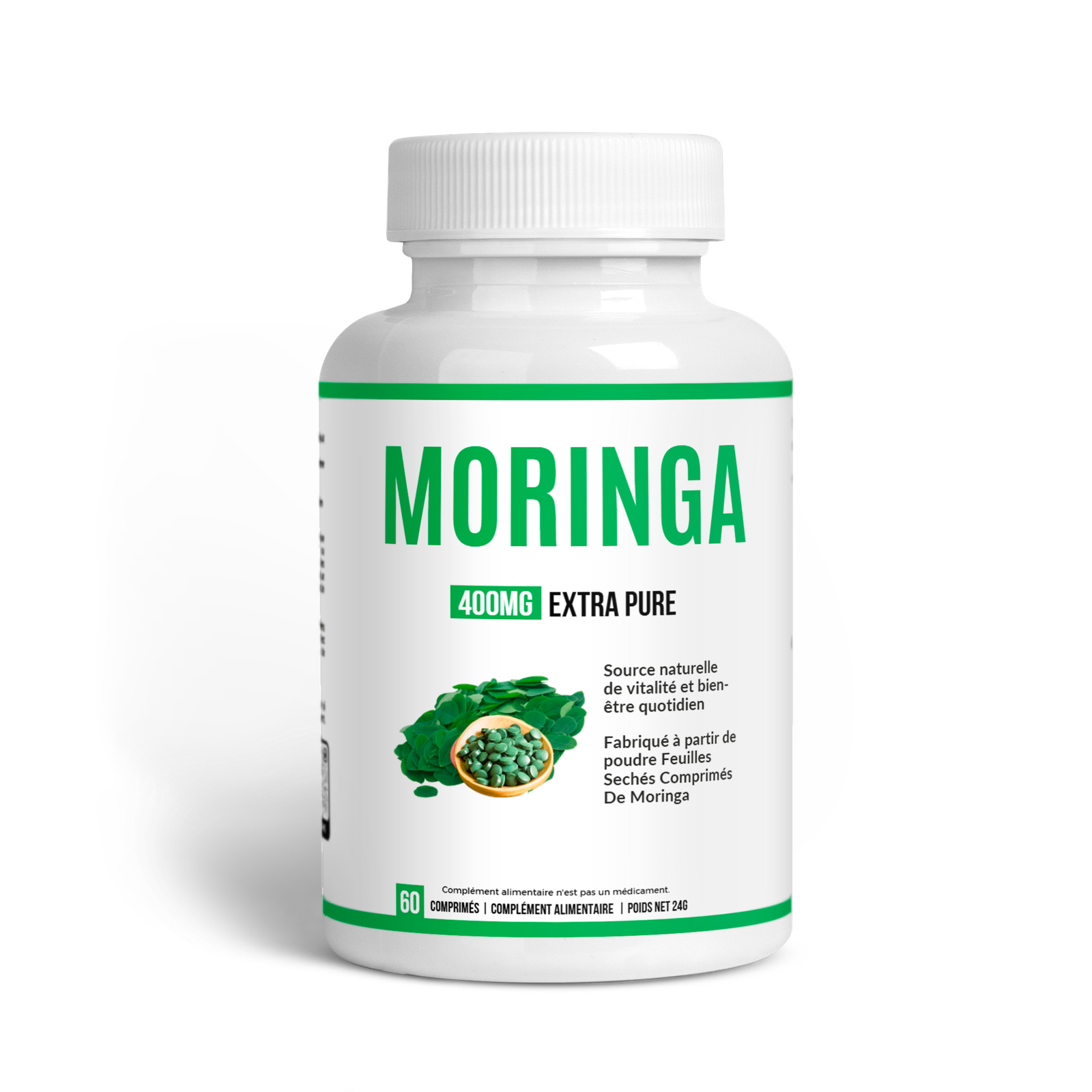
In practical terms, when we speak of moringa as a modern food supplement, we are most often speaking of the dried leaf powder or the tablets made from it: these are the safest and best-balanced forms. Hold on to this distinction from now on, because it guides everything else: “moringa” is not a magic word; it is first and foremost a leaf, properly dried and clearly dosed.
Nutritional value: what do the leaves really contain?
The reason for the nutritional interest in moringa lies in its density: a small amount of powder brings together many elements. According to a review published in Food and Nutrition Bulletin, moringa leaves are a concentrated source of protein, vitamins, minerals and antioxidants.2 Let us look at this more closely, without exaggeration: the density per gram is interesting, but it always has to be read at the scale of a realistic serving, not of an imaginary spoonful.
Vitamins and minerals
Dried moringa leaves provide vitamin A (as beta-carotene), vitamin C and vitamin E, along with minerals such as calcium, iron, potassium and magnesium. It is this mixture that leads moringa to be so often mentioned in the context of supporting vitality, immunity and general nutrition — not as a treatment, but as a supplementary food source, to be placed within an already balanced diet.
Protein and amino acids
Notably, moringa leaves show a relatively high protein content for a leafy plant, and contain a range of essential amino acids. This is one of the reasons they attract particular interest among people following a plant-based diet who are looking to diversify their sources of plant protein. Here too, it is a complement to the plate, not a substitute for the protein foods of daily life.
Antioxidants and plant compounds
The leaves contain plant compounds such as flavonoids, polyphenols and quercetin: antioxidants that help protect cells from oxidative stress within a balanced diet.3 These data belong to the field of general nutritional research, and they must not be converted into therapeutic claims: noting that a plant is rich in antioxidants is not the same as crediting it with the power to treat a disease. The nuance here makes all the difference between honest information and a hasty promise.
For a calm, evidence-based look at what moringa really offers — and what it does not — this educational video from a science-based nutrition channel is an excellent starting point:
The forms of moringa: six ways to take it
One of moringa’s strengths is the variety of its forms, which lets everyone find an option suited to their routine:
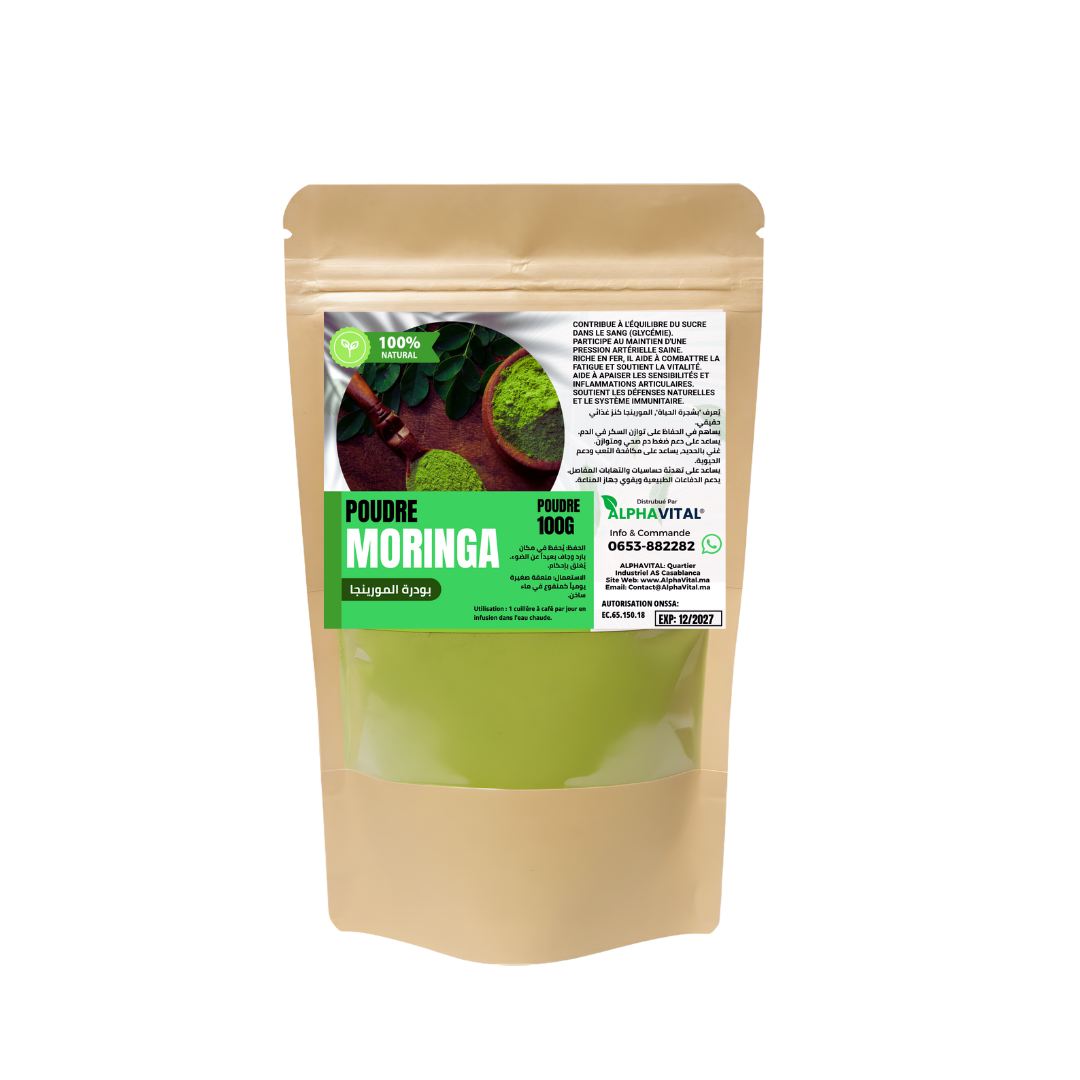
- Powder: the most flexible form; it is added to a juice, a yoghurt or a milk. It leaves a characteristic herbal taste.
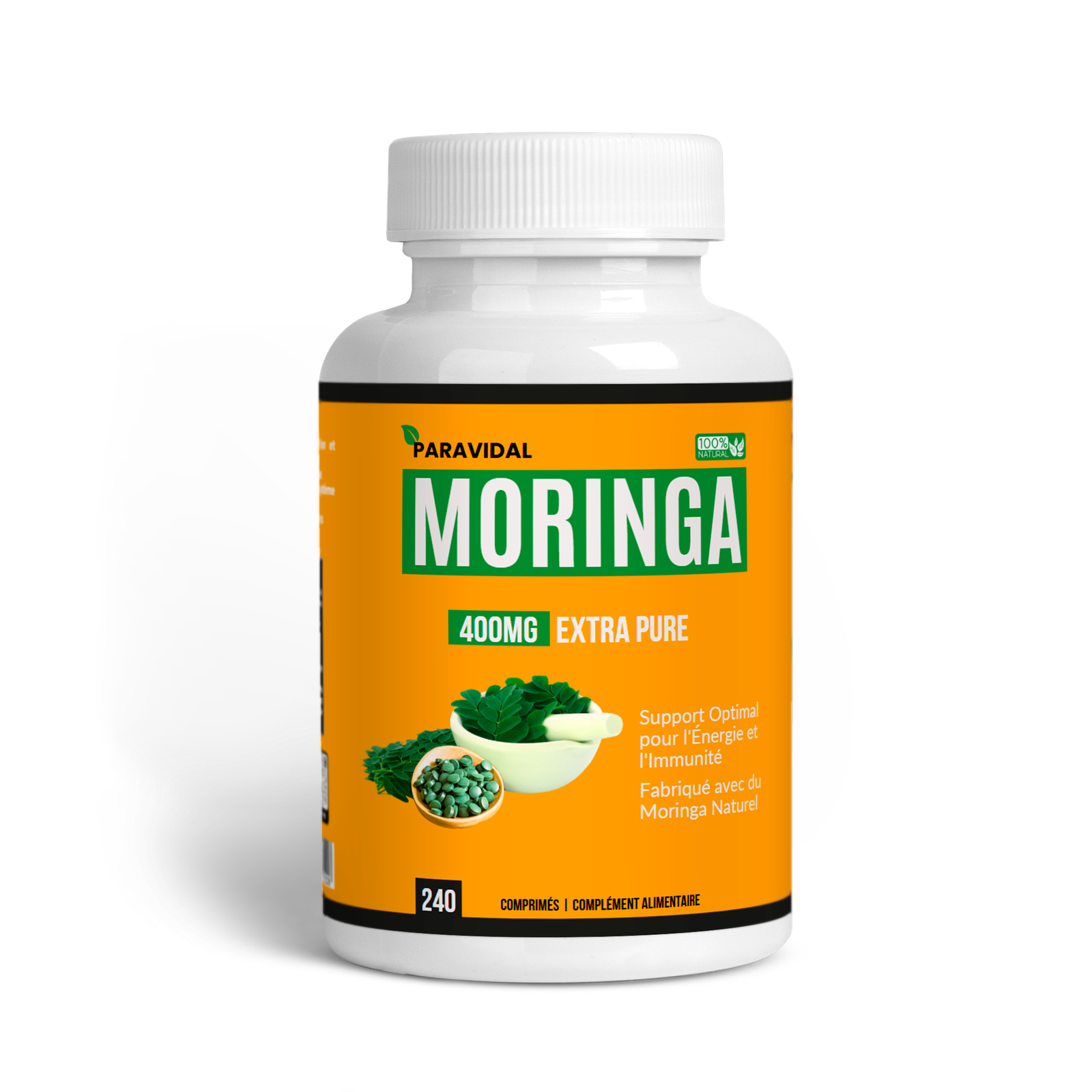
- Tablets and capsules: the ideal option for anyone who wants a clear dose, with no taste, easy to carry and to take when travelling.
- Tea (infusion): dried leaves steeped in warm water; a light, gentle choice, pleasant in the evening.
- Seeds: sometimes eaten roasted, but far less common as a daily supplement.
- Oil (ben oil): extracted from the seeds, mostly used externally for skin and hair care.
- Fresh leaves: cooked as a vegetable where the tree grows, exactly like spinach.
For beginners, powder and tablets remain the simplest way in. Choosing between them is not a matter of ranking: powder suits those who like to weave it into their recipes and accept the plant taste; tablets suit those who prefer a clean, taste-free dose at a fixed time of day. In both cases it is the same leaf; it is your habit that decides.
Moringa versus the others: spirulina, green tea, spinach
Many people ask: why moringa specifically, and not another option? Comparison helps us understand, not to make an absolute ruling:
- Moringa and spirulina: both are dense “superfoods,” but spirulina is a microalga rich in protein and vitamin B12, while moringa is a land plant balanced between vitamins, minerals and antioxidants. Many people combine them to diversify their sources.
- Moringa and green tea: they share a richness in antioxidants, but moringa adds a nutritional dimension — minerals and protein — that green tea does not usually provide.
- Moringa and spinach: they are sometimes compared for their iron and calcium content, with the difference that moringa powder is concentrated and taken in small amounts.
The conclusion is simple: moringa is not “always the best,” but a balanced, flexible nutritional choice. Comparing it with other foods only makes sense to inform a decision, never to disqualify the rest. A rich diet is built on variety; moringa takes its place there as one thread among others, not as a single answer to everything. The most useful question is therefore not “which one is best?” but “which one fits my plate, my tastes and my routine?” — a question that ends the endless search for a single perfect food and returns the focus to a diverse, sustainable everyday pattern.
How to recognise a quality moringa
Not all moringa powders are equal. Quality begins at the leaf and ends at the packaging. A reliable moringa can be recognised by a few simple markers:
- The source and the part used: the product should come from the leaves, not from an undefined mixture; an organic origin is a plus.
- Colour and smell: a good powder is bright green, with a fresh herbal smell; a dull or brownish shade may betray poor drying or over-long storage.
- Clarity of the dose: packaging that states the amount per serving plainly inspires more confidence.
- Local authorisation: in Morocco, the presence of an ONSSA authorisation is an important indicator of conformity and oversight.
These are exactly the standards VitalisPro holds itself to: a moringa made from the leaves, at a declared dose, authorised by ONSSA, with a transparent offer and price. Let us also make clear a point that advertising often passes over in silence: European scientific authorities, including the European Food Safety Authority (EFSA), have not approved a specific health claim linking moringa to the treatment of any disease.5 So we present it for what it is: a plant source of nutrients, to be woven into a broader wellbeing approach.
Moringa in the Moroccan context
In a market where products of unknown origin are plentiful, VitalisPro has chosen clarity. We offer a moringa made from the leaves, at a stated dose and concentration, ONSSA-authorised, with cash on delivery in every Moroccan city and a fixed price in dirhams, with no unpleasant surprises. This transparency is not one more argument: for us, it is the very condition of trust.
Moringa fits well within Moroccan habits, where plants and herbal infusions have always had their place at the table. Woven into a lifestyle that leaves room for vegetables, water and movement, it becomes a simple nutrition habit rather than a search for a miracle. To discover our full range dedicated to everyday wellbeing, our shop brings together formulas designed in this spirit of clarity and transparency.
Full precautions and contraindications
Because a plant is “natural,” it is sometimes believed to be without limits: that is a mistake. A safety review published in Phytotherapy Research indicates that moringa leaves are generally considered safe at usual dietary doses, while stressing several points of vigilance.4 Here they are, leaving nothing out:
- Pregnancy and breastfeeding: it is advised to avoid moringa, and especially root and bark extracts, which may not be safe at this stage.
- Roots and bark in particular: they contain potentially irritating compounds; it is better to stick to products made from the leaves.
- Ongoing treatments: people taking medication for blood sugar, blood pressure or blood thinners should consult a healthcare professional before use, because of a risk of interaction.
- High doses: they may cause mild digestive upset or bloating; it is best to start with a small amount and increase gradually.
- Children under 18: moringa should only be used with a professional’s advice.
The golden rule: moringa is a supportive food supplement, not a medicine and not a substitute for a varied diet, restful sleep and regular physical activity. At any persistent or worrying symptom, consulting a healthcare professional always remains the first reference; the supplement accompanies a healthy lifestyle, it does not replace it.
For a balanced overview of both the benefits and the possible side effects of moringa leaf powder, this second video, also grounded in the scientific data, usefully rounds out the picture:
How to fit it into your routine
Knowing what moringa is matters little if it never finds a place in your day. The good news is that fitting it in asks for no upheaval: a small, steady gesture, repeated calmly, will always outweigh an intense burst that fades after a week. Below is a simple, four-step path — from the plate to the honest assessment — that keeps expectations realistic and makes consistency genuinely easy to hold.
Step one: start with the plate
Your first “support” is your diet. Before adding any supplement, review a week of your meals: where are the vegetables missing, where is the sugar hiding, are you drinking enough water? Moringa only makes sense as a top-up on a base that is already sound; it does not, on its own, make up for an unbalanced way of living.
Step two: choose a suitable form
Pick the form that fits your day: powder if you like to cook and add it to your preparations, tablets if you prefer a simple, taste-free dose. Choose a clear source, made from the leaves and authorised; clarity here is part of safety, far more than an obscure product arriving through informal channels.
Step three: respect the dose and consistency
Do not exceed the dose stated on the box thinking that “more is better”: the body responds to consistency, not to excess. Start with a small amount, increase gradually, and tie your intake to a fixed daily habit — a meal, a glass of water — so you do not forget it. Any potential benefit is built through steady use, over weeks.
Step four: observe, then decide
After a sufficient period, assess objectively your general sense of vitality, digestive comfort and energy — without magical expectations. Quietly listening to your body remains the best judge. At any doubt, a healthcare professional’s advice takes priority; and for any question, the VitalisPro team is available through our contact page.
Stories from our readers
Here are a few testimonials from people who have added moringa to their routine; individual experiences that differ from one person to another, presented as they are, without exaggeration:
“I was looking for a simple plant source to add to my breakfast. I add a spoon of moringa powder to my smoothie every morning; the taste is distinctive, but I got used to it quickly, and I like this small nutrition habit each day.” — Nadia, Casablanca
“I preferred the tablets for simplicity: a clear dose, no taste, easy to take to work. What reassured me was the ONSSA-authorised formula and the transparent price in dirhams.” — Youssef, Rabat
“Ordering was easy, with cash on delivery, and the family size suits us perfectly. The honest message — a supplement, not a miracle — earned my trust, and I reordered.” — Salma, Marrakech
Frequently asked questions about moringa
Conclusion: one guide, a clear view
Moringa is a genuinely remarkable tree: an ancient history, nutrient-dense leaves, and a variety of forms to suit every profile. But it remains a supportive food supplement within a balanced lifestyle — neither a magic solution nor a medicine. To present it in its rightful place is to respect both the plant and the reader.
Within this frame, VitalisPro is committed to offering a moringa of clear origin and dose, made from the leaves, ONSSA-authorised, with cash on delivery across Morocco. What sets the aware consumer apart is neither avoiding every supplement nor believing every promise, but the ability to discern: to know what science says and what it does not, to put the fundamentals before the add-ons, and to give the body its fair time. If you leave this guide with that mindset, we have reached our goal. For direct contact, the VitalisPro team is available through our our team page.
Sources and methodology
This guide relied on a review of documented general scientific sources (PubMed databases) and published reviews, in addition to official bodies such as the European Food Safety Authority (EFSA). We committed to presenting results at their true size: nutritional density is presented as such, without being turned into a therapeutic promise, and no treatment effect was claimed. The information here is for health education, not for diagnosis or a medical prescription.
References
- Moringa oleifera: a food plant with multiple medicinal uses. Phytotherapy Research (2007). PubMed 17089328
- How Functional Is Moringa oleifera? A Review of Its Nutritive, Medicinal, and Socioeconomic Potential. Food and Nutrition Bulletin (2018). PubMed 29284305
- Bioactive Components in Moringa Oleifera Leaves Protect against Chronic Disease. Antioxidants (2017). PubMed 29144438
- Review of the Safety and Efficacy of Moringa oleifera. Phytotherapy Research (2015). PubMed 25808883
- European Food Safety Authority (EFSA) — health claims and botanicals. efsa.europa.eu
The information in this article is provided for informational purposes for health education, drawing on documented general scientific references (PubMed, EFSA), and is not a substitute for consulting a qualified healthcare professional. Moringa is a food supplement that does not replace a varied, balanced diet or a healthy lifestyle, and is not intended to diagnose, treat, cure or prevent any condition. Do not exceed the recommended dose. Pregnant and breastfeeding women, children under 18, and people with medical conditions or ongoing treatments are advised to consult a professional before use. Keep out of the reach of children.
