


Natural balance and stress management
A relentless pace of life, endless workdays, notifications that never stop and nights that are far too short: stress has become the silent companion of many of us. It is in this context that an ancient plant is back in the spotlight, mentioned in nutrition videos as much as on shop shelves: ashwagandha. But how much do its promises really hold up, what is a safe dose, and when is it wiser to avoid it?
This complete guide from VitalisPro sells you no miracle. In plain language and with verifiable sources, it explains what ashwagandha (Withania somnifera) really is, why it is classed among the “adaptogenic plants,” what research has actually observed around stress, sleep, energy and focus, and where the evidence honestly stops. The goal: that you leave with a decision built on knowledge, not on advertising noise.
Let us set a principle from the start: a plant-based supplement is neither a medicine nor a magic wand. Ashwagandha does not “cure” anything; it supports the body, within a balanced lifestyle, to help it cope better with everyday tension. It is precisely from this realistic angle that talking about its benefits makes sense — not before.
محتوى الصفحة
- 1 In short: the key takeaways
- 2 Guide contents
- 3 What is ashwagandha? The adaptogenic root
- 4 What the research says: stress, sleep, energy
- 5 Ashwagandha for men and for women
- 6 Dosage and how to take it: 300 to 600 mg per day
- 7 Ashwagandha in Morocco: pace of life and calm
- 8 Possible side effects
- 9 Precautions, interactions and contraindications
- 10 Stories from our readers
- 11 Frequently asked questions about ashwagandha
- 12 Conclusion: what do we take from all this?
- 13 Sources and methodology
In short: the key takeaways
- Ashwagandha is an adaptogenic plant from Ayurveda: it is described as helping the body adapt better to physical and mental stress, rather than stimulating or suppressing it abruptly.
- Its best-documented use concerns stress support and sleep quality: several clinical trials report a lower sense of tension and lower cortisol, along with sleep felt to be more restful.
- The real effect depends on the extract and the dose: most studies use a root extract concentrated in withanolides, at 300 to 600 mg per day, not a plain powder of unknown origin.
- The fundamentals — regular sleep, physical activity, a balanced diet and disconnecting — matter more than any single supplement taken on its own.
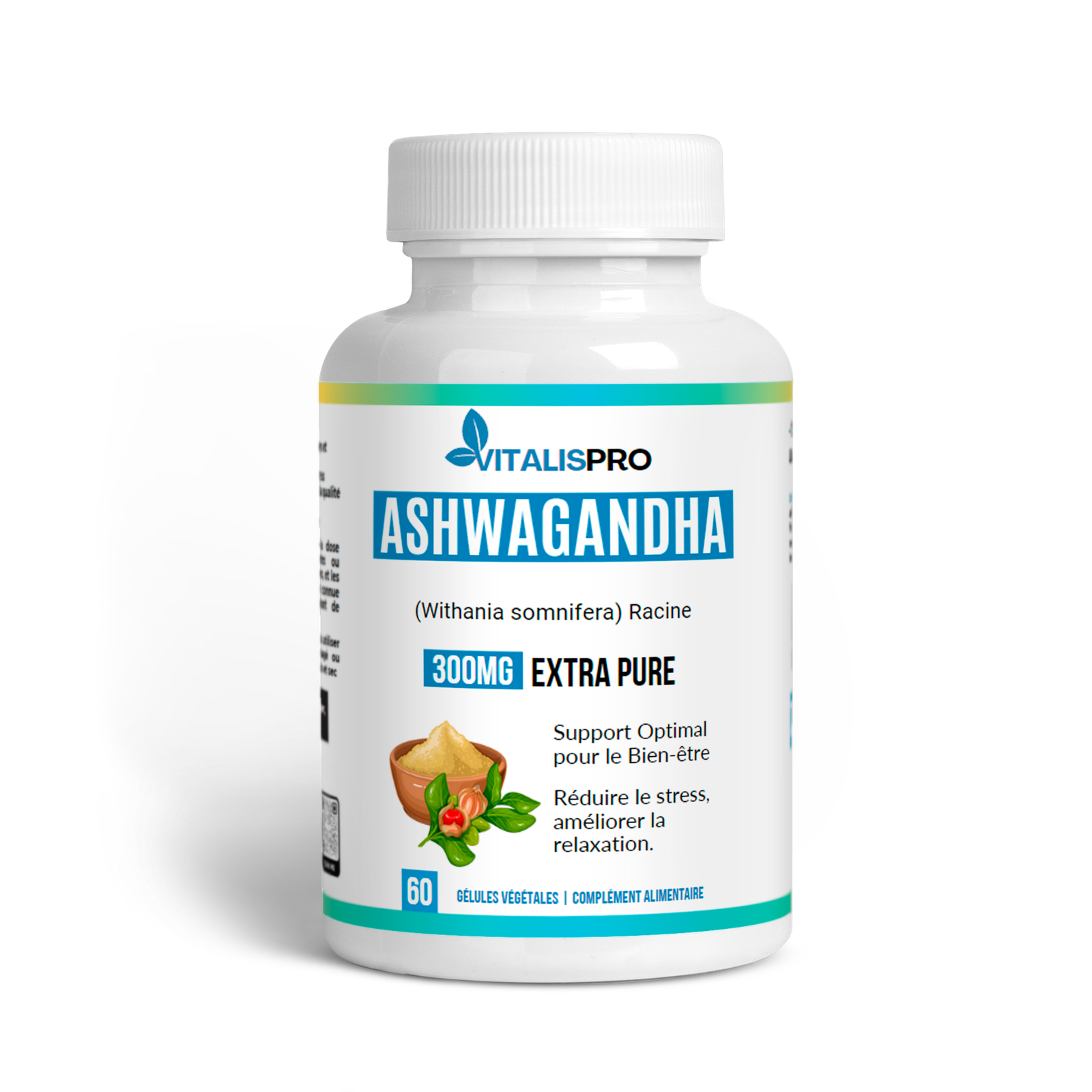
- VitalisPro’s ashwagandha 300 mg is an ONSSA-authorised food supplement, to be included in a healthy lifestyle; it is neither a medicine nor a substitute for the advice of a healthcare professional.
What is ashwagandha? The adaptogenic root
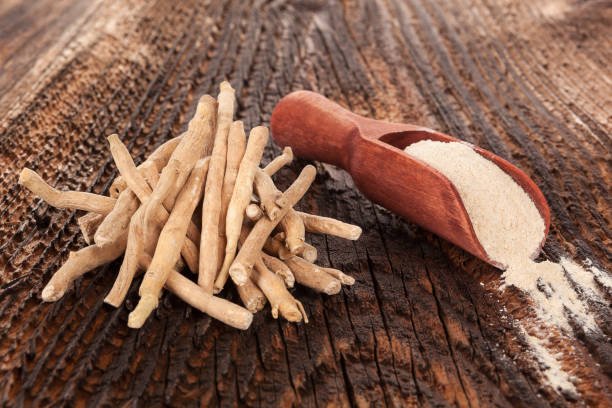
Ashwagandha, whose scientific name is Withania somnifera, is a plant that grows in India as well as in parts of the Middle East and North Africa. Its root has been used for thousands of years in traditional Indian medicine, Ayurveda, to “strengthen the body” and restore balance. Its Sanskrit name even evokes strength: it was described as the plant that gives vigour back to a tired body.
Today it is placed in the family of adaptogenic plants. The term deserves an explanation, because it is often misused. An adaptogen is a plant described as helping the body cope better with stress — physical, mental or environmental — by acting more like a regulator than a direct stimulant or sedative. Where coffee stimulates you and a sleeping pill knocks you out, an adaptogen is meant to work in a more subtle direction: nudging the body back towards its point of balance. This is a traditional framework that modern research now explores with its own tools.
Withanolides: the active compounds that make the difference
Most of ashwagandha’s effect is attributed to a group of molecules called withanolides. The quality of an extract is generally measured by its content of these compounds: a root extract concentrated in withanolides holds a far higher share of actives than a raw powder, and it is precisely this type of standardised extract that was used in most clinical trials. That is why the effect of a plain root powder, bought loose and of uncertain origin, is nothing like that of a concentrated, clearly dosed extract in a capsule.
This point is crucial and often overlooked: the word “ashwagandha” on a label is not enough. What matters is the nature of the extract, its withanolide concentration and the honesty of the stated dose. A formula with a clear, authorised composition truly gives you what you think you are buying; an obscure product, arriving through informal channels, may contain only a tiny share of active compound. This difference between a product worth its price and one that adds nothing is at the heart of the quality principle we hold to.
What the research says: stress, sleep, energy
What do we actually know, with evidence? The picture is promising but still incomplete. Results vary from one person to another, and it bears repeating: a supplement does not treat a disease, it supports the body’s general balance. Here, honestly ranked, are the areas research has looked at most.
1. Stress, nervous tension and cortisol
This is ashwagandha’s best-documented use: helping the body cope with stress. A randomised, double-blind, placebo-controlled clinical trial observed, in adults under chronic stress, a significant drop in the sense of tension, together with a fall in cortisol — the hormone linked to stress — after supplementation with root extract.2 Another randomised study published in the same decade reported comparable effects on the perception of stress and on related physiological markers.3
The U.S. National Center for Complementary and Integrative Health (NCCIH) sums up the situation cautiously: some studies suggest ashwagandha may be of interest for stress management, but they are often small and short, and larger work is needed before any firm conclusion.1 This is exactly the honesty we want to pass on to you: a signal exists, it is encouraging, but it is not definitive proof.

2. Sleep quality
Stress and sleep are two sides of the same coin: when the nervous system settles, sleep quality often improves on its own. A systematic review with a meta-analysis pooled several controlled trials and concluded that taking ashwagandha was associated with a modest but measurable improvement in several sleep parameters, especially in people with difficulty falling asleep.4 Ashwagandha does not act like a sleeping pill that “knocks you out”: it works upstream, on the factors that disturb sleep, starting with nervous tension.
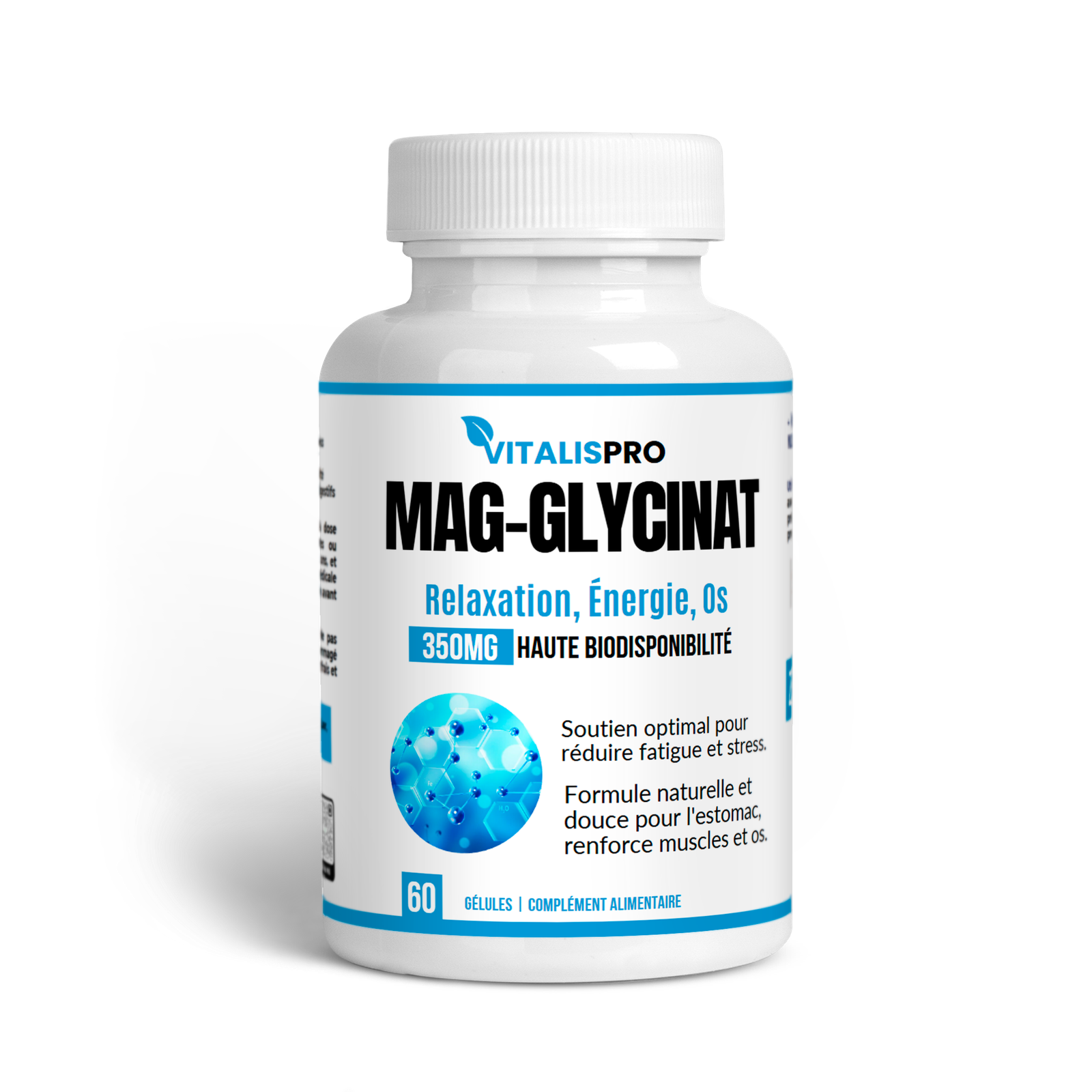
If your main concern is falling asleep and winding down in the evening, magnesium is a classic ally that many pair with ashwagandha at the end of the day. Magnesium contributes to the reduction of tiredness and to normal nervous-system function, two claims recognised by EFSA; alongside the evening calm you are looking for, it naturally rounds out a wind-down routine.
For a general, level-headed overview of ashwagandha and its effects on stress and sleep, this informative video offers a good introduction:
3. Energy, vitality and daily endurance
As an adaptogenic plant, ashwagandha is traditionally linked to a reduction in stress-related fatigue, which would show up in the energy level felt across the day. A randomised clinical trial in healthy adults observed, alongside its anxiolytic effects, an improvement in general wellbeing and perceived vitality.5 It is this “return of tone” dimension that explains the interest of athletes and of anyone looking for natural support for activity — provided these results are placed in their proper measure.
4. Focus and mental clarity
When tension eases and sleep improves, focus naturally becomes easier: it is often an indirect effect, but a very real one in how people feel. Some research has looked at attention and reaction time in adults, with positive signals that, once again, still need to be confirmed by larger studies. We prefer to present this area as promising but preliminary, rather than turning it into a promise: the difference between the two is exactly what separates serious information from a sales pitch.
It is worth pausing here on an idea that many overlook: the “stacking of supplements.” Some people, chasing a faster result, pile up many boxes from various and unknown sources, convinced that “more is better.” The reality is exactly the opposite: haphazard accumulation drives up the bill, raises the risk of interactions, and makes it hard to know what is really helping. The healthiest logic is simplicity and clarity: a single, well-thought-out and authorised formula is worth more than five obscure boxes. This is the philosophy we follow when designing our products — to give you what you need, clearly, without pushing you to buy the superfluous.
Ashwagandha for men and for women
The benefits of ashwagandha interest men and women alike, with a few nuances in the most sought-after uses. Let us recall from the outset that this is general support for balance, not a targeted treatment.
For men
- Vitality and energy support: thanks to calmer stress and better sleep, many men report improved general tone.
- Recovery and physical activity: it is valued by athletes to support strength and recovery after effort, within a structured training routine.
- Preliminary research on reproductive health: some work has looked at the effect of the extract in men under significant stress, with results judged promising but which need confirmation.
Those seeking complete support for male vitality sometimes pair ashwagandha with other traditional tonic plants available in our shop. Any combination of supplements deserves the prior advice of a healthcare professional, however.
For women
- Easing daily stress: between work pressure and family responsibilities, support for the nervous system is a strong expectation.
- Sleep and mood: better-quality sleep has a favourable knock-on effect on mood and energy throughout the day.
- Support during tiring periods: as an adaptogen, it may help restore a sense of balance during phases of overwork.
Important: pregnant or breastfeeding women are advised not to use ashwagandha unless recommended by a healthcare professional. We detail this point in the precautions section.
Dosage and how to take it: 300 to 600 mg per day
The ashwagandha dose varies with the type of extract and the goal, but most studies relied on a range of 300 to 600 mg per day of concentrated root extract. Here are practical reference points, always to be adapted to what is written on your product’s box:
| The marker | What it means | A concrete step |
|---|---|---|
| Usual dose | The range used by most serious studies | One 300 mg capsule, once or twice a day |
| Best time | Many prefer it in the evening for wind-down and sleep | In the evening, or after a meal to avoid any digestive discomfort |
| Time to effect | Benefits build with consistency | Count on several weeks of regular use, not an instant effect |
| Getting started | Give the body time to adjust | Begin with a low dose and observe your response |
Never exceed the recommended dose on the packaging on the assumption that “more is better”: the body responds to consistency, not to shock doses. Generally take the capsule with a large glass of water, and tie it to a stable daily habit so you do not forget it. Any possible benefit is built through consistency over weeks, not through a one-off dose.
One more practical note that is often forgotten: give the plant a fair trial before you judge it. Ashwagandha is not a stimulant with a same-day kick; its supportive effect tends to build quietly, so a window of four to eight weeks of regular use is more honest than a snap verdict after two or three days. Keep it simple: one clear extract, a stable time of day, and a calm observation of how you feel — your sleep, your sense of tension, your energy — rather than chasing an instant transformation that no plant can deliver.
Ashwagandha in Morocco: pace of life and calm
No discussion of stress can be assessed outside of lifestyle, and the Moroccan context has its own character. Between the acceleration of city life, long workdays, heavy traffic and the pressure of family responsibilities, the search for natural support for calm answers a very real need. Ashwagandha then fits in as one possible form of support — never as a substitute for rest, disconnecting and good sleep habits.
The smartest approach is not the race for a “miracle plant,” but the thoughtful combination of complementary ingredients within a balanced lifestyle. It is in this spirit that VitalisPro designed a Serenity & Performance pack bringing together ashwagandha, moringa and magnesium: three supplements that work in synergy to support calm, energy and inner balance, rather than piling up scattered boxes of unknown origin.

And to place ashwagandha in a broader frame — its benefits, but also its limits and precautions — this educational video offers a simple, balanced explanation:
Possible side effects
Ashwagandha is generally well tolerated in healthy adults, at usual doses and over reasonable periods. As with any supplement, a few side effects remain possible, especially at high doses:
- Mild digestive upset such as nausea, stomach discomfort or loose stools, often eased by taking it with a meal.
- Drowsiness or a feeling of heaviness, particularly when combined with other sleep-promoting products.
- Headaches in some people at the start of use.
- In rare cases, excessive and prolonged use has been linked to discomfort; all the more reason to respect the stated dose and not exceed it.
Precautions, interactions and contraindications
No responsible discussion of a food supplement is complete without a frank section on its limits. “Natural” is not an automatic synonym for “suitable for everyone in all circumstances.” It is advised to avoid ashwagandha, or to consult a healthcare professional before any use, in the following situations:
- Pregnancy and breastfeeding: its use is not advised, given insufficient data on its safety during these periods.
- Thyroid conditions: it may influence thyroid hormones; caution is required for people on thyroid treatment.
- Autoimmune diseases: it may modulate immune activity, hence the need for prior medical advice.
- Sedative, anti-anxiety or mood medications: the drowsiness effect may add up; professional advice is recommended.
- Blood-pressure or blood-sugar treatments: monitor your indicators carefully and speak to your doctor.
- Before surgery: it is best to stop use about two weeks before any operation.
- Children under 18: supplements are not intended for this age group without supervision.
The golden rule: a supplement adds; it does not fix a real imbalance on its own, it does not diagnose and it does not treat a condition. Do not start several new supplements at the same time: beginning them together makes it hard to know what helped you and what may have caused discomfort. At any persistent or worrying symptom, consulting a healthcare professional remains the safest and first choice; for any question, the VitalisPro team can be reached through our contact page.
Stories from our readers
These are testimonials from people who added ashwagandha to their routine, alongside habits they tried to improve; individual experiences that differ from one person to another, which we present as they are, without exaggeration:
“Between work and the kids, I ended my days on edge, with broken sleep. I did not look for a miracle: I reviewed my bedtime and added ashwagandha in the evening. After a few weeks, I fall asleep more easily and feel more settled. No magic, but a real difference.” — Nadia, Casablanca
“What I liked was the honest message: no exaggerated promises, just support within a lifestyle. I have been taking ashwagandha 300 mg before my evening workout for two months, and I recover better. Ordering was easy, with cash on delivery.” — Yassine, Rabat
“I appreciate that the formula is clear and ONSSA-authorised, and that the price is transparent. I started with one capsule in the evening, then kept that little routine. I feel calmer facing everyday stress, and I reordered.” — Salma, Marrakech
Frequently asked questions about ashwagandha
Conclusion: what do we take from all this?
Ashwagandha is an ancient adaptogenic plant whose benefits modern research explores with genuine interest: support against stress, improved sleep quality, and a boost to energy and focus. The signals are promising, but still incomplete; we present them honestly as they are, without inflating them to serve a sale. It is neither a medicine nor a miracle solution: it is a form of support, to be included within a balanced lifestyle.
If you choose to use it, opt for a clear extract, concentrated in withanolides and authorised, from a transparent source in both offer and price, such as VitalisPro’s ashwagandha 300 mg. Respect the dosage, give the body time to respond, and lay the fundamentals first: sleep, movement, diet and disconnecting. Because wellbeing is built through knowledge and habits, not through promises; and we believe a customer’s trust is built through clarity, not exaggeration.
In the end, what distinguishes the aware consumer is not avoiding every supplement nor believing every promise, but the ability to discern: to know what science says and what it does not, to place the fundamentals before the add-ons, and to give the body its fair time. For direct contact, the VitalisPro team is available through our team page.
Sources and methodology
This guide relied on a review of documented general scientific sources (PubMed databases) and published systematic reviews, in addition to official bodies such as the U.S. National Center for Complementary and Integrative Health (NIH/NCCIH) and the European Food Safety Authority (EFSA). We committed to presenting results at their true size: promising signals are presented as signals, not as definitive promises, and no therapeutic effect was claimed. The information here is for health education, not for diagnosis or a medical prescription.
References
- U.S. National Center for Complementary and Integrative Health — “Ashwagandha” page. nccih.nih.gov
- A prospective, randomised, double-blind, placebo-controlled study of the safety and efficacy of an ashwagandha root extract in reducing stress and anxiety in adults (2012). PubMed 23439798
- An investigation into the stress-relieving and pharmacological actions of an ashwagandha (Withania somnifera) extract: a randomised, double-blind, placebo-controlled study (2019). PubMed 31517876
- Effect of ashwagandha (Withania somnifera) extract on sleep: a systematic review and meta-analysis (2021). PubMed 34559859
- Adaptogenic and anxiolytic effects of ashwagandha root extract in healthy adults: a double-blind, randomised, placebo-controlled clinical study (2019). PubMed 32021735
- European Food Safety Authority (EFSA) — health claims and botanicals. efsa.europa.eu
The information in this article is provided for informational purposes for health education, drawing on documented general scientific references (PubMed, NIH and EFSA), and is not a substitute for consulting a qualified healthcare professional. Ashwagandha is a food supplement that does not replace a varied, balanced diet or a healthy lifestyle, and is not intended to diagnose, treat, cure or prevent any condition. Do not exceed the recommended dose. Pregnant and breastfeeding women, children under 18, and people with medical conditions or ongoing treatments are advised to consult a professional before use. Keep out of the reach of children.
