


Balance and lasting wellbeing
Few topics stir up as much hope and frustration at once as weight management. Express promises, punishing diets, results that vanish: many people know this exhausting cycle well. Yet the truth that science confirms is simpler — and far less glamorous: a balanced weight is built through sustainable habits, never through miracle solutions. Mindful eating, regular movement, good sleep, and managing hunger and fullness are the real building blocks.
This guide from VitalisPro does not sell you a “fat burner” or a wondrous “appetite suppressant.” Instead, in plain language and with sourced references, it explains how weight actually balances out, why “miracle slimming products” almost always disappoint, and where the honest, marginal, complementary place of a few natural elements truly lies. The goal is that you leave with a decision built on knowledge, not on advertising noise.
Let us agree on one principle from the start: there is no capsule that “makes you lose weight” for you. The body does not respond to a promise, but to a set of conditions — what you eat, how you move, how you sleep, and how you manage stress. It is precisely within this realistic frame that talking about natural support begins to make sense — not before, and never in place of the fundamentals.

محتوى الصفحة
- 1 In brief: what you will learn
- 2 In this guide
- 3 The truth about weight: why miracle solutions fail
- 4 The energy equation: the gentle, sustainable deficit
- 5 Nutrition: quality before quantity
- 6 Movement: far more than burning calories
- 7 Sleep and stress: the two forgotten pillars
- 8 Weight management in the Moroccan context
- 9 Where supplements fit: support, never a miracle
- 10 Common mistakes to avoid
- 11 How to build a sustainable routine
- 12 Precautions and limits
- 13 Stories from our readers
- 14 Frequently asked questions about weight management
- 15 Conclusion: the intelligence is in sustainability
- 16 Sources and methodology
In brief: what you will learn
- A balanced weight is built through a gentle, sustainable energy deficit, not a shock diet: steady slowness beats fleeting speed.
- The quality of the plate matters as much as the quantity: protein and fibre prolong satiety, while ultra-processed foods push us to eat more without feeling full.
- Movement is not only about calories burned: it preserves muscle mass and supports mood, sleep, and stress management.2
- Sleep and stress management are the two forgotten pillars: neglecting them often sabotages the best dietary efforts.
- Food supplements do not “make you lose weight”: they are only a marginal support, within a calorie-controlled diet and physical activity, never a substitute for the fundamentals.
The truth about weight: why miracle solutions fail
Open any social feed and you will be flooded with promises: “lose X kilos in a week,” “the drink that melts fat,” “the revolutionary appetite-suppressing capsule.” These messages share one thing: they sell speed and ease. And that is exactly where the trap lies. Weight that drops very fast, under extreme deprivation, almost always comes back just as fast — often beyond the starting point. This yo-yo is not a failure of willpower; it is the predictable consequence of an approach that ignores how the body works.
The myth of the “slimming product” rests on a seductive but false idea: that some outside object — a pill, a tea, a powder — could, on its own, reorganise your metabolism. The reality is soberer: no food supplement makes you lose weight. What moves weight is the overall balance between energy consumed and energy spent, shaped by sleep, stress, and the quality of the diet. Everything else is, at best, an add-on — at worst, a costly illusion.
This is not meant to discourage — quite the opposite. Understanding it is liberating: it frees you from the anxious chase after the latest fashionable product, and it hands you back your power. Because the real levers — the plate, movement, sleep, calm — are within your reach, free, and require you to buy nothing at all. This is the honest approach VitalisPro stands for: we talk about support and balance, never about a miracle.
“The best ‘slimming product’ does not exist in a bottle. It comes down to four patient habits: eat well, move, sleep well, ease stress. Everything else merely adds to these — and only makes sense once these foundations are in place.”
The energy equation: the gentle, sustainable deficit
At the heart of weight management lies a simple principle: energy balance. It is the relationship between the calories that come in (food) and those the body spends (basal metabolism, activity, digestion). When the spending is slightly greater than the intake, in a gentle and sustained way, the body tends to draw on its reserves. This principle is the foundation of any serious approach; the rest is just its intelligent application.
The most widespread mistake is to create a sudden, brutal deficit: skipping meals, severe deprivation, cutting out entire food groups. This shock is hard to sustain beyond a few days, slows the body down, drains morale, and almost always ends in a rebound. The wise approach instead builds a light deficit that you can live with for months — not days. Sustainability matters here far more than speed.
A simple image helps: think of a budget. Spending a little more than you earn, each month, slowly reduces your accumulated savings — in a bearable way. Depriving yourself of everything all at once, by contrast, creates such tension that you end up “cracking” and spending it all in one go. Weight follows a similar logic: steady moderation beats extreme restriction. The World Health Organization notes that the balance between energy intake and expenditure, within a varied diet, is a pillar of maintaining a healthy weight.1
Nutrition: quality before quantity
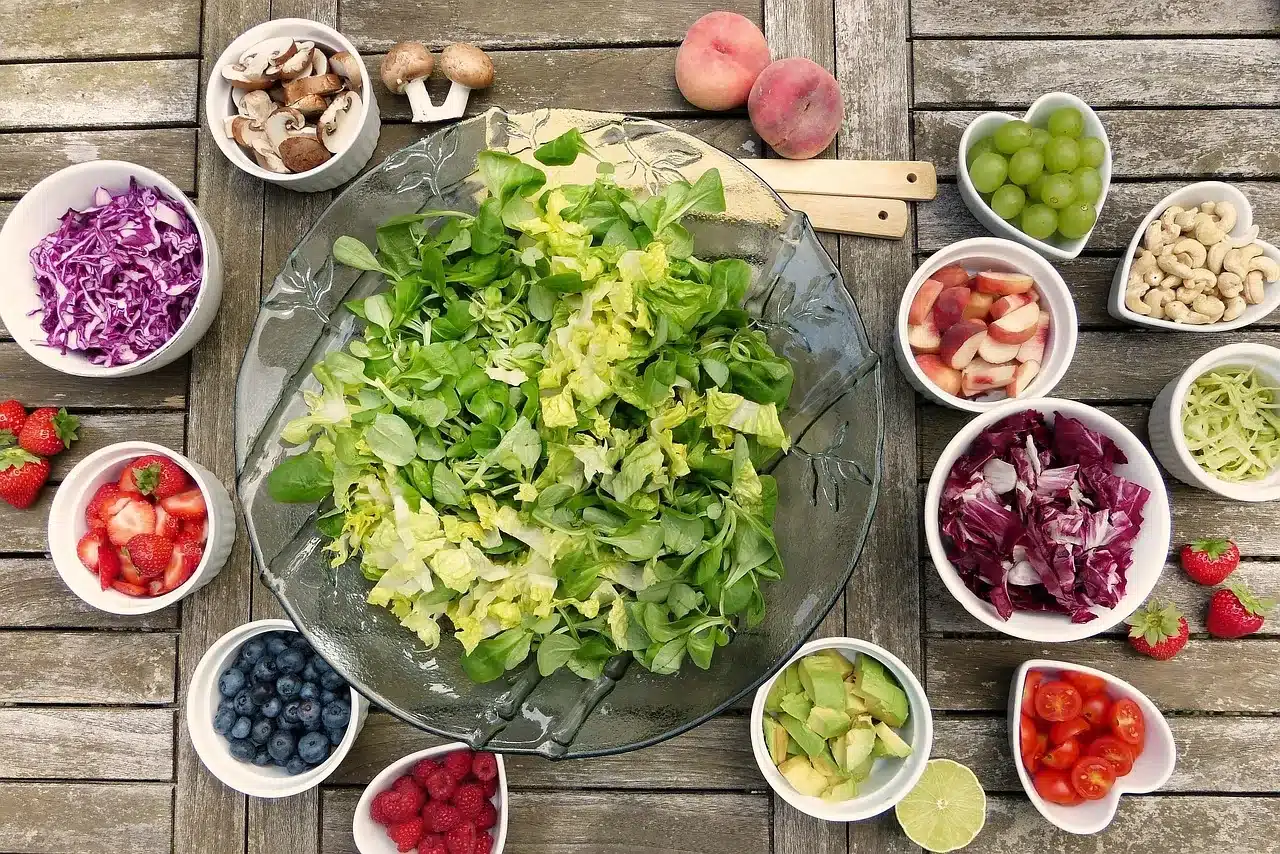
Not all calories are equal in their effect on satiety and energy. Protein is among the most filling nutrients, and it helps preserve muscle mass during weight management — a crucial point, since keeping your muscles supports the metabolism. Fibre, found in vegetables, pulses, and whole grains, prolongs the feeling of fullness and slows the absorption of sugars, which avoids the energy peaks and troughs that trigger cravings.
At the opposite end, ultra-processed foods, rich in sugar and refined fats, tend to push us toward larger quantities without true satiety. They are designed to be hyper-palatable and easy to over-consume. Building a plate rich in protein, fibre, and colourful vegetables is therefore the cornerstone of mindful weight management. The WHO highlights that dietary diversity and portion moderation are among the essential levers for maintaining a balanced weight.1
The role of fibre in satiety
Fibre is not just “filler”: it plays a subtle role in regulating hunger. When you eat fibre-rich foods, the contents of the stomach expand slowly, and satiety signals reach the brain in a more balanced way. Fibre also slows the absorption of sugars, which helps avoid the abrupt energy swings that reawaken the urge to eat. That is why vegetables, pulses, and whole grains are very concrete allies of calm weight management — not by magic, but through a real physiological mechanism.

Movement: far more than burning calories
Many people reduce exercise to a simple “burning of calories.” Its role is far deeper. Regular physical activity builds and preserves muscle, a metabolically active tissue that supports energy expenditure at rest. It also improves mood, the quality of sleep, and the management of stress — all factors that indirectly, but powerfully, influence our eating behaviour. Moving is not just spending: it rebalances the whole system.
The good news? You need neither a gym nor an intensive programme. Regular daily walking is already a powerful step in the right direction. The WHO recommends regular physical activity within a healthy lifestyle, and notes that even a moderate intensity, practised consistently, brings real benefits.2 What matters is not the occasional performance, but regularity built into the long term.
One point deserves emphasis, because it debunks another stubborn myth: you cannot “compensate” for an unbalanced diet with exercise alone. An hour of sport does not “buy back” a regular excess at the table. Movement and the plate are not two separate accounts to be settled one against the other; they are two complementary levers that, together, shape balance. Relying on one to erase the other is one of the most disappointing illusions of weight management.
Sleep and stress: the two forgotten pillars
The link between sleep and weight may seem surprising, but it is firmly established. A lack of sleep disrupts the balance of the hunger and satiety hormones, which increases the craving for calorie-rich foods — often sweet and fatty. Someone who sleeps poorly finds themselves, without even realising it, more vulnerable to cravings and snacking. Taking care of your sleep is therefore not a luxury: it is a full component of intelligent weight management.
Chronic stress weighs heavily too. It pushes many people toward “emotional eating”: eating to soothe a tension, an anxiety, or a fatigue, rather than out of genuine hunger. Recognising this mechanism is already a big step. Weight management does not stop at the plate and movement; it encompasses sufficient, regular sleep and conscious stress management. Tending to these two dimensions often makes a difference that outweighs what any strict diet promises.
Here is a truth rarely spoken in advertisements: you can eat perfectly and train seriously, and see your efforts held back by chronically insufficient sleep or unmanaged stress. These two pillars are not “sold,” because they earn no one anything; perhaps that is why they are talked about so little. They are no less among the most powerful levers — and among the most accessible.
Weight management in the Moroccan context
No discussion of weight can be judged in isolation from lifestyle, and the Moroccan context has its own character. Our traditional cuisine is a remarkable asset: rich in vegetables, pulses, olive oil, and herbs, it forms a naturally favourable base for a balanced weight. The vegetable tagine, the pulse-rich harira, the cooked salads: our culinary heritage is full of healthy, filling, and flavourful dishes.
But the pace of urban life disturbs this balance. The spread of ultra-processed foods and sugary drinks, the long hours of work and commuting that reduce movement, snacking under pressure: all of these push many toward an unbalanced weight. The good news is that the solution is not to import a foreign “diet,” but to return to the authenticity of the Moroccan table — varied, colourful, moderate — while adding regular walking and reducing added sugars.
This approach has a double advantage: it is effective, and it is rooted in our culture, and therefore far easier to sustain over time than a diet imported from elsewhere. Giving light, plant-based dishes back the place they held before the march of fast food is to reconcile a healthy food tradition with an active lifestyle. To explore our range dedicated to daily wellbeing, our shop brings together formulas designed in this spirit of support.
Where supplements fit: support, never a miracle
Once the fundamentals are in place, a legitimate question arises: do food supplements have a place? The honest answer is: a modest, complementary place, never a central one. A supplement does not make you lose weight, does not burn fat, and does not suppress hunger by magic. At best, it can only accompany an approach already built on nutrition, movement, sleep, and calm. To present it otherwise would be to mislead you.
Some natural elements are studied for their supportive role within a broader approach. Green tea catechins, for example, have been the subject of reviews examining their effect combined with physical exercise on body composition; the results remain modest and are always set within a frame of physical activity and a controlled diet, never as an isolated effect.34 Other work has explored the possible role of these compounds within metabolism, while calling for caution in interpretation.5 The message is consistent: a supporting signal, within a frame, and not a promise.
It is essential to set this research in its proper measure. European scientific authorities, including the European Food Safety Authority (EFSA), strictly regulate weight-related claims: no formula may claim to “make you lose weight.”6 That is why VitalisPro presents its supplements for what they are: natural supports to be included within a calorie-controlled diet and physical activity, not shortcuts. This honesty is not merely a legal caution: it is at the heart of the respect we owe you.

Common mistakes to avoid
Many efforts fail because of repeated mistakes, easy to avoid once you know them. Recognising them will spare you months of frustration:
| The mistake | Why it sabotages efforts | The wise approach |
|---|---|---|
| Sudden shock diets | Hard to sustain, they almost always lead to regain (yo-yo) | A light, sustainable deficit, lived over months |
| Neglecting protein | Loss of muscle mass, a slowed metabolism | A source of protein at every main meal |
| Relying on exercise alone | You cannot offset an unbalanced plate with exercise | Combine a controlled plate with regular movement |
| Expecting instant results | Frustration sets in at the first slowdown | Aim for consistency, assess over weeks |
| Chasing the “slimming product” | No supplement makes you lose weight; cost and letdown | Lay the fundamentals first; the rest adds on |
| Demonising a food group | Total deprivation is unsustainable and unbalanced | Prefer quality and moderation to the ban |
Notice the common thread: nearly all these mistakes stem from the same root — the pursuit of speed at the expense of sustainability. The approach that succeeds is slow and steady: small, sustainable changes that accumulate over time to create a real and lasting difference. It is not spectacular, but it is what works.
How to build a sustainable routine
Step one: start with the plate, not the box
Your first “slimming lever” is your plate. Before buying any supplement, review a week of your meals honestly: where are the hidden sugars, the excess refined fats, and where are the protein, fibre, and vegetables missing? A simple rebalancing here comes before everything, and it makes whatever follows far more useful. It is the foundation; everything else rests on top of it.
Step two: build movement into your day
Choose a form of movement you will sustain: a daily walk, a few weekly sessions, the stairs rather than the lift. The goal is not performance, but regularity. Moderate movement, practised consistently, beats an intense effort abandoned after two weeks. Tie it to an existing habit — after a meal, before a shower — so it becomes automatic.
Step three: protect your sleep and your calm
Set stable bedtimes and treat your sleep as a non-negotiable appointment. Spot your emotional-eating triggers too: stress, boredom, fatigue. Slow breathing, a walk, or a moment of pause can replace the snacking reflex. These two gestures, invisible and free, are among the most effective of all.
Step four: if you add support, do it consciously
If, once these foundations are in place, you decide to add natural support, choose a formula with clear ingredients, authorised by ONSSA, from a transparent source. Always remember its role: an add-on within a controlled diet and physical activity, never a substitute. For any question, the VitalisPro team is available through our contact page.

Precautions and limits
No responsible discussion of a food supplement is complete without a frank section on its limits. “Natural” is not an automatic synonym for “suitable for everyone in all circumstances.” Caution is required in specific situations:
- Pregnancy and breastfeeding: it is advised to avoid weight-management supplements unless recommended by a healthcare professional.
- Children and adolescents under 18: these supplements are not intended for them without supervision.
- Ongoing treatments or a medical condition: consult a professional before starting, as some plants may interact with medication.
- Never exceed the recommended dose: “more” is not “better,” and excess speeds up nothing.
We add a practical reminder that is often forgotten: do not start several new supplements at the same time. If you begin them together, it becomes hard to know what helped you, what did nothing, and what may have caused any discomfort. The smarter method is to introduce one element at a time. The golden rule stays the same: a supplement adds; it does not fix a real imbalance on its own, and it never replaces the advice of a healthcare professional, especially in case of doubt or a persistent symptom.
Stories from our readers
These are testimonials from people who reviewed their habits and added natural support to their routine; individual experiences that differ from one person to another, which we present as they are, without exaggeration:
“I stopped hunting for the miracle product. I simply rebalanced my meals, added daily walking, and looked after my sleep. It was slow, but real. The difference is that this time, it holds over the long term.” — Nadia, Casablanca
“What I liked about VitalisPro was the honest message: no promise of magical melting, just support within a lifestyle. I reviewed my plate and built in movement; I feel lighter and more in control.” — Karim, Rabat
“Ordering was easy, payment was on delivery, and the formula is clear and ONSSA-authorised. I appreciate that they never oversell, and that they explain the essentials remain in my own habits.” — Hind, Marrakech
Frequently asked questions about weight management
Conclusion: the intelligence is in sustainability
Weight management is not a sprint, but a journey of sustainable habits. A gentle energy deficit, a plate rich in protein, fibre, and vegetables, regular movement, sufficient sleep, and conscious stress management: these are the real pillars that science confirms. Natural supporting elements come to complement these foundations — never to replace them, and always within a calorie-controlled diet and physical activity.
Step away from promises of miracle solutions and punishing diets; invest instead in small, sustainable changes that accumulate over time. When you combine realism, patience, and an overall approach, you build a healthy, lasting relationship with your weight and your body, far from the spiral of frustration and the return to square one. And if you choose to add support, do it consciously, with clear, authorised formulas such as those in our shop.
In the end, what distinguishes the aware consumer is neither believing everything nor rejecting everything, but the ability to discern: to know what science says and what it does not, to place the fundamentals before the add-ons, and to give the body its fair time. If you leave this guide with that mindset, we have reached our goal, whether or not you choose our products. For direct contact, the VitalisPro team is available through the contact page and the our team page.
Sources and methodology
This guide relied on general, verifiable scientific sources (PubMed databases), published systematic reviews, as well as official bodies such as the World Health Organization (WHO) and the European Food Safety Authority (EFSA). We committed to presenting results at their true size: supporting signals are presented as signals, never as promises, and no weight-loss claim was made. The information here is for health education, not for diagnosis or a medical prescription.
References
- World Health Organization — “Healthy diet” (healthy eating and energy balance). who.int
- World Health Organization — “Physical activity”. who.int
- Does green tea catechin enhance the weight-loss effect of exercise? A systematic review and meta-analysis of randomised controlled trials (2024). PubMed 39350601
- Effects of green tea catechins and exercise training on body composition (2022). PubMed 36446085
- Potential role of green tea catechins in the context of the metabolic syndrome: a review (2009). PubMed 19147161
- European Food Safety Authority (EFSA) — health claims (including weight control). efsa.europa.eu
The information in this article is provided for informational purposes for health education, drawing on documented general scientific references (PubMed, WHO and EFSA), and is not a substitute for consulting a qualified healthcare professional. Food supplements do not replace a varied, balanced diet or a healthy lifestyle, and are not intended to diagnose, treat, cure or prevent any condition. No weight-loss claim is made. Do not exceed the recommended dose. Pregnant and breastfeeding women, people under 18, and people with medical conditions or ongoing treatments are advised to consult a professional before use. Keep out of the reach of children.
