


Wellbeing and natural vitality
You wake up exhausted even after a night that felt long enough. By midday your battery already feels flat, and you reach for that third coffee just to get through to the evening. If this sounds familiar, you are far from alone: everyday fatigue is one of the most common complaints in Morocco, between the pace of work, the summer heat, and a diet that does not always give the body what it needs. The good news? In most cases, a large part of your natural energy can be recovered through simple habits and a few well-chosen nutrients.
This in-depth guide from VitalisPro promises you neither a magic potion nor a miracle “boost.” Instead, in plain language and with sourced references, it explains where fatigue really comes from, the four pillars that build energy day after day, and how micronutrients such as iron, the B-group vitamins and magnesium, along with traditional tonic plants like ginseng, fit into a balanced lifestyle. The goal is that you leave with a decision built on knowledge, not on advertising noise.
Let us agree on one principle from the start: fatigue is almost never an unsolvable mystery, and it is not a life sentence either. More often than not it is a signal that one of the body’s great balances needs attention — sleep, the plate, movement, or certain intakes. Learning to read this language of the body is already half the journey. The rest is a matter of steady, quiet actions kept up over time: that is exactly the spirit in which we approach the subject.

محتوى الصفحة
- 1 In brief: what you will learn
- 2 In this guide
- 3 Why do we feel so tired?
- 4 The four pillars to recover your energy
- 5 Iron, B vitamins and magnesium: the quiet fuel of energy
- 6 Tonic plants and superfoods of vitality
- 7 Fatigue in the Moroccan context: factors specific to our lifestyle
- 8 Hydration: the simplest factor, and the most overlooked
- 9 A seven-day plan to restart your energy
- 10 When fatigue deserves medical advice
- 11 Stories from our readers
- 12 Frequently asked questions about energy and fatigue
- 13 Conclusion: what do we take from all this?
- 14 Sources and methodology
In brief: what you will learn
- The energy we feel is nothing abstract: it is born in our cells, where tiny “power plants” called mitochondria turn what we eat into usable fuel.
- Four pillars build energy day to day: restorative sleep, stable nutrition, regular movement and adequate micronutrients. No supplement makes up for a lost night.
- Iron and B vitamins “contribute to the reduction of tiredness and fatigue” — a claim recognised by the European authorities (EFSA) when intakes are insufficient.
- Tonic plants such as ginseng and superfoods such as moringa and spirulina are studied for their role in supporting vitality, within a healthy lifestyle.
- VitalisPro supplements are ONSSA-authorised, with clear pricing and cash on delivery across Morocco; they accompany a good lifestyle, they do not replace it.
Why do we feel so tired?
The energy we feel is not a vague concept: it is the result of remarkably precise operations carried out inside our cells. Every cell holds tiny “power plants” called mitochondria, which turn what we eat into usable fuel, ATP. When this system runs well, energy flows effortlessly. When it falters — through lack of sleep, a shortfall in certain nutrients, or sustained stress — output drops, and fatigue sets in.
The World Health Organization reminds us that lifestyle — sleep, diet, physical activity and stress management — explains a considerable share of chronic-fatigue complaints in adults. In other words, before hunting for a distant cause, it is wise to look first at the foundations of daily life. For more on the basics of healthy eating, you can consult the resources from the WHO on a healthy diet.1
Picture it simply. Imagine a phone whose battery drains faster than it charges: the problem is not necessarily the battery itself, but often the charger, the charging time, or an app running in the background that quietly eats everything. Our body works in a similar way. Sleep is the charging time, food is the charger, and chronic stress is that invisible app draining the power without your noticing. Recovering your energy means acting on these three levers together, rather than chasing a single fix that would solve everything at once.
When passing tiredness becomes a permanent weight
Tiredness after an intense week or a bad night is perfectly normal: it clears with rest. What deserves attention is fatigue that persists despite enough sleep and a decent diet, the kind that settles in and weighs on mood, concentration and the pleasure of the day. This is not a diagnosis, but a general signal inviting you to review your habits — and, if the signal does not ease, to consult a qualified healthcare professional. We will come back to this, because knowing how to tell the two situations apart is part of respecting your body.
The four pillars to recover your energy
Before even thinking about a supplement, there are four pillars whose effect far outweighs any single capsule taken on its own. They cost almost nothing, and yet they are what decide your energy level over the long run. Let us take them in the order that matters.
1. Sleep first: no supplement makes up for a bad night
Sleep is the cornerstone, the one on which everything else rests. Adults generally need seven to nine hours of quality sleep. Try to keep a stable bedtime and wake time, weekends included: the body loves regularity more than long catch-up lie-ins. Avoid screens in the hour before bed, since their light delays falling asleep, and keep your room as dark and cool as possible. Major public-health reviews consistently link the regularity of sleep to better energy during the day.
A point often overlooked: quality matters more than raw quantity. Nine fragmented hours, broken by constant waking, are more tiring than seven hours of continuous sleep. So look after your evening ritual — a dim light, a herbal tea, a book rather than a screen — and give the body the signal that the day is ending. To understand just how vital sleep is for the brain and for energy, this short educational video offers a clear, calm explanation:
2. Nutrition: steady fuel instead of a roller coaster
Meals rich in fast sugars give you a brief surge, immediately followed by a sharp crash — the familiar afternoon “slump.” The simple rule to avoid this roller coaster: at every meal, combine a source of protein (eggs, lentils, fish, chicken), fibre (vegetables, whole grains) and good fats (olive oil, nuts). This trio releases energy slowly and steadily, without spikes or collapses. Add enough hydration to that: even mild dehydration is enough to lower concentration and drive.

3. Movement: the paradox that gives energy instead of taking it
It can feel counter-intuitive: how could moving give energy rather than use it up? Yet that is what research confirms. Even thirty minutes of brisk walking a day improves the efficiency of blood circulation and the supply of oxygen to muscles and brain. A randomised controlled trial showed that regular endurance training, even at moderate intensity, increases feelings of energy and reduces the sense of fatigue in people who complained of persistent exhaustion.2 The body, in short, rewards movement with more vitality.
You do not need athletic feats: consistency beats intensity. A daily walk after lunch, a few flights of stairs instead of the lift, a gentle session at the end of the day — these small choices, repeated, gradually transform your energy reserve. And for many people, physical activity also improves sleep quality, which closes a virtuous circle: you move better, you sleep better, you recover better.
4. Micronutrients: when the body needs an extra nudge
When habits are healthy but energy stays low, a shortfall in certain nutrients may be at play. Iron, the B-group vitamins and magnesium all take part, in their own way, in cellular energy production and in the proper working of the nervous system. Alongside these essentials, traditional plants and superfoods are studied for their role in supporting vitality. It is here, and only here — once the fundamentals are in place — that a supplement takes on its full meaning.
Iron, B vitamins and magnesium: the quiet fuel of energy
Some nutrients work in the shadows, unnoticed, until the day their absence makes itself felt. Iron is one of them: it carries oxygen in the blood, and an insufficient store — even without declared anaemia — can translate into a stubborn tiredness, especially in menstruating women. A randomised controlled trial found that iron supplementation significantly reduced fatigue in non-anaemic women with low stores (low ferritin).4 This is a precious signal: sometimes the answer is not to “do more,” but to fill a quiet gap.
The B-group vitamins (B1, B2, B3, B6, B9, B12…) form a team that takes a direct part in turning food into energy and in the proper working of the nervous system. A landmark review recalls the central role of these vitamins in the brain’s energy metabolism, and underlines how much an adequate intake matters for maintaining cognitive function and vitality.5 It is no accident that the European authorities recognise that several of these vitamins, along with iron, “contribute to the reduction of tiredness and fatigue” when intakes are insufficient.6
Magnesium, finally, is involved in hundreds of reactions in the body, many of which touch on energy production and muscular and nervous relaxation. A diet rich in green vegetables, pulses, nuts and whole grains provides it naturally; but stress, heavy summer sweating and a refined diet can lower the reserves. Here again, the idea is not to supplement everything blindly, but to recognise that a targeted shortfall deserves a targeted, clear and measured response.
A word of honesty: these claims hold within the frame of an insufficient intake. A supplement does not “boost” someone already well supplied; it helps fill what is missing. That is why we always prefer clarity to exaggeration: we present these nutrients for what they are — essential building blocks of energy metabolism — without ever crediting them with virtues science has not established. For support that brings together iron, B9 and B12, VitalisPro offers a formula designed precisely in this spirit.

Tonic plants and superfoods of vitality
Alongside the essential micronutrients, another family draws interest: tonic plants and superfoods, used for centuries and studied today by science. Here are the best documented in the field of vitality:
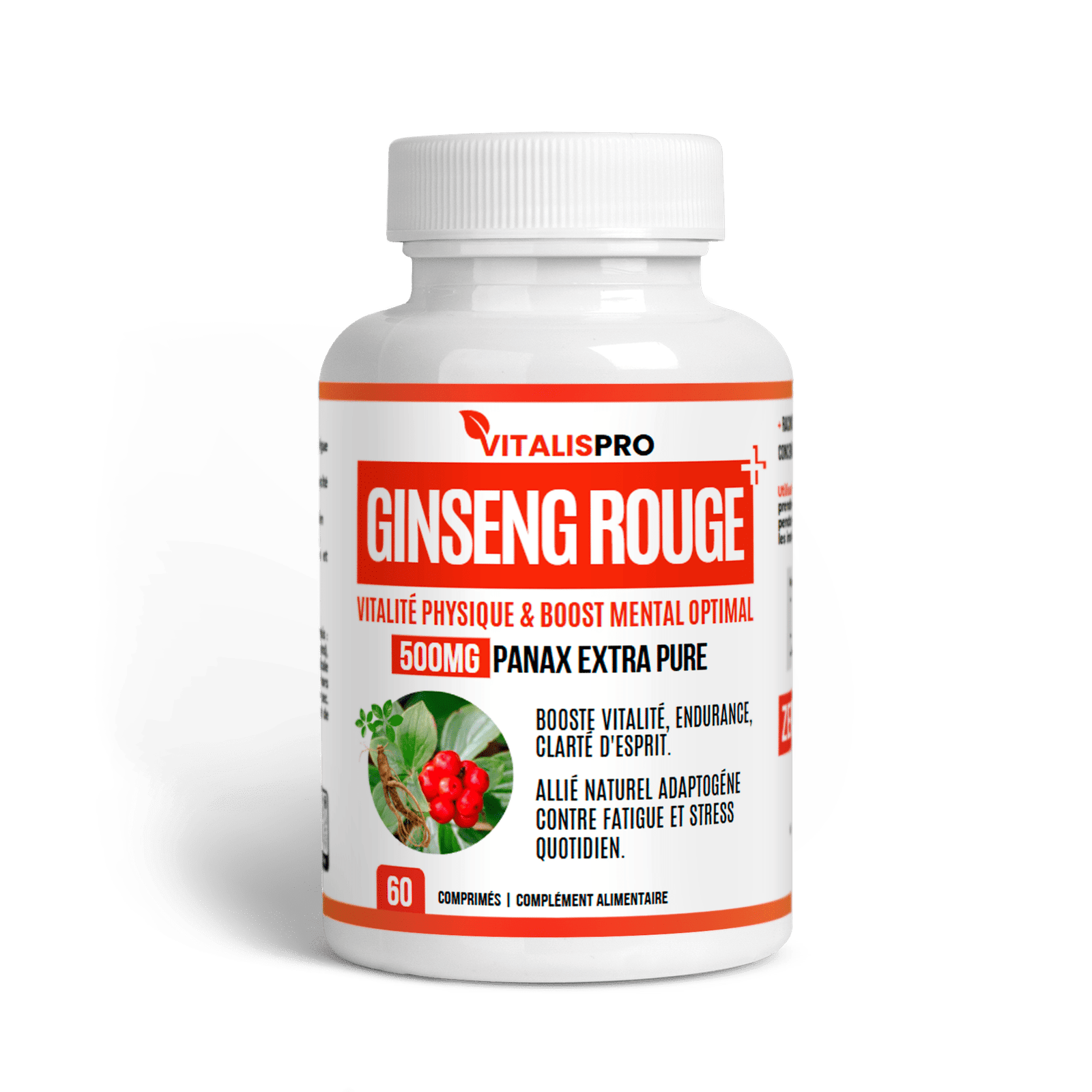
- Ginseng: this traditional Asian root is one of the most studied “adaptogenic” plants. A systematic review dedicated to its use against fatigue concluded that it is a promising candidate for supporting mental and physical vitality, while calling for larger trials.3
- Spirulina: this micro-algae is naturally rich in protein and iron, which explains its traditional use to support vitality and accompany periods of fatigue linked to insufficient intakes.
- Moringa: nicknamed the “tree of life,” it concentrates vitamins and minerals, and belongs to the traditions that link it to tone and resistance to everyday fatigue.
Here again, let us keep the right measure. These plants are not medicines, and they do not “cure” anything: they support a vitality already sustained by good sleep, a balanced diet and movement. Their value is real, but it is expressed within a whole, not as a replacement for the fundamentals. This is VitalisPro’s constant philosophy: to offer clear, authorised formulas, without ever turning a traditional plant into a promise of guaranteed results.
The smartest approach is not to pile up boxes hoping that five will do better than one. On the contrary, it is the considered combination of a few complementary ingredients, within a routine kept up over time. It is in this spirit that VitalisPro designed its Energy & Vitality Pack, which brings moringa, ginseng and spirulina together into one coherent set, made to accompany demanding days.
And because food remains the base of any lasting energy, this educational video explains simply how what we eat influences the brain and our level of vitality:
Fatigue in the Moroccan context: factors specific to our lifestyle
We cannot separate our sense of energy from the environment we live in. In Morocco, several factors intersect and make fatigue more common than we think. The first is the high heat of the long summer months, which increases the loss of water and minerals through sweat: without enough fluid intake, energy and concentration drop. The second is the pace of work and commuting in the big cities, where days grow longer and sleep time shrinks by the same measure.
The third factor concerns our eating habits, which sometimes lean toward meals rich in starches and fast sugars at certain times of the year; hence the spikes and crashes of energy that are hard to sustain. The good news is that awareness of these factors is already half the solution. When you know that your midday dip comes from a heavy meal or a quiet dehydration, you can act with a simple gesture: a glass of water, a lighter meal, a short walk. Fatigue is not a fate; it is most often a setting to be adjusted.
Our culinary heritage, in fact, offers valuable allies: vegetable soups, pulses, salads and fresh herbs, all present in traditional cooking, are perfect for maintaining steady energy. To discover the full range of our formulas designed in this spirit of support, our shop presents the whole line dedicated to everyday wellbeing.
Hydration: the simplest factor, and the most overlooked
It may seem obvious, but mild dehydration — which you do not even feel directly — is enough to lower concentration, mood and energy. The body loses water constantly, through breathing and sweating, especially in a hot climate. The practical rule: start the day with a glass of water, keep a bottle near you, and do not wait to feel thirsty before drinking — because thirst is a late signal. Add to water some fluid-rich foods, such as vegetables and fruit, and cut back on sugary drinks that offer an illusory, fleeting energy.
A useful marker: the colour of your urine. Pale means good hydration; dark invites you to drink more. It is a free, immediate signal that the body gives you several times a day. Getting into the habit of paying attention to it is like having a simple thermometer for your energy — long before you need any supplement.
A seven-day plan to restart your energy
You do not need to change everything at once: that is actually the best way to give up after three days. Start with small steps, realistic and sustainable, that add up:
| Step | What you put in place | Why it matters |
|---|---|---|
| Days 1-2 | Set a stable bedtime and drink a glass of water on waking | Regular sleep and morning hydration restart your energy |
| Days 3-4 | Add a source of protein at breakfast and walk for 20 minutes after lunch | Steady fuel and movement prevent the afternoon slump |
| Days 5-6 | Cut coffee after 2 p.m. and replace it with water or herbal tea | Late caffeine disrupts sleep and sustains fatigue |
| Day 7 | Review your week and keep the habits that made you feel better | Consolidating what works builds lasting energy |
Notice that none of these steps costs any real money: water, walking, a regular bedtime and a little protein are within everyone’s reach. This is a paradox worth pausing on: the strongest thing you can offer your energy is not a product you buy, but small daily decisions you make. The supplement comes after these foundations, like an extra brick on a solid base — never as an attempt to patch up an exhausting lifestyle. If, once these foundations are laid, you choose to add support, then it takes on its full meaning.

When fatigue deserves medical advice
Most everyday fatigue is linked to lifestyle and improves with better habits. But there are situations where fatigue stays deep and persistent despite enough sleep and a balanced diet. In these cases, it is wise not to rely on supplements alone, but to consult a qualified healthcare professional to check certain markers, such as iron, vitamin D or vitamin B12: a deficiency in any of them can be behind a lasting exhaustion. This article is educational; its aim is to help you ask the right questions, not to make a diagnosis.
Be attentive, too, to certain signals that call for medical advice rather than self-experimentation:
- unusual shortness of breath on light effort, or an unusual paleness;
- fatigue that worsens over time instead of improving;
- fatigue accompanied by weight loss, fever or any other worrying symptom;
- pregnancy, breastfeeding, an ongoing treatment or a known condition: always seek advice before starting a supplement.
The golden rule stays the same: a supplement adds; it does not fix a real imbalance on its own, and it does not diagnose or treat a condition. At the slightest doubt, consulting a healthcare professional is the first and safest option; we are here to accompany you with a clear, authorised product, not to replace the doctor. For any question, the VitalisPro team is available through our contact page.
Stories from our readers
These are testimonials from people who reviewed their habits and added natural support to their routine; individual experiences that differ from one person to another, which we present as they are, without exaggeration:
“I had been carrying a background fatigue for months. I did not look for a miracle: I stabilised my sleep, added protein in the morning and a walk after lunch, then included ginseng. After a few weeks, my afternoons became bearable again. No magic, but a real difference.” — Nadia, Casablanca
“What I liked was the honest message: no exaggerated promises, just support within a lifestyle. I have been taking Iron + B9 + B12 for two months, alongside habits I try to improve, and I feel less drained at the end of the day.” — Karim, Rabat
“Ordering was easy, with cash on delivery, and the formulas are clear and ONSSA-authorised. I appreciated the Energy & Vitality Pack for busy periods, and I reordered.” — Salma, Marrakech
Frequently asked questions about energy and fatigue
Conclusion: what do we take from all this?
Fatigue is almost never a fate: it is a signal the body sends us, and one we can learn to listen to. The best thing we can do for our energy is not to look for a wonder product, but to build our foundations: restorative sleep, stable nutrition, regular movement and enough hydration. That is the true source of vitality: daily, quiet, free of noise.
And within this frame, nutrients such as iron and the B vitamins, and tonic plants such as ginseng, moringa and spirulina, can be a valuable support — presented honestly for what they are, without exaggerated promises. If you choose to add them, opt for clear, authorised formulas from a transparent source, such as those in our shop. Because vitality is built through knowledge and habits, not through promises; and we believe trust is built through clarity, not exaggeration.
In the end, what distinguishes the aware person is neither avoiding every supplement nor believing every promise, but the ability to discern: to know what science says and what it does not, to place the fundamentals before the add-ons, and to give the body its fair time. If you leave this guide with that mindset, we have reached our goal — whether or not you choose our products. For direct contact, the VitalisPro team is available through our team page.
Sources and methodology
This guide relied on a review of documented general scientific sources (PubMed databases) and landmark publications, in addition to official bodies such as the World Health Organization (WHO) and the European Food Safety Authority (EFSA). We committed to presenting results at their true size: promising signals are presented as signals, not as definitive promises, and no therapeutic effect was claimed. The information here is for health education, not for diagnosis or a medical prescription.
References
- World Health Organization (WHO) — “Healthy diet.” who.int
- The effect of aerobic exercise training on feelings of energy and fatigue in sedentary young adults with persistent fatigue: a randomised controlled trial (2008). PubMed 18277063
- Ginseng as a treatment for fatigue: a systematic review (2018). PubMed 29624410
- Effect of iron supplementation on fatigue in non-anaemic menstruating women with low ferritin: a randomised controlled trial (2012). PubMed 22777991
- B vitamins and the brain: mechanisms, dose and efficacy — a review (2016). PubMed 26828517
- European Food Safety Authority (EFSA) — health claims (iron and B vitamins contribute to the reduction of tiredness and fatigue). efsa.europa.eu
The information in this article is provided for informational purposes for health education, drawing on documented general scientific references (PubMed, WHO and EFSA), and is not a substitute for consulting a qualified healthcare professional. Energy-support products are food supplements that do not replace a varied, balanced diet or a healthy lifestyle, and are not intended to diagnose, treat, cure or prevent any condition. Do not exceed the recommended dose. Pregnant and breastfeeding women, children under 18, and people with medical conditions or ongoing treatments are advised to consult a professional before use. Keep out of the reach of children.
