


Natural vitality and energy
After a day that never seems to end — the commute, the work, the home — many people in Morocco look for a natural way to recover a little energy, without exaggerated promises. That is when the name shilajit keeps coming up: in pharmacies, at herbalists, and all over social media. But between the authentic resin from the mountains and the doubtful imitations, it is not easy to tell them apart. This guide brings order, with verifiable sources and an honest tone.
This in-depth guide from VitalisPro does not sell you a miracle and does not promise any spectacular overnight result. It explains, in plain language, what shilajit really is, where its reputation comes from, what research has — and has not — shown around energy and vitality, what a reasonable dose looks like, and above all how to recognise an authentic, purified product rather than a paste of unknown origin. The goal is that you decide on the basis of knowledge, not advertising noise.
Let us agree on one principle from the start: shilajit is a food supplement, not a medicine. It does not “treat” anything and does not replace a balanced diet, sleep, or the advice of a healthcare professional. It is precisely from this realistic angle — support for everyday wellbeing and vitality within a healthy lifestyle — that we can talk about it calmly. Neither a cure-all nor a scam: an ancient traditional resin, with young research, to be handled with discernment.

محتوى الصفحة
- 1 In brief: what you will learn
- 2 In this guide
- 3 What is shilajit? The “moomiyo” of the mountains
- 4 Fulvic acid: the molecule at the heart of shilajit
- 5 Shilajit and vitality: what research does (and does not) say
- 6 Dosage and how to use shilajit
- 7 How to recognise authentic, purified shilajit
- 8 Shilajit in the Moroccan context
- 9 Precautions, side effects and limits
- 10 Stories from our readers
- 11 Frequently asked questions about shilajit
- 12 Conclusion: what to take away about shilajit
- 13 Sources and methodology
In brief: what you will learn
- Shilajit (or “moomiyo”) is a natural resin that forms very slowly inside high-mountain rocks, rich in fulvic acid and trace minerals.
- Its traditional reputation revolves around everyday energy, tone and vitality; clinical research exists but remains preliminary and limited: these are promising signals, not definitive proof.
- The common dose is between 300 and 500 mg per day of purified extract; you start low, respect the label, and “more” does not mean “better.”
- The most important point is purity: raw, unpurified shilajit may contain heavy metals. A serious product is purified, tested and dosed in standardised capsules.
- VitalisPro Shilajit 300 mg is an ONSSA-authorised food supplement, meant to fit inside a balanced lifestyle; it does not diagnose, treat or prevent any disease.
What is shilajit? The “moomiyo” of the mountains
Shilajit is a sticky natural material, ranging in colour from dark brown to black, that seeps from cracks in rocks at high altitude, mainly in the Himalayan ranges but also in other mountain systems around the world. It forms over several centuries, through the very slow decomposition of plant matter under the pressure of the rocks and the effect of altitude. In Arab and Persian tradition it is known as “moomiyo”, and it has long been used as a general body tonic.
A general review even described it as a traditional remedy reputed to help the body adapt to the harsh conditions of high mountains — hence its long history of use in those regions.2 This reputation should be taken for what it is: a traditional heritage that deserves interest and study, without immediately crediting it with virtues that modern science has not yet firmly established.
What sets shilajit apart is its composition. Purified shilajit brings together two main families of compounds: on one side fulvic acid and humic substances, on the other a long list of trace minerals and particular molecules called dibenzo-alpha-pyrones. It is this chemical signature, not some mysterious “energy,” that explains the scientific interest in this resin.
Resin, paste or capsule: in what form do you find it?
On the market, shilajit exists in three main forms: raw resin, the paste often sold loose by some herbalists, and the standardised extract capsule. The difference is not just practical. Paste of unknown origin is hard to dose and, above all, hard to check for purity. A dosed capsule — a 300 mg capsule, for instance — gives you a precise, consistent amount of an extract whose origin and purification are, in a serious product, documented. We will return to this point at length, because it is the heart of the matter.
Fulvic acid: the molecule at the heart of shilajit
If shilajit fascinates researchers so much, it is above all because of fulvic acid. It is a small organic compound produced by the very slow decomposition of plant matter. Its particularity: it has chemical groups able to bind minerals and carry them, which has earned it the nickname of a natural “transporter.” It is also credited with antioxidant properties, meaning an ability to help the body face free radicals.
What does this mean in practice? That fulvic acid is a genuinely interesting molecule from a chemical standpoint, and that most research on shilajit is concentrated around it. But “interesting in the lab” does not mean “guaranteed effect in humans.” The distance between a test tube and a benefit felt in daily life is exactly what serious science works to measure, with caution.
Alongside fulvic acid, purified shilajit provides trace minerals: iron, zinc, magnesium and others, in very small amounts. This is not a major source of minerals in the nutritional sense — your plate remains the primary source — but this richness contributes to shilajit’s traditional reputation as a “complete tonic.” Here too, let us keep perspective: a supplement supports a balanced lifestyle, it does not replace it.
This detail also explains why the quality of the extract matters so much. Two products bearing the same name “shilajit” can be radically different: one purified, tested and concentrated in fulvic acid; the other a raw paste liable to contain impurities. The name on the label says nothing about the real value; it is the purification and the control that make the difference.
Shilajit and vitality: what research does (and does not) say
Let us be honest from the outset: the clinical evidence on shilajit is thin and preliminary. This is not a plant studied in hundreds of rigorous trials, but a resin whose modern evaluation is still young. A review of the literature indeed recalled that, despite a long history of traditional use, shilajit still lacks a complete and robust scientific evaluation.2 This is the frame in which everything that follows should be read: signals, not certainties.
Energy and fatigue: the link with mitochondria
The most commonly advanced argument links shilajit to energy. The hypothesis: fulvic acid would support the work of mitochondria, the “power plants” of our cells. An experimental study conducted in animals observed that shilajit eased symptoms linked to a state of fatigue by acting on the stress hormone axis and on the bioenergetics of the mitochondria.4 This is an interesting result in terms of mechanisms, but it must be read for what it is: an animal study, which does not automatically translate into a promise for humans.
In humans, a small study explored the effect of shilajit supplementation on the drop in muscular strength induced by fatigue.3 Here again, this is a modest-sized piece of work, whose conclusions call for larger trials before any firm claim. Many people describe, with use, a sense of steadier tone through the day; this individual experience is valuable, but it does not replace solid scientific proof, and it varies from one person to another.
A more recent pilot study, conducted in healthy adults over 28 days, looked at the safety and at markers of physical performance and blood biomarkers after shilajit resin supplementation.6 This kind of work, carried out in healthy subjects, is useful for documenting the product’s tolerability; it nonetheless remains preliminary, on a small sample and over a short period. Our job is to present these signals at their true size, without inflating them to serve a sale.
Antioxidant, immunity and focus
On the antioxidant side, the interest in shilajit flows directly from fulvic acid and the compounds that accompany it; it is a recurring line of research, often cited to explain the resin’s reputation as a “background tonic.”2 Oxidative stress plays a role in cellular ageing, which is why shilajit is regarded as a possible support for the body’s overall balance — never as a substitute for good lifestyle habits.
Finally, on the side of focus and memory, a review described shilajit as a natural phytocomplex with potentially favourable activity for cognitive functions, with a possible role in protecting nerve cells.5 The key word here is “potentially.” This is a research lead, not a validated claim. For everyday mental tone, the essentials remain sleep, diet and stress management; the supplement comes after.
For a simple, calm overview of what shilajit is, how it is used, and its precautions, this informative video offers a good general introduction:
Shilajit, rarely on its own: the logic of synergies
In tradition as in modern formulas, shilajit is rarely used in isolation. It is often combined with other tonic plants, such as tongkat ali, red ginseng or maca, in a logic of synergy: complementary ingredients brought together to accompany vitality within a balanced lifestyle. For anyone who wants a complete approach to everyday tone, this considered combination makes sense — as long as it stays within an honest wellbeing frame, not one of performance promises.

Dosage and how to use shilajit
The most frequent question is: when should you take shilajit and at what dose? The general rule is simple: start with a low dose, then adjust as needed. For purified extract capsules, the commonly used range is between 300 and 500 mg per day. Many products, such as capsules dosed at 300 mg, make this precise control of the amount easier.
- Best time: preferably in the morning, or before physical activity, to accompany tone through the day.
- With or without food: shilajit is taken with water; many choose to take it with a meal to limit any digestive discomfort.
- Duration: a regular course over several weeks is often followed to allow time to observe, with breaks in between.
- Consistency above all: the body responds to regularity, not to shock doses. Doubling the amount to go faster is a false good idea.
The point to engrave: respect the dose stated on the product. Increasing the amount does not give better results; above all, it raises the risk of side effects. Wisdom, with shilajit as with any supplement, comes down to one thing: measured regularity, over time, rather than an occasional excess.
“The best service you can do your vitality is not to swallow more capsules, but to lay the foundations first: sleep, diet, movement. Shilajit adds to a house that is already solid; it does not build it on its own.”
How to recognise authentic, purified shilajit
Here is the heart of the matter, the part too many sellers pass over in silence. The market for authentic shilajit is flooded with doubtful products, because the raw material is rare and costly. The difference between a purified product and an imitation is not only about effectiveness: it is about safety. And this is a point that cannot be overlooked.
Why? Because raw, unpurified shilajit may contain impurities and heavy metals. Analyses of shilajit resins sold as “rejuvenator” products have revealed the presence of metals, including some potentially toxic ones, in raw samples.7 This is exactly why serious shilajit must be purified, tested and dosed before it reaches your hands. Purification is not a marketing detail: it is a safety step.
The practical criteria of a good product
- Source and transparency: a serious product states the origin (often the Himalayas) and gives clear information about the composition.
- Purification and control: the extract must be purified and tested, not a raw paste of unknown origin.
- Reliable form: dosed capsules (300 mg, for example) allow precise dosing, far safer than paste sold loose.
- Compliance and authorisation: in Morocco, make sure the product is registered and compliant with the standards of the National Office for Food Safety (ONSSA).
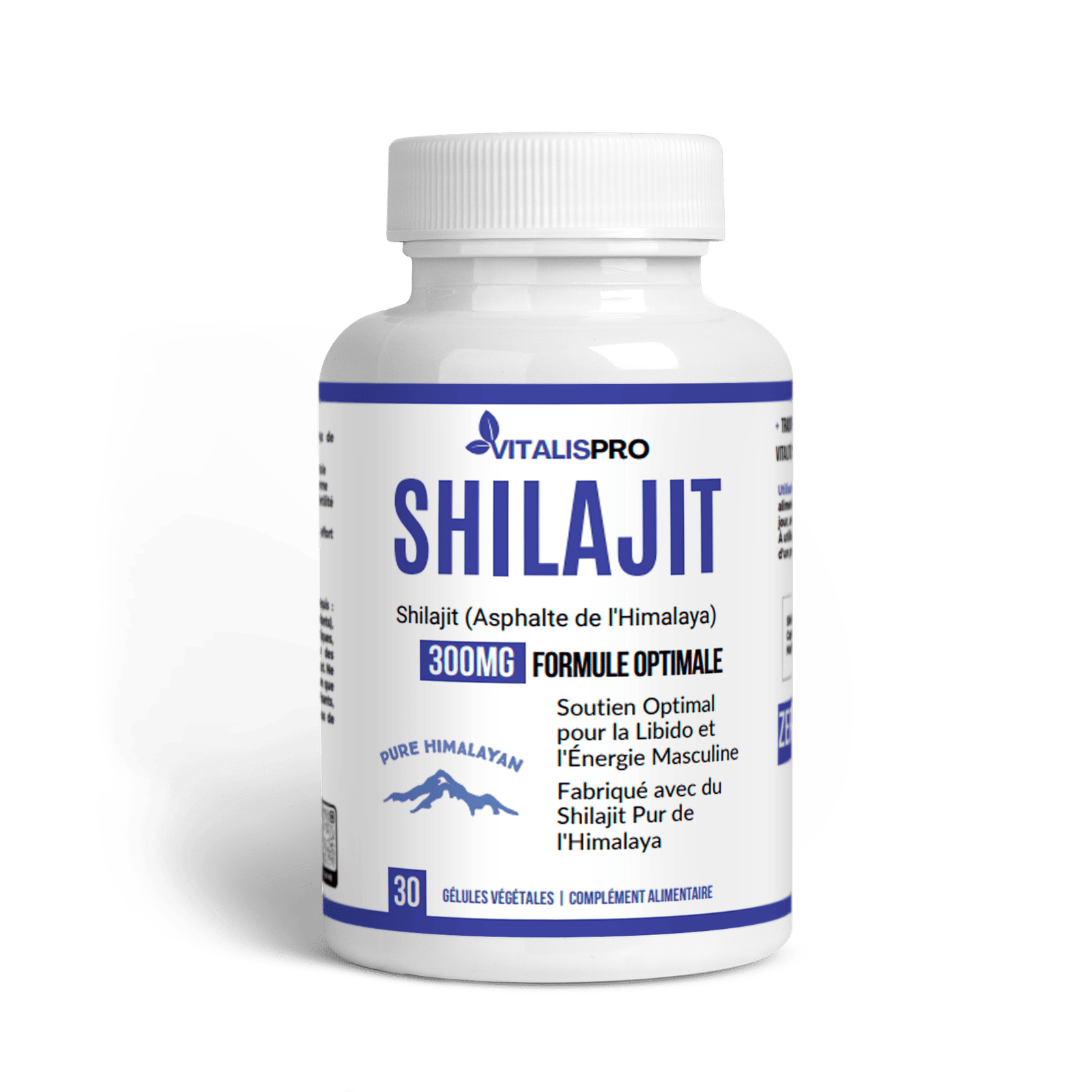
This is precisely the VitalisPro approach: to offer a purified shilajit, in capsules dosed at 300 mg, with a clear formula authorised by ONSSA. Far from anonymous paste, this control framework is what separates a supplement you take with peace of mind from a product you know nothing about. To go further on the question of quality, our team remains available through the contact page.
For a critical and balanced look at what to check before buying, this video offers a useful perspective:
Shilajit in the Moroccan context
Why does shilajit attract such interest in Morocco? Because it touches a very widespread concern: background fatigue and the desire for steadier tone, in an often busy daily life. Between long days, commuting and a sometimes exhausting rhythm, many look for natural support. Shilajit, with its ancient reputation as a “complete tonic,” fits into this search.
But let us stay clear-headed: no supplement makes up for insufficient sleep, an unbalanced diet or chronic stress. Shilajit can accompany a healthy lifestyle; it does not replace it. The first vitality “booster” is still free: enough sleep, a balanced plate rich in the vegetables and pulses of our culinary heritage, plenty of water, and a little movement each day.
Another local reality: the informal market. You sometimes find shilajit paste sold loose, without a label, without any guarantee of purification or compliance. This is exactly the kind of product to avoid, for the safety reasons mentioned above. Choosing a purified, dosed extract authorised by ONSSA means choosing peace of mind. To discover our full range dedicated to vitality, our shop brings together formulas designed in this spirit of clarity.
Precautions, side effects and limits
No responsible discussion of a supplement is complete without a frank section on its limits. Used as a purified extract and at reasonable doses, shilajit is generally well tolerated in healthy adults, as recalled by a review devoted to its safety and efficacy.2 This does not remove the need for caution in several specific situations:
- Raw, unpurified shilajit: this is where the main risks are concentrated (heavy metals, impurities). Hence the importance of a purified, tested product.
- Pregnancy and breastfeeding: it is not advised unless recommended by a healthcare professional.
- Children under 18: supplements are not intended for this age group without supervision.
- Particular conditions: people with clotting disorders, iron overload or high uric acid should seek professional advice before use.
- Ongoing treatment: in case of chronic medication, ask a healthcare professional for advice to avoid any interaction.
A last practical tip, often forgotten: do not start several new supplements at the same time. If you begin them together, it becomes impossible to know what helped you, what did nothing, and what may have caused discomfort. The smarter method: one element at a time, with enough time to observe. This calm, gradual approach protects both your health and your wallet.
The golden rule: a supplement adds; it does not fix a real imbalance on its own, and it does not diagnose or treat a condition. At any persistent or worrying symptom, consulting a healthcare professional remains the safest and first choice. This honest frame, also recalled by health authorities that encourage a sensible use of supplements, is the one in which we place each of our products.1
Stories from our readers
These are testimonials from people who added shilajit to their routine after first taking care of their basic habits; individual experiences that differ from one person to another, presented as they are, without exaggeration:
“I started VitalisPro shilajit after reviewing my sleep and diet. What I appreciate is steadier tone in the afternoon, where I used to fade before. No miracle, but a difference I feel over the weeks.” — Hamza, Casablanca
“What reassured me was knowing the product is purified and ONSSA-authorised, in dosed capsules. I was wary of the pastes sold everywhere. Here, at least, I know what I am taking, and ordering with cash on delivery was simple.” — Salma, Rabat
“I use it in the morning before training, as part of the vitality pack. I liked the brand’s honest message: no exaggerated promises, just support to fit into a healthy lifestyle. I reordered.” — Younes, Marrakech
Frequently asked questions about shilajit
Conclusion: what to take away about shilajit
Shilajit is an ancient traditional supplement, whose reputation as a “vitality tonic” rests on a long history of use and on promising — but still preliminary — research signals. On energy, antioxidant activity and focus, there are interesting leads around fulvic acid; they should be read honestly, as signals, not as guaranteed promises.
The key, with shilajit, comes down to two words: purity and measure. Choosing a purified, tested, dosed extract rather than an anonymous paste; respecting the dose; laying down first the fundamentals of a healthy lifestyle; and staying attentive to precautions. It is within this frame that VitalisPro Shilajit 300 mg and the Men’s Vitality Pack find their place: clear, ONSSA-authorised supplements, to fit into a balanced daily life.
In the end, what distinguishes the aware consumer is neither avoiding every supplement nor believing every promise, but the ability to discern: to know what science says and what it does not, to place the fundamentals before the add-ons, and to give the body its fair time. If you leave this guide with that mindset, we have reached our goal. For direct contact, the VitalisPro team is available through the our team page.
Sources and methodology
This guide relied on a review of documented general scientific sources (PubMed databases) and published work, in addition to official bodies such as the U.S. National Center for Complementary and Integrative Health (NIH/NCCIH) and the European Food Safety Authority (EFSA). Because the clinical evidence on shilajit is still thin, we presented each result at its true size: animal studies are flagged as such, small clinical studies as preliminary, and no therapeutic effect was claimed. The information here is for health education, not for diagnosis or a prescription.
References
- U.S. National Center for Complementary and Integrative Health (NIH/NCCIH) — using dietary supplements wisely. nccih.nih.gov
- Stohs S.J. — “Safety and efficacy of shilajit (mumie, moomiyo),” review (2014). PubMed 23733436
- Effects of shilajit supplementation on the fatigue-induced decrease in muscular strength. PubMed 30728074
- Shilajit attenuates fatigue symptoms by modulating the hypothalamic-pituitary-adrenal axis and mitochondrial bioenergetics (animal study). PubMed 22771318
- Carrasco-Gallardo C. et al. — “Shilajit: a natural phytocomplex with potential procognitive activity,” review. PubMed 22482077
- Safety and physical performance after shilajit resin supplementation in healthy adults: a 28-day pilot study (2025). PubMed 41613504
- Determination and quantification of metals in Ayurvedic shilajit using advanced analytical techniques. PubMed 34800280
- European Food Safety Authority (EFSA) — health claims and botanicals. efsa.europa.eu
The information in this article is provided for informational purposes for health education, drawing on documented general scientific references (PubMed, NIH and EFSA), and is not a substitute for consulting a qualified healthcare professional. Shilajit is a food supplement that does not replace a varied, balanced diet or a healthy lifestyle, and is not intended to diagnose, treat, cure or prevent any condition. Do not exceed the recommended dose. Pregnant and breastfeeding women, children under 18, and people with medical conditions or ongoing treatments are advised to consult a professional before use. Keep out of the reach of children.
