


Energy, vitality and natural balance
From the high plateaus of the Andes to the rocky crevices of the Himalayas come two natural elements with a long traditional history: maca and shilajit. For centuries, mountain peoples have turned to them to face harsh climates and physically demanding lives. Today, modern research studies their compounds with growing curiosity. This educational guide from VitalisPro explores this pairing around a single phrase — maca and shilajit — viewed not as a miracle promise, but as supportive elements for energy and balance within a healthy lifestyle.
This guide sells you no miracle and promises no “instant fix.” It explains, in plain language and with verifiable sources, what maca and shilajit are, why they interest researchers, and how they are viewed today within a complete system for supporting energy and wellbeing. The goal: that you leave with a decision grounded in knowledge, not in advertising noise.
Let us set a principle from the start: energy and balance are not the result of a single magic ingredient, but the outcome of a set of habits — sleep, movement, nutrition and stress management. Traditional elements like maca and shilajit come to complement these pillars, never to replace them. It is precisely from this realistic angle that talking about supplements makes sense — not before. This article is educational: it aims to inform you, not to diagnose any condition.
محتوى الصفحة
- 1 In brief: the key takeaways
- 2 Guide contents
- 3 Maca: the golden treasure of the Andes
- 4 Shilajit: the resin of the summits
- 5 Why are they seen as a complementary pairing?
- 6 Energy and balance: a system, not an ingredient
- 7 What the research observes
- 8 Fulvic acid: what intrigues researchers
- 9 Adaptogenic plants: the concept of maca
- 10 Dosage, mindful use and common mistakes
- 11 When to consult a health professional?
- 12 Experiences from our readers
- 13 Frequently asked questions about maca and shilajit
- 14 In conclusion: a traditional pairing within a mindful system
- 15 Sources and methodology
In brief: the key takeaways
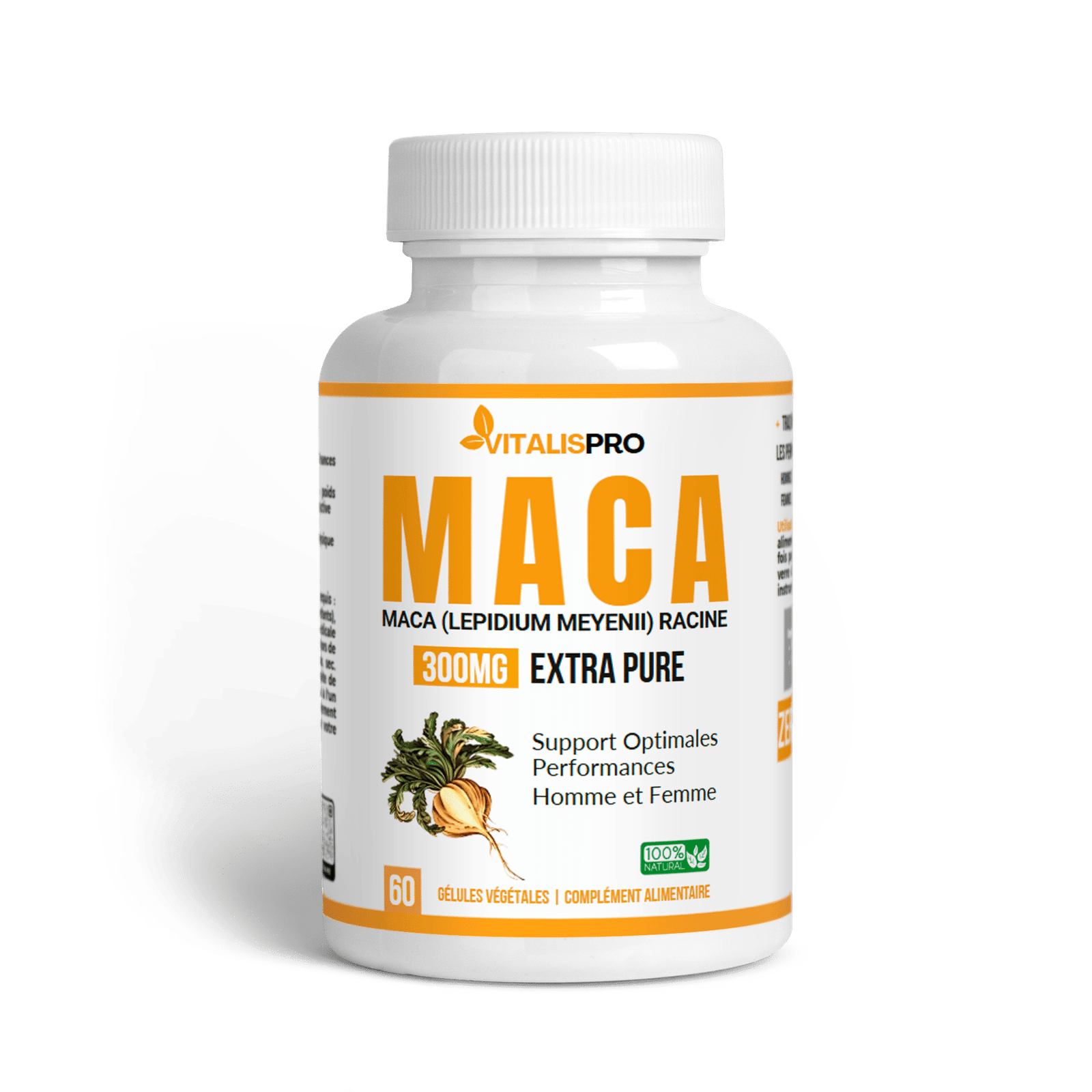
- Maca (Lepidium meyenii) is an Andean root rich in unique compounds called “macamides,” studied in the context of physical performance and vitality.
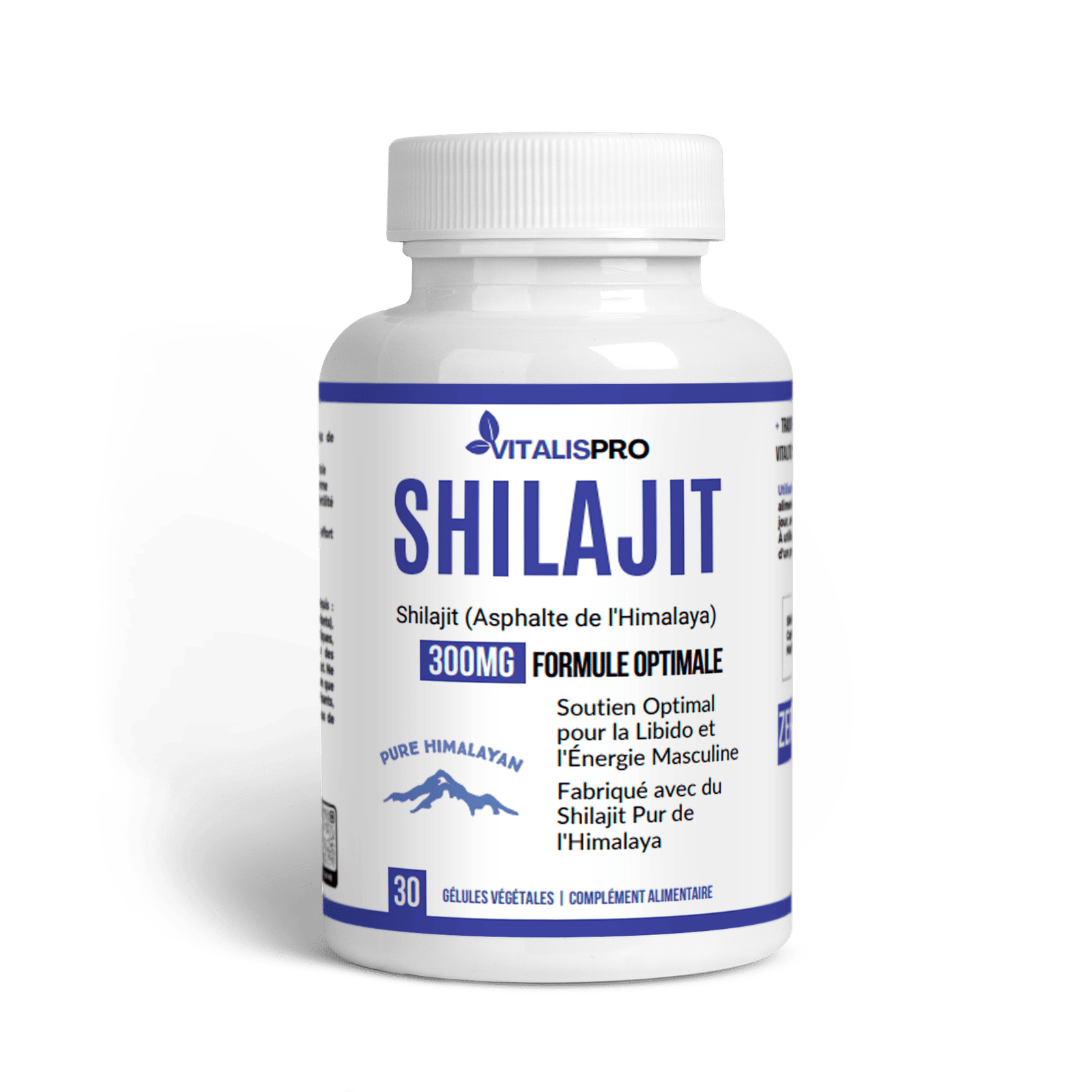
- Shilajit is a mountain resin rich in fulvic acid and trace minerals, traditionally associated with supporting energy and endurance.
- Together, maca and shilajit share a long heritage in demanding mountain environments; they are viewed as a supportive pairing within a balanced lifestyle.
- Energy is a system: sleep, movement, nutrition and stress management matter more than any supplement taken in isolation.
- The VitalisPro products Maca 300 mg, Shilajit 300 mg and the Men’s Vitality Pack are food supplements authorized by ONSSA; they are neither a medicine nor a substitute for the advice of a health professional.
Maca: the golden treasure of the Andes
Maca, known scientifically as Lepidium meyenii, is a root plant that grows in extreme conditions at very high altitude in the Peruvian Andes. For centuries, the region’s peoples have used it as a nourishing food and a supportive element for energy, vitality and endurance. The maca root stands out for its richness in protein, fiber, minerals and singular plant compounds — the famous “macamides.”
Today, interest in maca has moved from folk heritage to scientific study. Work published on Lepidium meyenii appears in medical databases such as PubMed, where its traditional role and possible interest are discussed in the context of physical performance and general vitality.2 One thing deserves an honest emphasis: the research is promising but still developing, and we present it as it is.
A root shaped by altitude
What makes maca fascinating is the environment in which it thrives: poor soils, sharp cold, constant wind and intense radiation above 4,000 meters. Few crops survive these conditions. Andean communities integrated it into their daily diet — dried and then ground into powder — to support a physically demanding way of life. This close link between the plant and a harsh environment partly explains maca’s traditional reputation as a supportive element for endurance.
Shilajit: the resin of the summits
Shilajit is a dark resinous material that forms over very long periods in the rocky crevices of high-mountain regions, particularly in the Himalayas. This traditional element attracts interest for its richness in singular compounds — first among them fulvic acid — along with a set of trace minerals. In the traditional medicine of mountain areas, shilajit earned a reputation as a supportive element for energy, endurance and overall balance.
Research published on shilajit and its compounds is available on PubMed, where researchers study its properties and composition; a recent pilot study, for instance, examined the tolerability and effect of a shilajit resin on physical performance and certain blood markers in healthy adults.4 This is still emerging research, approached with a responsible and cautious stance: shilajit is presented as a supportive element within a complete lifestyle, not as a standalone solution.
From tradition to a modern capsule
In its raw state, shilajit is a sticky, dense resin that mountain communities traditionally collected from rock faces, then purified before use. A modern, standardized form — a defined dose in a capsule — makes it far easier to use consistently and to know exactly what you are taking. This is where the honesty of the label matters most: a clear composition and a verified authorization tell you that the resin has been through a real quality pathway, rather than reaching you through informal, untraceable channels. The value is not in the exotic story of the resin, but in the clarity and consistency of the finished product, taken within a balanced everyday routine.
Why are they seen as a complementary pairing?
Despite their different geographic origins and natures — maca is a plant root, shilajit an organic mineral resin — one common denominator brings them together: a long traditional heritage of supporting energy and endurance in demanding mountain environments. It is this conceptual complementarity that leads many to view them as a pairing for supporting vitality and balance.
Maca is recognized for its role in supporting general energy and vitality, while shilajit stands out for its mineral richness and singular compounds. Together, they illustrate a single philosophy: that of traditional elements accompanying an already balanced system. It is important, however, to keep in mind the essential truth: such elements support a complete whole; they never work in isolation.
| Element | Origin | What sets it apart |
|---|---|---|
| Maca | Root from the high Andean plateaus (Peru) | Rich in macamides, protein, fiber and minerals; reputed to support energy and vitality |
| Shilajit | Resin from the rocky crevices of the Himalayas | Rich in fulvic acid and trace minerals; reputed to support energy and endurance |
| Common ground | Harsh mountain environments | A long traditional heritage of supporting vitality, now studied by research |
Energy and balance: a system, not an ingredient
It is important to stress one point: energy and vitality are not the result of a single magic element, but the outcome of a fine balance between several essential pillars that no supplement can replace:
- Good sleep: the foundation of the body’s regeneration and natural balance; chronic sleep deprivation is one of the greatest drains on energy.
- Regular movement: it supports circulation, energy and overall balance.
- A balanced diet: rich in elements that take part in natural energy metabolism.
- Stress management: chronic stress is one of the most draining factors for energy and balance.
Maca and shilajit come to complement these pillars, not to make up for neglecting them. The World Health Organization reminds us that a balanced and varied diet is a fundamental foundation for energy and general health.5 No capsule, however ancient its plant, will make up for degraded sleep or an entrenched sedentary lifestyle. This is a truth we prefer to state clearly, even if it does not “sell.”
“The best support for your energy is not a miracle bottle, but a system: sleep enough, move, eat a balanced diet and ease stress. Traditional elements like maca and shilajit add a brick; they do not build the house on their own.”
What the research observes
What does the science say, precisely? Let us be honest: the picture is interesting but unfinished. Regarding maca, a systematic review and meta-analysis examined its effect on physical performance in animals and humans, pooling several studies to draw a general trend while stressing the heterogeneity of the protocols.2 A double-blind, placebo-controlled clinical trial also observed, in healthy men, a modulation of an immune marker after exhaustive endurance exercise following supplementation with maca extract.3
Another systematic review and meta-analysis looked at the effects of maca in the context of cellular oxidative stress, a field that interests researchers seeking to understand how certain plant compounds interact with the body’s balance.6 Here again, the authors call for larger, more rigorous studies before any firm conclusion. In short: signals exist, but they are not definitive proof, and the difference between the two is exactly what separates serious knowledge from a hasty promise.
For shilajit, the clinical literature remains thinner: a recent pilot study explored the tolerability and effect of a shilajit resin on physical performance and certain blood markers in healthy adults,4 while preclinical work studied its interest in models of fatigue.7 These studies are preliminary and cannot be translated, for a healthy person, into a promise that a capsule will “fix” a lack of energy. European scientific authorities, including the European Food Safety Authority EFSA, have not approved specific health claims for these elements.8 We therefore present them for what they are: traditional elements with interesting but unfinished research.
Why so much caution if signals are there? Because rigorous science carefully distinguishes several levels: a laboratory experiment on cells, an experiment in animals, and a clinical trial in humans; then a small study versus a large one, and an isolated result versus a review pooling dozens of studies. Much of what is promoted about “energy-boosting plants” rests on the lowest level of that pyramid, then is presented as established truth. Our job is to put each signal back in its proper place, not to inflate it in the service of a sale. That is the difference between informing you and marketing to you.
For a simple, measured introduction to maca and its traditional uses, this informative video offers a general overview:
Why “the extract and the dose” matter more than the name
A point many overlook: the word “maca” or “shilajit” on the box is not enough. What matters is the quality of the extract, the purity of the raw material and the honesty of the stated dose. A powder of unknown origin may contain only a tiny fraction of what makes the plant interesting, whereas a product with a clear, authorized composition truly gives you what you think you are buying. This is why we always insist on ONSSA regulatory authorization: it is not a formality, but a control pathway that concerns the product’s safety and compliance.
Fulvic acid: what intrigues researchers
Among shilajit’s components, fulvic acid draws particular attention. It is an organic compound that forms naturally through the slow decomposition of plant matter over centuries. It intrigues researchers for its singular properties and its possible role in carrying trace minerals. The presence of fulvic acid alongside a palette of minerals is precisely what sets shilajit apart as a traditional element.
That said, research in this field remains developing, and the responsible approach views shilajit as a supportive element within a complete lifestyle, not as a solution in itself. We prefer to pass on this nuance rather than inflate a compound into a “miracle molecule”: that is the honesty we owe the reader.
For a balanced look at shilajit, between myth and reality, this informative video offers a measured perspective:
Adaptogenic plants: the concept of maca
Maca is often described as an “adaptogenic plant.” The scientific idea behind this term is that such elements may help the body adapt to different types of stress, rather than targeting a single specific function. In other words, they are thought to support the body’s overall balance instead of pushing it in one direction.
This is what makes them interesting in the context of energy and balance, which are by nature the outcome of several body systems working together. The mature understanding, however, is to view them as a supportive element within an overall lifestyle — never as a shortcut. The word “adaptogen” describes an interesting working hypothesis, not a guarantee of results.
Dosage, mindful use and common mistakes
When it comes to any plant-based or traditional element, a clear dose is an important factor for mindful use. Maca and shilajit supplements are generally used at a defined dose per day, within a program followed over several weeks before assessing how you feel, because the effects of plant-based and traditional elements are often gradual and cumulative. Realistic expectations and patience are an integral part of the right approach.
It is also wise to start with a single element to observe the body’s response, and to consult a qualified health professional in case of a medical condition, ongoing treatment, pregnancy or breastfeeding. Here are a few common mistakes we observe:
- Expecting an “instant result” from a single element, when energy and balance are built through a complete system and with patience.
- Neglecting the fundamentals — sleep, movement, nutrition — while betting everything on the supplement.
- Stacking several elements at once, which makes it hard to understand the body’s response.
- Exceeding the recommended dose, thinking that “more is better”: the body responds to consistency, not to shock doses.
The smart approach begins with correcting basic habits, then adds a supportive element at a clear dose, with patience and realistic expectations. You always build by strengthening the foundations before adding what complements them. For those who wish to bring together several traditional vitality elements in a single approach, VitalisPro offers a pack designed in this spirit.

You can also browse our full range dedicated to everyday wellbeing in our shop, where maca, shilajit and the pack sit alongside our other supportive formulas.
When to consult a health professional?
It is natural for energy levels to vary with life’s demands and with age, and to call for more mindful attention to lifestyle. However, if you notice a marked and persistent drop in energy despite a healthy lifestyle, it is wise not to rely on self-experimentation alone and to consult a qualified health professional for reassurance.
This article is educational: it aims to inform you and help you ask the right questions, not to diagnose a condition or prescribe an individual program. Reliable general information on nutrition is available via the MedlinePlus medical encyclopedia (U.S. National Library of Medicine).1 For any question about our products, the VitalisPro team is reachable via our team page.
Experiences from our readers
Here are testimonials from people who revisited their habits and added a traditional support to their routine; individual experiences that vary from person to person, presented as they are, without exaggeration:
“What I was mostly after was more consistency in my days. I first revisited my sleep and my meals, then added maca in the morning. After a few weeks, my energy feels steadier. No magic, but a difference I notice.” — Yassine, Casablanca
“What I liked was the honest tone: no spectacular promise, but a support within a lifestyle. I use shilajit as part of habits I’m trying to improve, and I appreciate the clear, authorized formula.” — Khalid, Rabat
“Ordering was simple, with cash on delivery. I chose the pack to bring several elements together in one approach, keeping realistic expectations. I appreciate the transparency and I reordered.” — Mehdi, Marrakech
Frequently asked questions about maca and shilajit
In conclusion: a traditional pairing within a mindful system
The essential message of this guide is that maca and shilajit are two traditional elements that bring together a long heritage of supporting energy and balance, and a growing research interest. Maca, with its macamide-rich root; shilajit, with its resin rich in fulvic acid and trace minerals — both take on meaning within a complete system: enough sleep, regular movement, a balanced diet and stress management.
Use them at a clear dose, with realistic expectations and patience, within a mindful lifestyle, and start with a single element. And if you notice a marked and persistent drop despite all this, consulting a qualified health professional remains the wisest step. This article is educational: it aims to inform you, not to diagnose a condition. Energy and balance are a project you build with awareness and patience. For a direct exchange, the VitalisPro team is present via our team page.
Sources and methodology
This guide draws on a review of general, verifiable scientific sources (PubMed databases) and published systematic reviews, as well as official bodies such as the U.S. National Library of Medicine (MedlinePlus), the World Health Organization (WHO) and the European Food Safety Authority (EFSA). We have committed to presenting the findings in proportion: promising signals are presented as signals, not as categorical promises, and no therapeutic effect has been claimed. The information gathered here is intended for health education, not for diagnosis or medical prescription.
References
- MedlinePlus — Nutrition (U.S. National Library of Medicine). medlineplus.gov
- Effects of Maca (Lepidium meyenii Walp.) on physical performance in animals and humans: a systematic review and meta-analysis (2024). PubMed 39796542
- Enhancement of interferon-γ secretion by Lepidium meyenii extract supplementation after exhaustive endurance exercise in healthy men: a double-blind, placebo-controlled trial (2025). PubMed 39781531
- Tolerability and effect of a shilajit resin on physical performance and blood biomarkers in healthy adults: a 28-day open-label pilot study. PubMed 41613504
- World Health Organization (WHO) — Healthy diet (fact sheet). who.int
- Effects of Maca (Lepidium meyenii Walp) on cellular oxidative stress: a systematic review and meta-analysis (2024). PubMed 39334705
- Shilajit and preclinical models of fatigue: an experimental study (HPA axis and mitochondrial bioenergetics). PubMed 22771318
- European Food Safety Authority (EFSA) — health claims. efsa.europa.eu
The information in this article is provided for informational purposes, for health education, drawing on documented general scientific references (PubMed, NIH/MedlinePlus, WHO, EFSA); it is not a substitute for the advice of a qualified health professional. Maca and shilajit are food supplements that replace neither a varied and balanced diet nor a healthy lifestyle, and are not intended to diagnose, treat or prevent any condition. Do not exceed the recommended dose. Pregnant or breastfeeding women, children under 18, and people with a medical condition or on treatment are advised to consult a professional before any use. Keep out of the reach of children.
