


Wellbeing, quality and an informed choice
In a market crowded with products and promises, a fair question keeps coming back to many of us: how do I go about choosing a food supplement I can genuinely trust? Trust is not built on slogans, but on clear markers: the quality of the source, a transparent dose, and honest information. A supplement is not a trivial product; it is something you bring into your body, and that deserves demanding criteria. This educational guide from VitalisPro calmly explains what sets a trustworthy supplement apart, so you can decide with real understanding.
Our goal is not to frighten you, nor to sell you a miracle. It is to give you the keys to read a label, ask the right questions and tell a serious product from a vague one. Because the difference between the two is not always obvious: it hides in details that few people take the time to examine. Once you hold these markers, you stop being a passive consumer and become an informed chooser.
Let us set a principle from the start: no supplement, however good, replaces a varied diet, enough sleep, and a balanced lifestyle. A supplement adds; it does not build the house on its own. It is precisely within this honest frame that choosing a good product makes full sense — as an extra brick on a solid base, not as a quick patch for neglected habits.
So we will walk together through the four pillars of a trustworthy supplement — quality, authorisation, dosage, transparency — then the practical steps for reading a label, setting realistic expectations and knowing when to seek professional advice. At each step, we will show how VitalisPro applies these same standards to its own products, not by slogan, but by consistency.

محتوى الصفحة
- 1 In brief: what you will learn
- 2 In this guide
- 3 Why choosing a supplement deserves a method
- 4 Pillar 1 — The quality of the source and manufacturing
- 5 Pillar 2 — ONSSA authorisation and conformity
- 6 Pillar 3 — Real dosage and standardisation
- 7 Pillar 4 — Transparency: source, price, honest information
- 8 Reading a label: a step-by-step guide
- 9 Realistic expectations: what a supplement really does
- 10 Patience and consistency: evaluating a supplement well
- 11 When to seek professional advice
- 12 Stories from our readers
- 13 Frequently asked questions about choosing a food supplement
- 14 Conclusion: trust is a choice you build
- 15 Sources and methodology
In brief: what you will learn
- Choosing a food supplement you can trust rests on four pillars: the quality of the source, official authorisation (ONSSA in Morocco), a clear and standardised dose, and transparent information.
- ONSSA authorisation is not a formality: it is a control pathway concerned with the product’s safety and conformity, unlike items sold through informal channels.
- The real dose matters more than the name on the box: an active whose quantity and chemical form are clearly stated (“300 mg”, form specified) tells you what you are actually taking.
- Transparency — source, price, honest information, clearly stated precautions — is the sign of a brand that respects its reader’s intelligence.
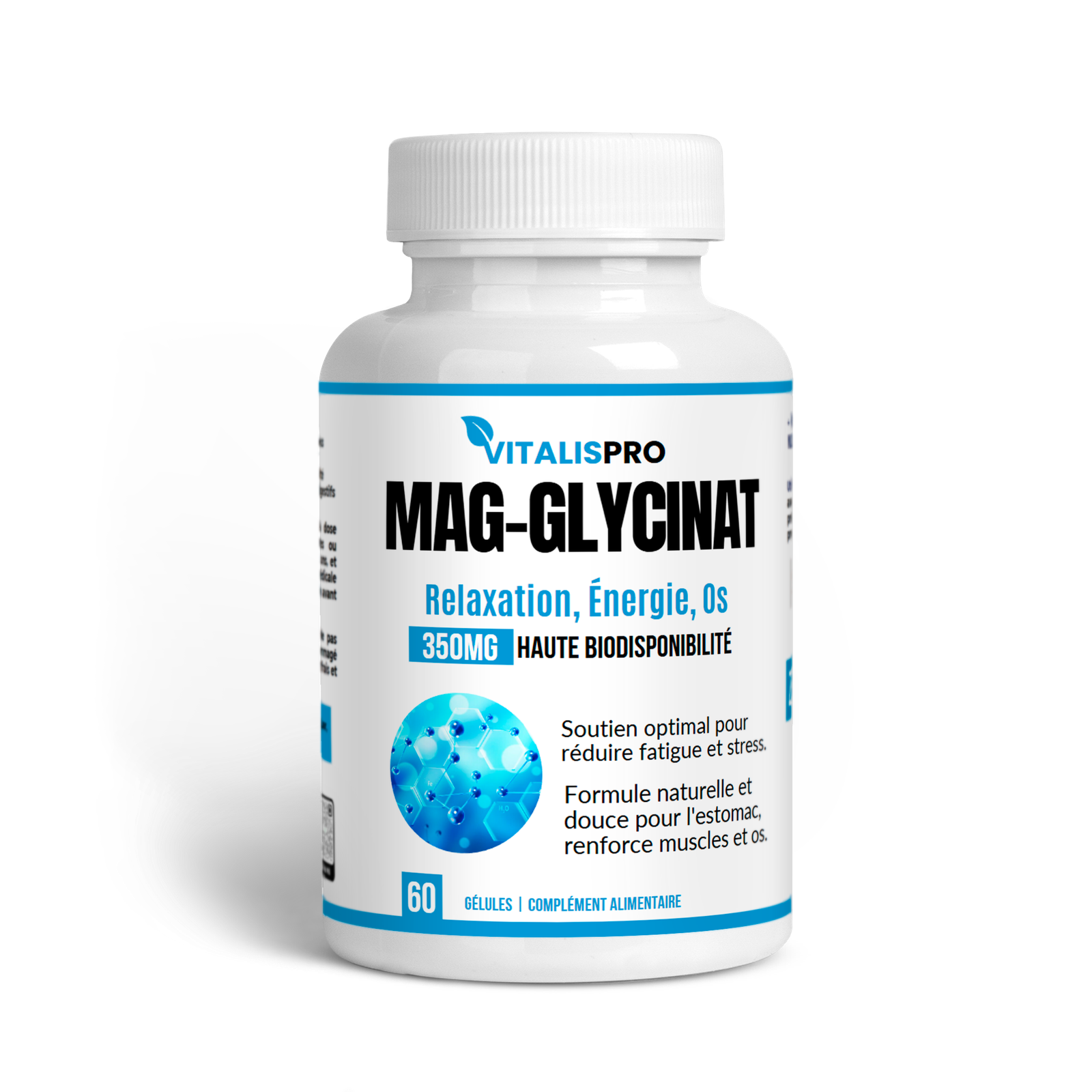
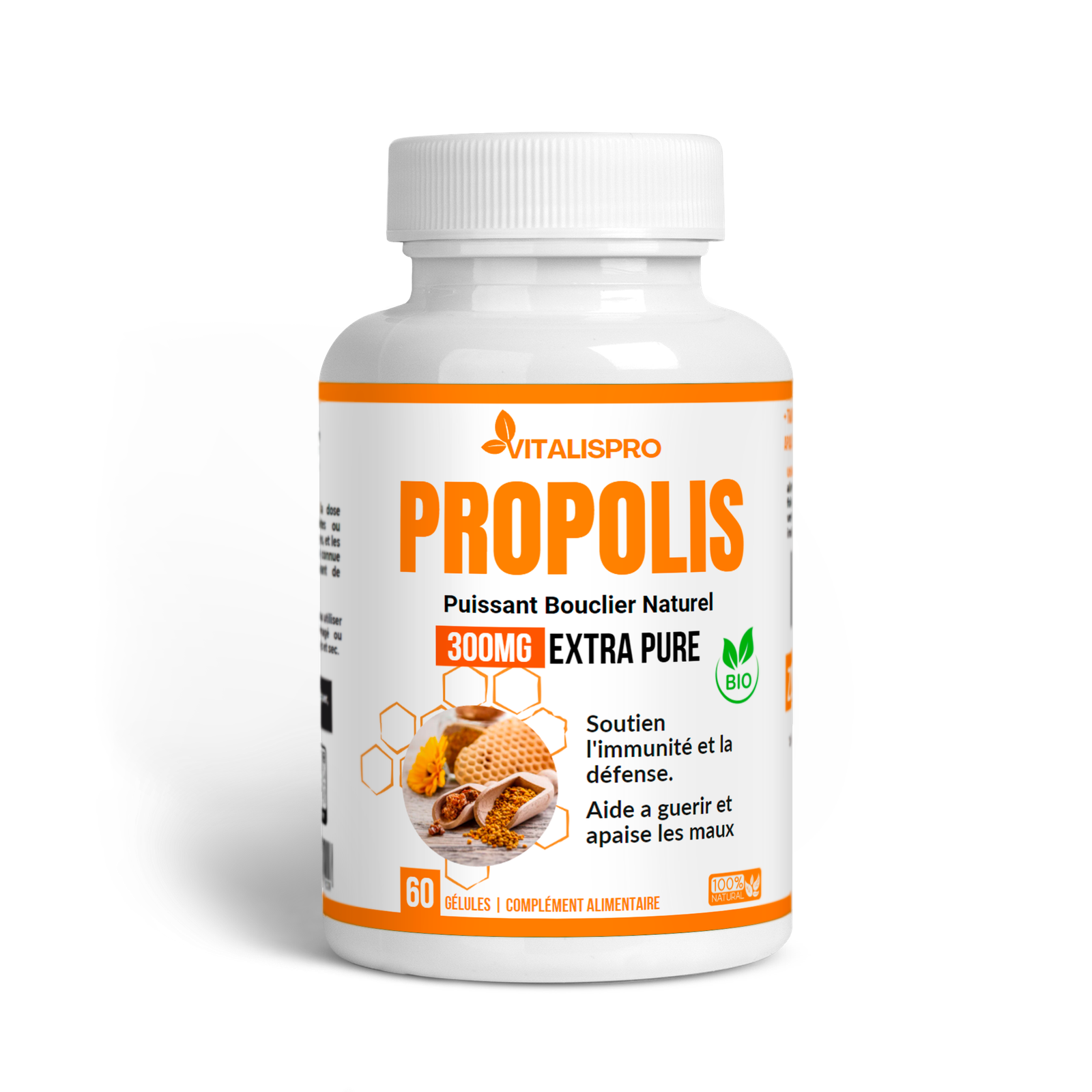
- VitalisPro products such as Magnesium Bisglycinate 350 mg, Propolis 300 mg and Reishi 300 mg illustrate these standards: stated doses, ONSSA authorisation, transparent pricing and delivery across Morocco.
Why choosing a supplement deserves a method
Facing a pharmacy shelf, social-media ads, or countless online shops, the consumer is often left alone before a bewildering abundance. The boxes look alike, the promises repeat, and prices range from single to triple for what seems to be “the same product.” This confusion is no accident: it benefits those who bet on appearance rather than substance. The first wise decision, then, is to slow down and refuse the impulse buy.
A food supplement is neither a sweet nor a gadget. It is a concentrate of actives you will ingest, sometimes daily, over several weeks. As such, it deserves the same attention you would give a food you choose for your family. Public-health authorities put it plainly: a supplement should be chosen with discernment, keeping in mind that it comes to complement a diet, not to replace it.1
The good news is that discernment can be learned. It is not about becoming a chemist, but about knowing a few simple markers and checking them before buying. These markers fit into four pillars we will detail, and then a handful of practical steps. Once this reading grid is yours, you keep it for life — for any supplement, of any brand.
“The best reflex before a supplement is not to ask ‘does it work?’, but first ‘do I really know what I am buying?’. Trust begins with clarity, not with a promise.”
Pillar 1 — The quality of the source and manufacturing
A supplement’s trustworthiness begins at the root: the quality of its ingredients and the way it is made. An active from a pure source, processed with controlled methods, is the foundation of a product that deserves your trust. Conversely, a raw material of unknown origin may carry impurities, an uncertain concentration of active, or even unwanted substances. Quality, then, is not a cosmetic detail: it is the heart of the difference between a reliable product and one you keep questioning.
This requirement plays out at several levels: the choice of supplier, the traceability of the raw material, checks on receipt, and the conditions of manufacturing and packaging. Each of these stages is a chance either to guarantee quality or to sacrifice it for a lower price. That is why two products carrying the same name on the label can, in reality, be radically different inside the bottle.
The risk of informal products
The most concrete danger concerns products sold outside controlled channels: parallel markets, undeclared imports, purchases on platforms with no guarantee. The scientific literature regularly documents cases of falsified or contaminated supplements. One analytical study, for example, detected and quantified hidden pharmaceutical molecules (such as sildenafil or tadalafil) in supplements sold as “natural,” unknown to the consumer.2 Such adulterations, invisible to the eye, show why the source and the control framework matter as much as the product itself.
VitalisPro is committed to selecting raw materials of studied quality and to working with controlled processes, because what enters your body deserves that rigour. This commitment is not a marketing line: it is a non-negotiable starting condition, without which the rest would make no sense.
In Morocco, authorisation from the National Office for the Sanitary Safety of Food Products (ONSSA) is a major marker of conformity. This authorisation is not a mere piece of paper: it signals that the product has passed through a recognised regulatory framework, with safety and conformity requirements. It is a guarantee of oversight that a product arriving through informal channels will never offer you.
Concretely, ONSSA authorisation is part of the contract of trust between the product and the consumer. It does not prove that a supplement is “miraculous” — no authorisation does — but it certifies that the safety and labelling framework has been respected. It is a regulatory foundation, not a promise of efficacy; the two must be told apart honestly.
VitalisPro is committed to having its products authorised by ONSSA, out of respect for the reader and for local standards. To learn more about this approach, our page on quality and ONSSA authorisation details what this control means in practice. Consulting official information on the safety of foods and supplements, such as that published by the European food-safety authorities, is also a healthy reflex.5
Pillar 3 — Real dosage and standardisation
Here is one of the most decisive criteria, and yet one of the most neglected: the real dose. Knowing exactly how much active you consume, and that the active is standardised, is what separates a serious product from a vague one. A supplement that states “300 mg” of a precise active, with its chemical form, respects you: it tells you what you are taking. A product that stays vague on its quantities, or drowns the active in a “proprietary blend” with no numbers, leaves you in the dark.
Standardisation — that is, the guarantee of a defined content of active compound — is especially important for plant extracts. The word “plant” on a box says nothing about the real concentration of active principle. A powder of unknown origin may contain only a trace of what matters, while an extract with a clearly stated content gives you what you actually think you are buying. Transparency about the dose is not a constraint: it is respect for the consumer’s intelligence.
The dosage problem is not only about “how much”: it also touches on the honesty of the label. Analytical work has shown that some products on the market display contents that do not match their real make-up: a quantitative assessment of commercial green-coffee extract supplements, for example, revealed cases of mislabelling, with declared amounts far from measured ones.3 This is a reminder that a stated dose is only worth as much as the rigorous, controlled source behind it.
The form of the active changes everything
Beyond quantity, the chemical form of an active shapes how the body absorbs it. Magnesium is the classic example: not all forms are equal when it comes to absorption. Research comparing the bioavailability of different magnesium salts observed differences between organic and inorganic forms.4 That is why a label stating “bisglycinate” rather than a vague “magnesium” gives you useful information: it tells you not only how much, but in what form.
VitalisPro is committed to displaying clear doses on its labels and to specifying the form of the actives when it matters. This standard runs through the whole range, from magnesium to plant extracts: you should never have to guess what your supplement contains.
To go deeper into reading a dose and telling real markers from misleading claims, this educational video offers a calm and useful overview:
Pillar 4 — Transparency: source, price, honest information
Trust is built on sincerity. A trustworthy supplement does not exaggerate its promises and does not hide its information. Transparency means clearly stating the composition, the source, the price, but also the precautions and limits. A brand that tells you “here is what science supports, and here is what still belongs to traditional use” respects you more than a brand that promises the moon.
Transparency on price deserves a special note. An abnormally low price should make you wonder: where does the saving come from? From the quality of the raw material? From the absence of control? Conversely, a high price is not an automatic guarantee of quality either. The right marker is not price alone, but the relationship between the price and what is actually offered: dose, form of the active, authorisation, traceability.
Transparency is, finally, the consistency of the message. Health authorities remind us that a supplement adds to a balanced diet, without ever replacing it; this general frame weighs more than any single active.6 An honest brand builds this message in rather than working around it. VitalisPro is committed to sincere educational content that distinguishes what science supports from what remains traditional, and that states precautions clearly.
This honesty has a cost: it rules out tempting shortcuts and easy promises. But that is exactly what gives value to a lasting relationship between a brand and its customers. You can discover our whole range, designed in this spirit, in our shop, and meet the people behind the brand on our team page.
Reading a label: a step-by-step guide
The label is the product’s identity card. Learning to read it turns you, in a few minutes, from a passive buyer into an informed chooser. Here are the markers to check, in order:
| What you look for | Why it matters | The right reflex |
|---|---|---|
| The words “food supplement” | They confirm the product’s regulatory frame | Check that they appear clearly on the packaging |
| The name of the active and its dose | It is the heart of what you take | Look for a precise quantity (e.g. 300 mg) and the form |
| The full list of ingredients | It reveals excipients, additives and allergens | Prefer clear formulas, without needless clutter |
| The recommended daily dose | It guides safe, consistent use | Never exceed the stated dose |
| Precautions and warnings | They protect sensitive groups | Read the pregnancy, breastfeeding and under-18 notes |
| The expiry date and storage | They ensure the product’s integrity | Check the date and storage conditions |
| Official authorisation (ONSSA) | It certifies regulatory conformity | Confirm its presence, especially outside official channels |
Notice that most of these checks take only a few seconds. Yet this small reading effort is one of the most protective habits you can adopt. A product that makes this information easy to find respects you; a product that makes it vague or hard to find sends you, in effect, a signal. VitalisPro is committed to labels that are readable and honest, with no grey areas.
To round out this approach with a documented look at false promises and how to keep a critical eye, this consumer-focused report offers instructive insight:
Realistic expectations: what a supplement really does
An essential part of trust is understanding what a supplement can bring — and what it cannot. A food supplement is a supportive element within an overall lifestyle. It replaces neither a balanced diet, nor restorative sleep, nor physical activity, nor the follow-up of a professional when one is needed. Realistic expectations protect you both from disappointment and from exaggerated promises.
This clarity also applies to vocabulary. A supplement “contributes to,” “takes part in” or “supports” wellbeing; it does not “cure” and does not “treat.” This distinction is not just legal caution: it reflects the real state of knowledge. Scientific authorities strictly frame health claims, and a serious brand works within that frame rather than around it with flattering wording.
Understanding the true role of a supplement is, in itself, part of choosing it well. The informed consumer does not expect a capsule to make up for neglected habits; they add it to an already healthy base, to give a targeted boost. VitalisPro is committed to this honesty in its message: a supplement complements, it does not replace.
Patience and consistency: evaluating a supplement well
Many actives, especially plant-based, act in a gradual and cumulative way, not immediately. Evaluating a supplement therefore calls for regular use over several weeks, within a sustained programme, before you judge your experience. Impatience, or hopping from one product to another, deprives you of honest observation. The intelligent approach begins with one active at a time, a clear dose, consistency, and attentive listening to your body.
This method has a double benefit. First, it protects your health: by introducing one element at a time, you know precisely what helps you, what does nothing, and what might cause any discomfort. Second, it protects your budget: randomly stacking boxes raises the bill without improving results. Wisdom often comes down to one word: simplicity.
Trust is not built in a day, but through a conscious, patient experience. That, too, is what it means to choose a supplement responsibly: accepting that the body has its own rhythm, and giving it the time it is due. VitalisPro is committed to supporting this approach with clear products, built around a single well-dosed dominant active, rather than opaque blends.

When to seek professional advice
Choosing with confidence also means knowing when to ask for specialist advice. If you take medication, if you live with a particular health condition, if you are pregnant or breastfeeding, or if the user is under 18, it is wise to consult a qualified healthcare professional before starting any supplement. This is not excessive caution: it is part of a responsible choice.
Some plants and actives can interact with ongoing treatments, or be inadvisable in specific situations. A healthcare professional has the full context of your situation to guide you; no article, however well documented, replaces that personalised advice. Asking for advice at the right moment is not a sign of hesitation, but of maturity in managing one’s health.
VitalisPro is committed to reminding readers of these precautions clearly, on every product and in every piece of content. For any question about our products or their use, our team remains reachable through our contact page. We are here to accompany you with a clear, authorised product, not to replace the healthcare professional.
Stories from our readers
These are testimonials from people who adopted this informed-choice approach; individual experiences that differ from one person to another, presented as they are, without exaggeration:
“Before, I bought a bit at random, trusting the packaging. Since I started checking the dose and the ONSSA authorisation, I choose far better. I began with magnesium bisglycinate, a single product, and I finally know what I am taking.” — Nadia, Casablanca
“What convinced me was the transparency: the price shown, the form of the active, the precautions written in black and white. I took propolis over the winter, following the dose, and I appreciate not being treated as a naive customer.” — Hamza, Fès
“I learned to read a label thanks to guides like this. Now, a product that stays vague on its quantities, I put back. I use reishi consistently, without expecting a miracle, and that patience suits me.” — Salma, Rabat
Frequently asked questions about choosing a food supplement
Conclusion: trust is a choice you build
The essential message of this guide is that choosing a food supplement with confidence is not a matter of luck, but a conscious decision built on clear markers: the quality of the source and manufacturing, authorisation and conformity, the real, standardised dose, and sincere transparency of information. Add to that a careful reading of the label, realistic expectations, patience in evaluation, and a professional consultation at the right moment, and you have a complete frame for choosing with confidence.
This frame is now yours. It holds for any supplement, of any brand, in any shop. It makes you a consumer who decides, rather than one who is sold to. VitalisPro is committed to this standard across its range, not by slogan, but by consistency: because your trust deserves that rigour, and because a lasting relationship is built on clarity, not exaggeration.
In the end, the most precious thing is not this or that product: it is your ability to choose with discernment. If you leave this guide with that ability, then we have reached our goal, whether or not you choose our products. And if you would like to discuss it, the VitalisPro team is available through our contact page and our team page.
Sources and methodology
This guide relied on a review of documented general scientific sources (PubMed databases) and published analytical work, in addition to official bodies such as the U.S. National Center for Complementary and Integrative Health (NIH/NCCIH), the European Food Safety Authority (EFSA) and the World Health Organization (WHO). We committed to presenting results at their true size: quality markers are presented as markers, and no therapeutic effect was claimed. The information here is for consumer education, not for diagnosis or a medical prescription.
References
- U.S. National Center for Complementary and Integrative Health (NIH/NCCIH) — “Using Dietary Supplements Wisely.” nccih.nih.gov
- Detection and quantification of sildenafil and tadalafil in dietary supplements marketed as natural sexual enhancers (2025): supplement adulteration. PubMed 41165181
- Chlorogenic acids and caffeine in commercial green coffee bean extract supplements: quantitative assessment and evidence of mislabelling (2026). PubMed 42154619
- Study of magnesium bioavailability from ten organic and inorganic Mg salts (2005). PubMed 16548135
- European Food Safety Authority (EFSA) — food supplements. efsa.europa.eu
- World Health Organization (WHO) — healthy diet. who.int
The information in this article is provided for informational purposes for consumer education, drawing on documented general scientific references (PubMed, NIH, EFSA, WHO), and is not a substitute for consulting a qualified healthcare professional. Food supplements replace neither a varied, balanced diet nor a healthy lifestyle, and are not intended to diagnose, treat, cure or prevent any condition. Do not exceed the recommended dose. Pregnant and breastfeeding women, children under 18, and people with medical conditions or ongoing treatments are advised to consult a professional before use. Keep out of the reach of children.
