


Beauty and natural balance
When we talk about skin radiance, one name keeps coming up: vitamin C. This small nutrient, familiar to us all from oranges and lemons, plays a far bigger role than we tend to imagine. It does not simply support the body’s defences: it is a key partner in the normal formation of collagen, the protein that gives our skin its structure and firmness. So what exactly is the link between vitamin C, collagen and radiance? And how can it become one piece of a conscious skincare routine, from within?
This guide from VitalisPro does not sell you a miracle formula and does not promise “instant radiance.” Instead, in plain language and with sourced references, it explains what vitamin C actually is, why it is inseparable from collagen, how it helps protect cells from oxidative stress, and where the honest limit of the evidence lies. The goal is that you leave with a decision built on knowledge, not on advertising noise.
Let us agree on one principle from the start: true radiance does not come only from what we apply to the skin, but also from what happens inside. The skin is a living organ, built from our daily intake. Our job is not to hunt for a wonder capsule, but to give the skin the building blocks it needs within a balanced lifestyle. It is precisely from this realistic angle that talking about vitamin C and supplements begins to make sense, and not a moment before.

محتوى الصفحة
- 1 In brief: what you will learn
- 2 In this guide
- 3 What is vitamin C and why do we need it?
- 4 Vitamin C and collagen: a scientifically established link
- 5 Radiance comes from within: the antioxidant action
- 6 The natural sources of vitamin C
- 7 The vitamin C + marine collagen duo
- 8 Vitamin C in the Moroccan context
- 9 The fundamentals of lasting radiance
- 10 How to fit vitamin C into your routine
- 11 Precautions, interactions and limits
- 12 Stories from our readers
- 13 Frequently asked questions about vitamin C and skin
- 14 Conclusion: what do we take from all this?
- 15 Sources and methodology
In brief: what you will learn
- Vitamin C (ascorbic acid) is an essential, water-soluble vitamin: the body can neither make it nor store it in large amounts, which is why a regular dietary intake matters.
- According to the claims approved by EFSA, vitamin C contributes to normal collagen formation for the normal function of the skin, and contributes to the protection of cells from oxidative stress.4
- Radiance is not a magical effect: it flows from the health of the cells and the structure of the skin, supported by a colourful diet, enough hydration and sun protection.
- The fundamentals — varied fruit and vegetables, sleep, hydration, sun protection — matter far more than any single supplement taken in isolation.
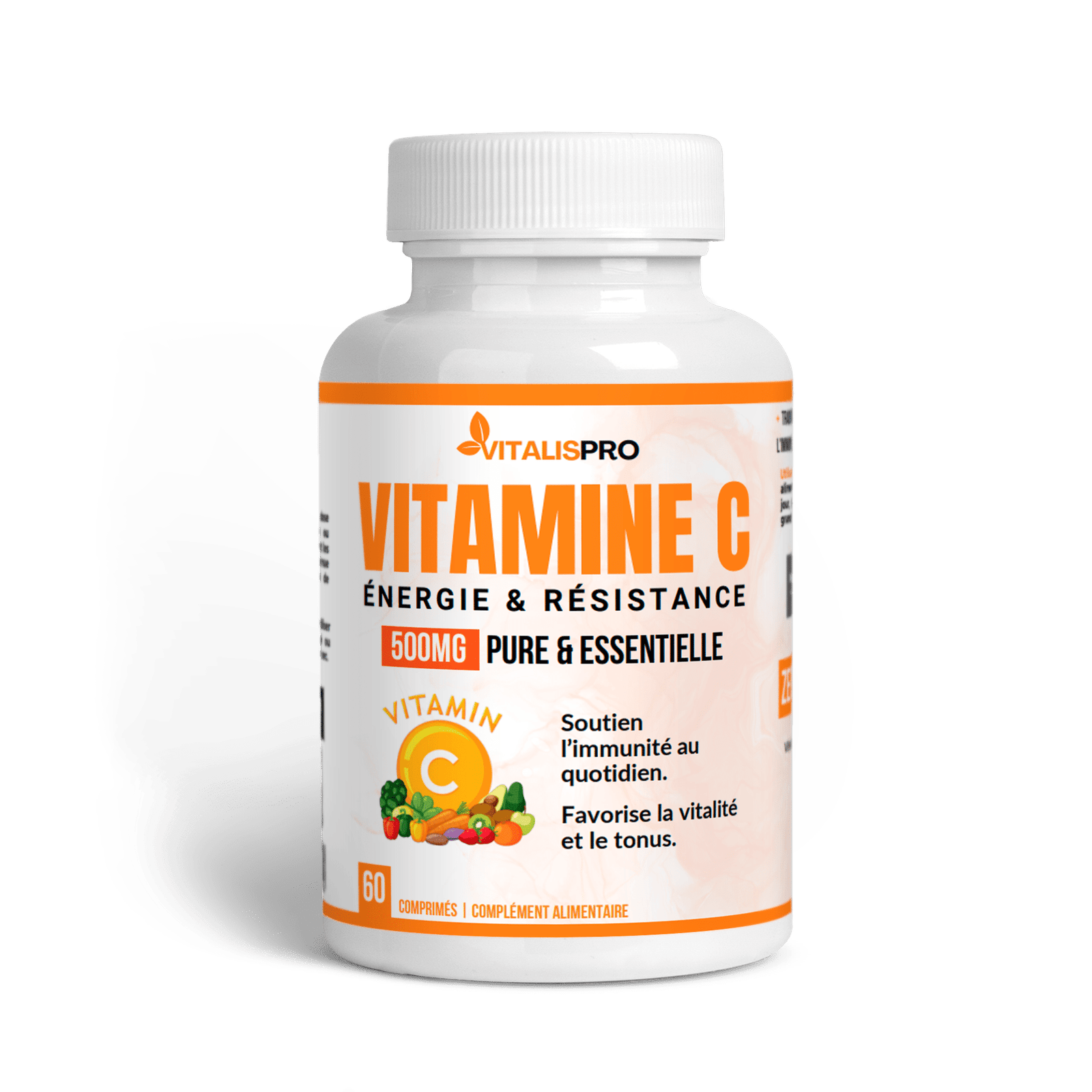
- VitalisPro products such as Vitamin C 500 mg and Marine Collagen are ONSSA-authorised food supplements, meant to fit inside a healthy lifestyle. They are not medicines and not a substitute for professional advice.
What is vitamin C and why do we need it?
Vitamin C, or ascorbic acid, is an essential, water-soluble vitamin. “Essential” means the human body cannot synthesise it on its own: it must obtain it from food. “Water-soluble” means it dissolves in water and is not stored in the body in large amounts; the excess is simply eliminated. The practical consequence is simple: we need a regular intake, day after day, rather than one large occasional dose. It is found in abundance in citrus fruits, bell pepper, kiwi, strawberry and leafy vegetables.
Its role goes far beyond the folk idea of the “cold vitamin.” Vitamin C takes part in many functions of the body: it contributes to the normal function of the immune system, it contributes to the protection of cells from oxidative stress, and above all, in the context of the skin, it contributes to normal collagen formation.4 These wordings are not slogans: they are health claims regulated by European law. The MedlinePlus reference and the fact sheet from the NIH Office of Dietary Supplements detail these fundamental functions.1
Why so much attention around such a small nutrient? Because vitamin C is a cofactor: a molecule without which certain reactions in the body cannot be carried out properly. That is the case for collagen production, which we will return to in detail. Without enough vitamin C, this machinery jams. This is why, historically, a severe deficiency (scurvy) showed up as fragility of the tissues, gums and skin: the body could no longer produce sturdy collagen.
A vitamin we use up quickly
A point often overlooked: vitamin C is fragile. It degrades with heat, light and air. Prolonged cooking, long storage, or a juice left out in the open all reduce its actual content. This does not mean everything must be eaten raw, but that freshness and variety matter as much as the mere presence of a food on the plate. It is a useful reminder: what counts is not just “eating an orange,” but a whole pattern of colourful, living food, day after day.
Vitamin C and collagen: a scientifically established link
Here is the heart of the matter, and one of the few statements science allows us to make clearly: vitamin C contributes to normal collagen formation for the normal function of the skin.4 This is not a marketing promise, but a precise biochemical role. Collagen is the most abundant protein in the skin: it is what gives skin its structure, firmness and elasticity. And for collagen to be built correctly, the body needs specific enzymes — and those enzymes need vitamin C to work.
Concretely, vitamin C acts as a cofactor for two enzymes (prolyl hydroxylase and lysyl hydroxylase) that stabilise the collagen structure and allow it to form its famous triple helix, the one that gives it its strength. A review published on PubMed Central examined the role of vitamin C in skin health, highlighting precisely this link with collagen synthesis and with protection against oxidative stress.2 This is why vitamin C is considered a genuine cornerstone whenever we talk about supporting the structure of the skin from within.
We must, however, keep a sense of proportion. That vitamin C is necessary for collagen formation does not mean that swallowing more of it will mechanically produce “more collagen” or “younger” skin. The body uses what it needs and regulates the rest. The value of an adequate intake is not to be short of this essential cofactor, so that the natural machinery runs unhindered. This is an important nuance: we are talking about supporting a normal process, not forcing or boosting it.
Radiance comes from within: the antioxidant action

We often fix our attention on what we apply to the skin, forgetting what unfolds inside. Yet true radiance is born from the health of the cells and the quality of the skin’s structure. This is where vitamin C’s second great role comes in: its antioxidant action. As an antioxidant, it contributes to the protection of cells from oxidative stress,4 the imbalance fed by factors such as sun exposure, pollution or an unbalanced lifestyle.
Antioxidants are molecules that help neutralise free radicals — unstable compounds that can build up under the influence of the environment. This double role of vitamin C, both a collagen supporter and an antioxidant shield, explains why it keeps returning in every serious discussion about the skin. A review on the link between nutrition and skin ageing also recalls how much diet, and antioxidant intake in particular, influences the state of the skin over time.5
We must remember, however, that antioxidants work in a network, never in isolation. Vitamin C acts in concert with other nutrients: vitamin E, selenium, or zinc, a mineral that, according to the claims approved by EFSA, contributes to the maintenance of normal skin. It is the variety of the plate that provides this balanced mix. For anyone who wants to round out this mineral approach, VitalisPro offers an ONSSA-authorised Zinc Gluconate, to be considered within a balanced lifestyle rather than as a standalone fix.
For a clear, calm look at how the skin is built and how it protects itself, this educational video from TED-Ed offers a helpful overview:
The natural sources of vitamin C

The best way to obtain vitamin C remains a varied, colourful diet. Citrus fruits — orange, lemon, grapefruit — are classic sources, but not the richest. Red bell pepper, kiwi, strawberry, broccoli and tomato are just as full of it, sometimes more. The practical advice fits in one sentence: vary the colours on your plate, because each colour carries a different mix of nutrients. The World Health Organization recalls the importance of eating fruit and vegetables every day as part of a healthy lifestyle.
| Food | What it brings | A simple idea |
|---|---|---|
| Red bell pepper | One of the highest vitamin C contents | Raw in a salad, or lightly pan-fried |
| Kiwi | Rich in vitamin C and fibre | A fruit at breakfast |
| Citrus (orange, lemon) | Classic, convenient sources | A whole fruit rather than a juice |
| Strawberry | Rich in vitamin C and antioxidants | As a seasonal snack |
| Broccoli | Vitamin C and fibre, better preserved lightly cooked | Steamed, still crunchy |
| Parsley and fresh herbs | Quiet concentrates, often forgotten | Added raw at the end of cooking |
When diet alone is not enough — busy stretches, reduced appetite, habits that leave little room for fresh fruit and vegetables — supplements can come in as extra support, within a balanced approach. They are not meant to replace a good plate, but to fill an occasional gap with a clear dose and a transparent origin. This is the logic in which we design our products: a supplement in its rightful place, neither overstated nor presented as a magic wand.
The vitamin C + marine collagen duo
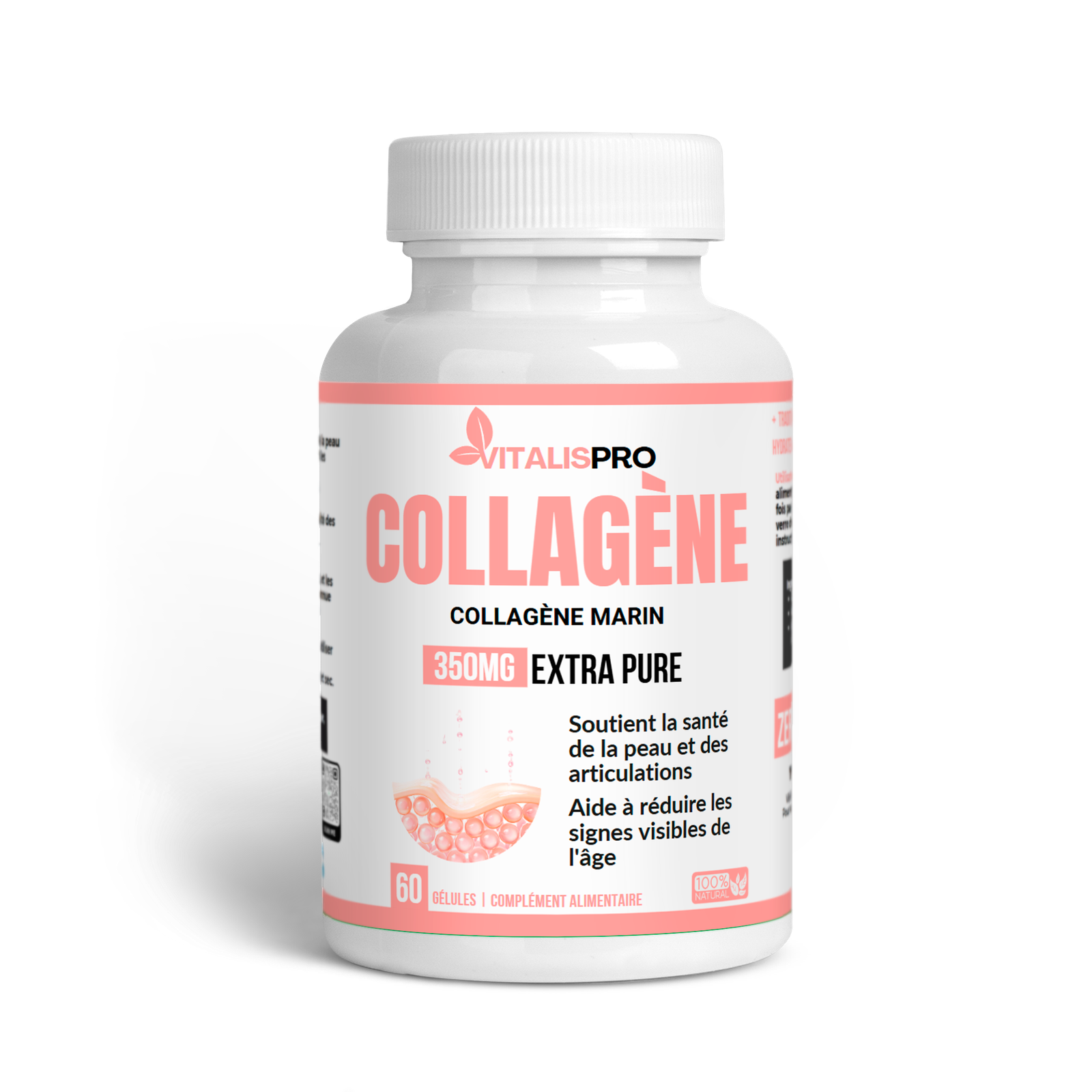
If vitamin C contributes to normal collagen formation, the idea of pairing a vitamin C intake with a collagen-supporting source logically interests many people in a beauty-from-within approach. Marine collagen provides amino acids, the protein “building blocks,” while vitamin C takes part in the body’s natural process of collagen formation. A systematic review of the dermatological applications of oral collagen supplementation noted a growing interest in these approaches, while calling for caution in interpreting the results.6
This complementarity reflects a deeper truth about the body: nutrients rarely work alone, but within a network of interactions. Even so, let us stay honest: these elements remain support, to be woven into a global approach — a balanced diet, hydration, sleep, sun protection. They replace none of these pillars. Presenting a duo as a guaranteed “anti-ageing cure” would be exactly the kind of hasty promise we refuse to make to you.
Vitamin C in the Moroccan context

Morocco enjoys a beautiful abundance of fresh citrus and colourful vegetables all year round, which makes obtaining vitamin C through food relatively accessible. It is a chance it would be a shame not to use: our markets overflow with oranges, lemons, peppers, tomatoes and fresh herbs. The first “skincare,” here, begins in the shopping basket, long before any capsule.
But certain factors can reduce the amount actually available: long cooking, prolonged storage, or eating habits that leave little room for fresh and raw foods. Add to this a very sunny climate which, for all its beauty, exposes the skin more to the oxidative stress linked to the rays. Hence a growing interest in supporting your share of vitamin C within a conscious skincare ritual: a colourful diet, enough hydration, and suitable sun protection.
Let us keep the right hierarchy: vitamin C is not a magical solution, but a smart piece in a larger picture made of daily habits. To discover our full range dedicated to everyday wellbeing, our shop presents clear, authorised formulas designed to accompany this lifestyle, not to replace it.
The fundamentals of lasting radiance
Before even thinking about a supplement, there are pillars whose effect outweighs any single capsule. We have arranged them for you by practical priority:
| Pillar | Why it matters to the skin | A practical step |
|---|---|---|
| A colourful diet | It provides vitamin C, antioxidants and fibre | Varied fruit and vegetables at every meal |
| Adequate hydration | Water accompanies every function of the skin | Regular glasses throughout the day |
| Sun protection | It limits the oxidative stress linked to the rays | Avoid peak hours, cover up |
| Enough sleep | Rest is part of cellular recovery | Consistent sleep times |
| Moderation with sugar | Chronic excess weighs on overall balance | Cut back on processed sweets |
| Regular movement | Activity supports circulation and metabolism | A daily walk, even a moderate one |
Notice that none of these pillars costs any real money: water, sleep, sun protection and a colourful plate are all within everyone’s reach. And this is a paradox worth pausing on: the strongest thing you can offer your skin is not a product you buy, but small daily decisions you make. That is why we always place the supplement in its correct spot: a step that comes after the fundamentals, for anyone who chooses to add extra support consciously.
When these foundations are built, any supplement takes on meaning: an extra brick on a solid base, not an attempt to patch up an unbalanced lifestyle. Waiting for salvation from a capsule while the habits stay the same is an illusion that always disappoints. A supplement adds; it does not build the house on its own.
How to fit vitamin C into your routine
Step one: start with the plate, not the box
Your first vitamin C intake is your plate. Before buying any supplement, review a week of your meals honestly: is there enough fresh fruit and vegetables, enough colour? A simple adjustment here comes before everything, and it makes whatever follows far more useful.
If you decide to add a supplement, choose a formula with a clear dose, authorised by ONSSA, from a source that is transparent in what it offers and in its price. An authorised supplement gives you a guarantee of oversight that a product of unknown origin, entering through unofficial channels, cannot. Clarity here is part of safety.
Step three: respect the dose and consistency
Do not exceed the recommended dose on the box thinking that “more is better”: since vitamin C is water-soluble, the excess is simply eliminated. The body responds to consistency, not to shock doses. Take the supplement usually with food and a large glass of water, and tie it to a fixed daily habit so you do not forget it. Any potential benefit is built through steady use over weeks.
Step four: observe, then decide
After a sufficient period, assess your general sense and comfort objectively, without magical expectations. Quietly listening to your body is the best judge. And at any doubt or persistent symptom, consulting a healthcare professional remains the priority. For any question, the VitalisPro team is reachable through our contact page.
And to place the skin in a wider scientific frame — how vitamins work in the body — this educational video from TED-Ed offers a clear and useful explanation:
Precautions, interactions and limits
No responsible discussion of a food supplement is complete without a frank section on its limits. “Natural” is not an automatic synonym for “suitable for everyone in all circumstances.” Vitamin C is generally well tolerated in healthy adults at usual doses, but caution is required in specific situations:
- Pregnancy and breastfeeding: ask a healthcare professional before taking any supplement.
- Children under 18: supplements are not intended for this group without supervision.
- A history of kidney stones or specific conditions: consult a professional before starting, especially with high, prolonged doses.
- Ongoing treatments: some intakes may interfere with tests or medication; discussing it with a professional remains the safest path.
A practical reminder that is often forgotten: do not start several new supplements at the same time. If you begin them together, it becomes hard to know what helped you, what did nothing, and what may have caused any discomfort. The smarter method is to introduce one element at a time, giving it enough time to observe. This calm, gradual approach protects both your health and your wallet.
The golden rule: a supplement adds; it does not fix a real imbalance on its own, and it does not diagnose or treat a condition. At any persistent or worrying symptom, consulting a healthcare professional remains the safest and first choice; and we are here to accompany you with a clear, authorised product, not to replace the doctor.
Stories from our readers
These are testimonials from people who reviewed their habits and added a vitamin C intake to their routine; individual experiences that differ from one person to another, which we present as they are, without exaggeration:
“I first changed my plate: more fresh fruit, more peppers and colourful vegetables. I added Vitamin C at breakfast, consistently. I was not looking for a miracle, but I feel more attentive to my skin and to what I eat. A simple, coherent approach.” — Imane, Casablanca
“What I liked was the honest message: no promise of instant radiance, just support within a lifestyle. I have been pairing Vitamin C and Marine Collagen for two months, with better hydration, and I appreciate how clear the formula is.” — Salma, Rabat
“Ordering was easy and payment was on delivery, and the formula is clear and ONSSA-authorised. I appreciate that it is natural and transparent, and I reordered.” — Younes, Marrakech
Frequently asked questions about vitamin C and skin
Conclusion: what do we take from all this?
After this exploration, the picture becomes clear. Vitamin C is not a magical recipe for instant radiance, but it is undeniably a central element that deserves its place. The truth is firmly established: vitamin C contributes to normal collagen formation for the normal function of the skin, and it contributes to the protection of cells from oxidative stress. This is an honest base, neither inflated nor downplayed.
The smart approach does not rely on it alone: it weaves it into a way of living made of a colourful diet rich in fruit and vegetables, enough hydration, quality sleep and sun protection. If you choose to add support, opt for a clear, authorised formula, such as Vitamin C 500 mg and Marine Collagen by VitalisPro. Because beauty is built through knowledge and habits, not through promises.
In the end, what distinguishes the aware consumer is neither avoiding every supplement nor believing every promise, but the ability to discern: to know what science says and what it does not, to place the fundamentals before the add-ons, and to give the body its fair time. For direct contact, the VitalisPro team is available through our our team page.
Sources and methodology
This guide relied on a review of documented general scientific sources (PubMed databases) and published reviews, in addition to official bodies such as the NIH Office of Dietary Supplements, the European Food Safety Authority (EFSA) and the World Health Organization. The health claims cited (collagen formation, protection of cells from oxidative stress, immune system, maintenance of normal skin for zinc) correspond to claims regulated by European Regulation 432/2012. We committed to presenting the results at their true size, without claiming any therapeutic effect. The information here is for health education, not for diagnosis or a medical prescription.
References
- NIH Office of Dietary Supplements — “Vitamin C” fact sheet. ods.od.nih.gov
- Pullar JM, Carr AC, Vissers MCM. The Roles of Vitamin C in Skin Health (2017). PubMed 28805671
- Carr AC, Maggini S. Vitamin C and Immune Function (2017). PubMed 29099763
- European Food Safety Authority (EFSA) — authorised health claims (EU Regulation 432/2012). efsa.europa.eu
- Schagen SK, et al. Discovering the link between nutrition and skin aging (2012). PubMed 23467449
- Choi FD, et al. Oral Collagen Supplementation: A Systematic Review of Dermatological Applications (2019). PubMed 30681787
The information in this article is provided for informational purposes for health education, drawing on documented general scientific references (PubMed, NIH, EFSA, WHO), and is not a substitute for consulting a qualified healthcare professional. Vitamin C and Marine Collagen are food supplements that do not replace a varied, balanced diet or a healthy lifestyle, and are not intended to diagnose, treat, cure or prevent any condition. Do not exceed the recommended dose. Pregnant and breastfeeding women, children under 18, and people with medical conditions or ongoing treatments are advised to consult a professional before use. Keep out of the reach of children.
