


Wellbeing and natural balance
Few botanicals carry a title as imposing as the “mushroom of immortality” in Asian tradition. Yet that is the nickname of reishi, a mushroom that has held a place of honour in traditional Chinese medicine for thousands of years, tied to calm, balance and vitality. Today this mushroom is back in the spotlight, this time under the microscope of researchers trying to understand its singular compounds. Does it truly deserve its age-old reputation? And what does modern research say about its role in supporting a sense of calm and balance?
This educational guide from VitalisPro promises you no miracle. Instead, it offers an honest journey: from the wisdom of tradition to the precision of the laboratory. We will look at what reishi really is, which compounds are studied, what the research has shown — and, above all, what it has not yet proven — around calm and general balance. The goal is that you leave with a decision built on knowledge, not on advertising noise.
Let us agree on one principle from the start: reishi is not a magic potion that would transform your mood or replace a balanced lifestyle. It is a traditional mushroom, rich in singular compounds, whose mechanisms modern research is still exploring. To present it accurately is to celebrate an ancient heritage without loading it with promises science has not made. It is precisely from this realistic angle that talking about reishi makes real sense.
محتوى الصفحة
- 1 In brief: what you will learn
- 2 In this guide
- 3 What is reishi, and why the interest?
- 4 Beta-glucans and triterpenes: the key to the studied effects
- 5 What research says about calm and balance
- 6 Reishi between tradition and modern science
- 7 How is reishi used?
- 8 Reishi in the Moroccan context
- 9 Who is it for? Precautions and limits
- 10 Stories from our readers
- 11 Frequently asked questions about reishi
- 12 Conclusion: a balanced picture of reishi
- 13 Sources and methodology
In brief: what you will learn
- Reishi (Ganoderma lucidum) is a traditional mushroom of Chinese medicine, nicknamed the “mushroom of immortality” — a cultural symbol, not a proven property.
- Its most studied compounds are beta-glucans (polysaccharides) and triterpenes; their content depends heavily on cultivation and extraction.
- Research explores its possible role in supporting a sense of calm and balance within a healthy lifestyle; the signals are interesting but inconclusive, and call for more studies.
- The fundamentals — enough sleep, a varied diet, regular movement — matter far more than any single supplement taken in isolation.
- VitalisPro Reishi 300 mg is an ONSSA-authorised food supplement, meant to fit inside a balanced lifestyle. It is not a medicine and not a substitute for professional advice.
What is reishi, and why the interest?
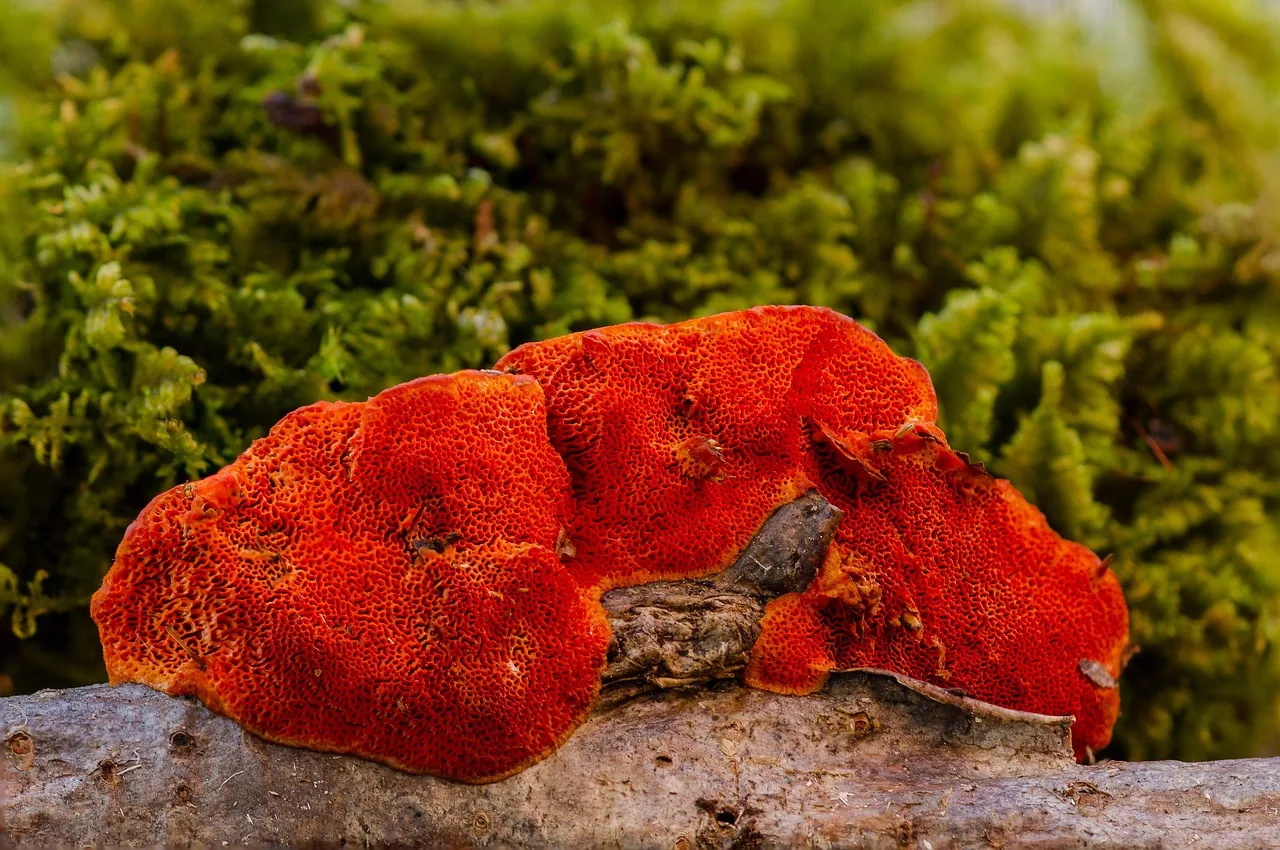
Reishi, whose scientific name is Ganoderma lucidum, is a hard, glossy mushroom, reddish-brown in colour, that grows on tree trunks. It is generally not eaten fresh, because its texture is woody and tough; instead it is extracted and prepared as powders or supplements. In Chinese tradition it was known as “lingzhi” and stood as a symbol of wisdom and longevity. Let us be clear: this is an ancient cultural symbol, not an absolutely proven property.
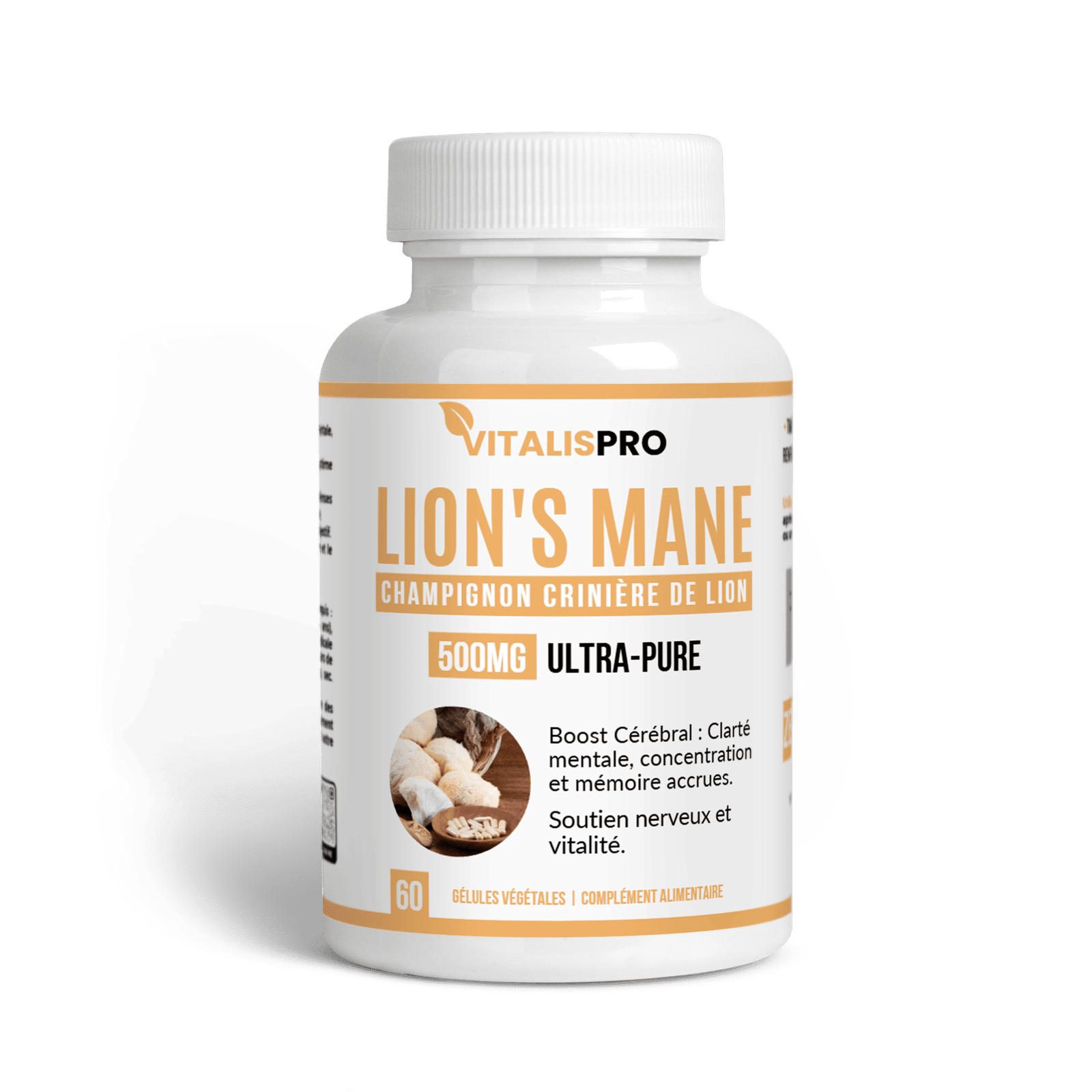
What interests scientists today is its wealth of singular active compounds, the most notable being beta-glucans and triterpenes. These are responsible for most of the studied effects. Reishi belongs to the broad family of “functional mushrooms,” alongside other traditional species such as lion’s mane. A documented overview of this mushroom is available in a reference chapter of the U.S. scientific library, NCBI, which traces its history and its compounds.1
Why such enthusiasm around a simple mushroom? Because it stands at a fascinating crossroads: that of a vast traditional use, passed down over millennia, and a modern research effort only just beginning to isolate its molecules to understand how they act. This meeting of the old and the new naturally draws curiosity. But scientific curiosity is not proof: that is exactly the nuance this guide works to keep, line after line. It is worth adding that the very fame of reishi is a double-edged sword. A famous name attracts serious research, but it also attracts exaggeration and inflated marketing that a careful reader learns to filter out. Our approach is to hold on to what is documented and to set aside the rest with honesty, so that what remains is a claim you can actually stand on.
Beta-glucans and triterpenes: the key to the studied effects
Reishi contains two main families of active compounds. The first is the beta-glucans, complex sugars (polysaccharides) studied for their role in supporting the body’s natural balance. The second is the triterpenes, bitter-tasting plant compounds that give reishi its characteristic flavour and are examined for their varied properties. To understand these two families is to understand why not all reishi products are equal.
A point many people overlook: the content of these compounds is not constant. It varies greatly with the cultivation method, the part of the mushroom used, and the extraction process. A scientific review showed that the growing substrate and the fermentation process directly influence the richness of reishi in bioactive compounds.4 In other words, the quality of the finished product is tied to the real concentration of these molecules: that is why the method of preparation and manufacture is an essential criterion for judging any supplement.
This reality has a very concrete practical consequence. A reishi powder of unknown origin may contain only a trace of active compounds, while an extract with a clear, authorised formula gives you what you actually think you are buying. This difference between a product worth its price and one that offers almost nothing is at the heart of the quality principle we commit to. It is also why we always insist on regulatory authorisation from ONSSA: it is not a formality, but a control pathway that concerns the safety and conformity of the product.

What research says about calm and balance
One of the areas that draw researchers is the relationship between reishi and the general sense of calm and balance. In tradition, reishi was linked to a state of serenity and inner stability; today, studies try to grasp these aspects with scientific tools. Let us be clear about what this means: the idea is not that reishi would grant “absolute serenity,” but that it might support a sense of balance within a calmer lifestyle.
What does the science actually say? The picture is promising but inconclusive. A study in college students assessed the effect of reishi supplementation on psychological stress and certain parameters, and reported interesting signals while remaining limited in scope.2 Other work looked at effects related to fatigue and the quality of rest, stressing a wide variation depending on the preparations used.3 These results invite curiosity, not excitement. It is also useful to understand why calm is so hard to measure in the first place. A sense of balance is subjective, it shifts with sleep, workload and mood, and it responds strongly to expectation, which is exactly why well-designed studies are difficult to run and why honest researchers hedge their conclusions. When you read a bold headline claiming a mushroom “relieves” tension, it is worth asking how many people were studied, for how long, and against what comparison. That habit of asking is more valuable than any single result, and it is the reader’s best protection against marketing dressed up as science.
Why all this caution if signals exist? Because rigorous science carefully distinguishes several levels: a laboratory experiment on cells, a study on an animal, and then a clinical trial on humans; and between a small study and a large one, between a single result and a review pooling dozens of works. Much of what is promoted around “mushrooms that calm you” rests on the lowest levels of this pyramid before being presented as established fact. Our job is to place every signal at its correct rank, not to inflate it to serve a sale.
We must also recall an essential framing point: European scientific authorities, including the European Food Safety Authority (EFSA), have not approved a specific health claim for reishi.5 So we present this mushroom for what it is: an ancient traditional element with interesting but incomplete research, to be woven into a broader wellbeing approach — and not as a treatment for any disorder.
“The healthiest approach does not expect a mushroom to deliver absolute calm. It treats it as a possible supportive element, within a lifestyle that does the real work: good sleep, a balanced diet, regular movement.”
Reishi between tradition and modern science
What sets reishi apart is this bridge stretched between the wisdom of several millennia and the precision of the modern laboratory. In traditional medicine, it was used within a holistic approach to balance. Today, science tries to isolate its compounds and understand their mechanisms. This meeting of the old and the new is exactly what makes reishi compelling: neither mere cultural heritage, nor a completed scientific promise, but an element sitting in a promising middle ground.
Scientific humility invites us to appreciate traditions without sanctifying them, and to welcome research without overstating its conclusions. Reishi deserves attention and study, without our loading it with virtues the evidence has not yet established. That balance between curiosity and caution is precisely what we try to convey to you. It is also in this spirit that reishi is often paired with other traditional mushrooms and plants within a considered routine, rather than as a “single solution.”
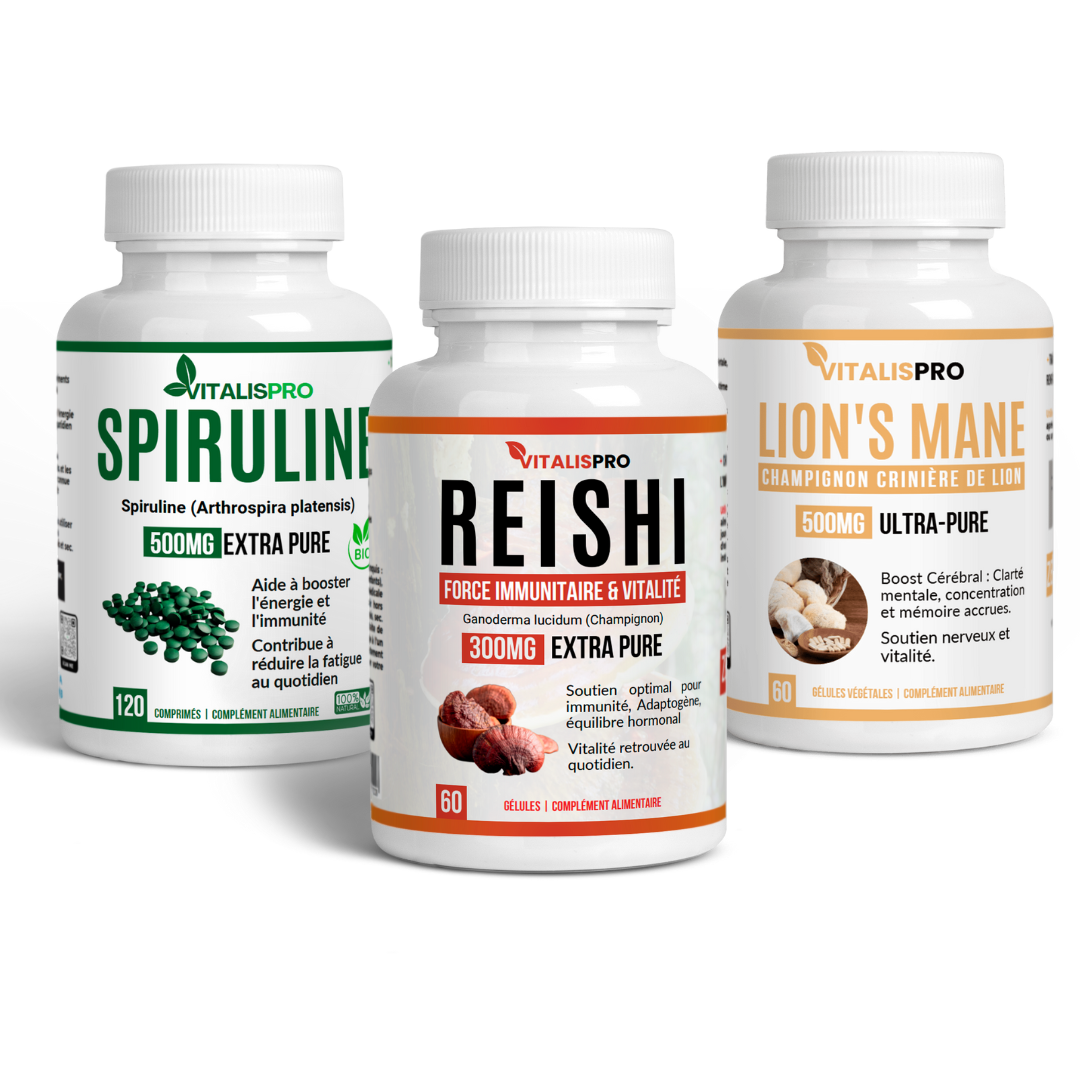
For anyone wishing to explore this world of functional mushrooms, lion’s mane (Hericium erinaceus) is another traditional species often cited alongside reishi. VitalisPro has in fact designed a pack combining reishi, lion’s mane and spirulina, for anyone who prefers a combined approach over stacking scattered boxes of unknown origin. The healthiest logic remains simplicity and clarity: one considered, authorised combination is better than a pile of obscure products.
How is reishi used?
Reishi is generally used within a continuous programme of several weeks, because its studied effects are gradual and do not always appear from the first dose. It is most often taken as an extract, which lets you benefit from its compounds without having to prepare a woody, tough mushroom. Many people prefer to weave it into a calm evening routine, like a small winding-down ritual at the end of the day. The form matters here as well: a powder, a capsule and a liquid extract are not automatically interchangeable, and the honest indication of what the box contains is part of what separates a serious product from a vague one. There is no single “correct” schedule that fits everyone, but the common thread across careful use is the same: modest, steady doses observed over time, rather than an impatient search for an overnight change that no plant, however venerable, can promise.
The golden rule: respect the recommended dose on the box. “More” is not always “better” — the body responds to consistency, not to shock doses. The research itself reminds us that results vary widely with preparations and protocols, which reinforces the importance of a clear product and steady use.3 Take it usually with a large glass of water, and tie it to a fixed daily habit so you do not forget it. Any potential benefit is built through patience, not through a passing capsule.
| Pillar | Why it matters | A practical step |
|---|---|---|
| Consistency | Reishi’s studied effects are gradual | A daily dose over several weeks |
| Respect the dose | The body responds to steadiness, not excess | Stick to the dose stated on the box |
| An evening ritual | Anchor the dose in a calmer routine | Tie it to a quiet end-of-day moment |
| Fundamentals first | A supplement supports; it does not replace | Sleep, a varied diet, regular movement |
Reishi in the Moroccan context
With the fast pace of life in Moroccan cities and the pressure of the daily grind, many people look for natural elements to recover a sense of balance. While the culture of medicinal mushrooms does not belong directly to Moroccan tradition, the growing global interest they attract makes them available today within trustworthy supplements. Reishi then fits in as one piece of a conscious lifestyle, not as an isolated answer.
This lifestyle rests first on simple foundations: good rest, a balanced diet rich in vegetables and fruit, and regular physical activity. The World Health Organization recalls the importance of dietary variety within a healthy lifestyle.6 Reishi is no magic answer: it is a fragment of a larger picture. Placing it at that fair position is already using it wisely. It also helps to remember that stress in a busy city is rarely solved by any single lever. Sleep that is protected from late screens, meals that are not swallowed in a rush, a short daily walk, and moments of genuine rest all matter more than any capsule. When those pieces are in place, a supportive element such as reishi has a solid base to sit on; when they are missing, no supplement can carry the weight on its own, and expecting it to only leads to disappointment.
To go further, our shop presents the full range dedicated to everyday wellbeing, from reishi on its own to considered combinations such as the reishi, lion’s mane and spirulina pack. Careful reading before any decision always gives you a clearer picture of what suits you, within a balanced lifestyle.
Who is it for? Precautions and limits
Reishi appeals to those looking for natural support of a sense of calm and balance during periods of tension, or who are interested in ancient plant traditions within a conscious lifestyle. But “natural” is not an automatic synonym for “suitable for everyone in all circumstances.” Caution is required in several specific situations:
- Pregnancy and breastfeeding: it is advised to avoid reishi unless recommended by a qualified healthcare professional.
- Children and teenagers under 18: reishi is not intended for this age group without supervision.
- Ongoing treatments: consult a professional before starting, particularly with medication that affects blood clotting.
- A known condition or scheduled surgery: always seek the advice of a healthcare professional before use.
We add a practical reminder that is often forgotten: do not start several new supplements at the same time. If you begin them together, it becomes hard to know what helped you, what changed nothing, and what may have caused any discomfort. The wiser method is to introduce one element at a time, giving it enough time to observe. This calm, gradual approach protects both your health and your wallet. The goal of this guide is to help you ask the right questions, not to diagnose a situation or prescribe an individual programme.
Stories from our readers
These are testimonials from people who wove reishi into a calmer routine; individual experiences that differ from one person to another, presented as they are, without exaggeration:
“I was not looking for a miracle, just a small evening ritual to ease off. I added reishi to a calmer routine, with better sleep and fewer screens in the evening. After a few weeks I feel more settled. No magic, but a difference I can feel.” — Nawal, Casablanca
“What I liked was the honest message: no exaggerated promises, just support within a lifestyle. I took the pack with lion’s mane for two months while looking after my habits, and I feel more balanced overall.” — Karim, Rabat
“Ordering was easy, with cash on delivery, and the formula is clear and ONSSA-authorised. I appreciate that it is natural and transparent, and I reordered.” — Sanaa, Marrakech
Frequently asked questions about reishi
Conclusion: a balanced picture of reishi
At the end of this journey, the picture is clear. Reishi is not the “mushroom of immortality” its legendary nickname suggests, but neither is it a mere cultural relic without value. The truth sits in the middle: an ancient mushroom, rich in singular compounds such as beta-glucans and triterpenes, whose growing body of research explores a possible role in supporting a sense of calm and balance — within a frame of scientific humility that still calls for more study.
The smart approach uses it as a supportive element within a complete lifestyle — good rest, a balanced diet, regular movement — and not as a substitute for those fundamentals. When you combine the wisdom of tradition, the rigour of science and realistic expectations, you make use of this ancient mushroom in a conscious and responsible way, one that pairs respect for heritage with openness to knowledge.
In the end, what distinguishes the aware consumer is neither avoiding every supplement nor believing every promise, but the ability to discern: to know what science says and what it does not, to place the fundamentals before the add-ons, and to give the body its fair time. For direct contact, the VitalisPro team is available through our contact page and our team page.
Sources and methodology
This guide relied on a review of documented general scientific sources (PubMed databases) and published work, in addition to official bodies such as the U.S. scientific library (NIH/NCBI), the European Food Safety Authority (EFSA) and the World Health Organization (WHO). We committed to presenting results at their true size: promising signals are presented as signals, not as definitive promises, and no therapeutic effect was claimed. The information here is for health education, not for diagnosis or a medical prescription.
References
- Wachtel-Galor S. et al. — “Ganoderma lucidum (Lingzhi or Reishi): A Medicinal Mushroom,” in Herbal Medicine: Biomolecular and Clinical Aspects, NCBI scientific library (NIH). ncbi.nlm.nih.gov/books/NBK92757
- Ganoderma lucidum (reishi) supplementation, psychological stress and physical parameters in college students: study (2024). PubMed 39241163
- Anti-fatigue and sleep-aiding effects varying among recipes containing Ganoderma lucidum extracts (2024). PubMed 38770283
- Review of substrates for solid-state fermentation of reishi (Ganoderma lucidum) and their effect on bioactive compounds (2022). PubMed 35695593
- European Food Safety Authority (EFSA) — health claims and botanicals. efsa.europa.eu
- World Health Organization (WHO) — “Healthy diet” fact sheet. who.int
The information in this article is provided for informational purposes for health education, drawing on documented general scientific references (PubMed, NIH/NCBI, EFSA, WHO), and is not a substitute for consulting a qualified healthcare professional. Reishi is a food supplement that does not replace a varied, balanced diet or a healthy lifestyle, and is not intended to diagnose, treat, cure or prevent any condition. Do not exceed the recommended dose. Pregnant and breastfeeding women, children under 18, and people with medical conditions or ongoing treatments are advised to consult a professional before use. Keep out of the reach of children.
