


Wellbeing and natural balance
It does not have the fame of vitamin C or the spotlight of vitamin D, yet magnesium is one of the most decisive minerals in your body: it takes part in hundreds of internal reactions, from producing energy to helping muscles contract and relax. The paradox? A mild shortfall is far more common than most people think, driven by modern eating habits. Do your calves cramp at night? Do you struggle to unwind before bed? This quiet mineral may well have a place in the picture.
This in-depth guide from VitalisPro promises no miracle and does not turn a capsule into a sleeping pill. In plain language and with verifiable sources, it explains what magnesium actually does in the body, what science has confirmed (and what it has not yet settled, especially around sleep), why forms such as bisglycinate differ, and above all how to start with the plate before any supplementation. The goal is that you leave with a decision built on knowledge, not on a promise.
Let us set one principle from the start: magnesium is not a magic calm pill. It is an essential mineral whose role is functional and documented by European authorities. Our job here is to separate what is established from what is still a promising research signal — because that very distinction is what separates serious information from advertising noise.

محتوى الصفحة
- 1 In brief: what you will learn
- 2 In this guide
- 3 Why does your body need magnesium?
- 4 Why is a mild shortfall so common?
- 5 Magnesium and sleep: what does the research really say?
- 6 Magnesium and muscle function
- 7 Forms of magnesium: why bisglycinate?
- 8 Food sources: start with the plate
- 9 Magnesium and stress: a loop worth knowing
- 10 How to fit it into your routine
- 11 Precautions, interactions and limits
- 12 Stories from our readers
- 13 Frequently asked questions about magnesium
- 14 Conclusion: a mineral that deserves more than to be forgotten
- 15 Sources and methodology
In brief: what you will learn
- Magnesium takes part in more than 300 enzymatic reactions; European authorities recognise that it contributes to normal muscle function, to the normal functioning of the nervous system and to the reduction of tiredness and fatigue.2
- The link between magnesium and sleep is popular, but science describes it as a promising, inconclusive signal: recent systematic reviews call for more rigorous trials.3
- A mild shortfall is common because of refined foods, mineral-poorer soils, and chronic stress that raises the body’s magnesium turnover.
- Forms are not equal: bisglycinate is recognised for good absorption and gentleness on the stomach, which makes it a comfortable choice for an evening routine.
- The plate first: almonds, seeds, leafy greens, pulses and whole grains. A supplement comes after these fundamentals, never in their place; it is not a medicine and not a substitute for professional advice.
Why does your body need magnesium?
If we had to sum magnesium up in one phrase: it is a conductor mineral. It does not settle for a single job; it supports hundreds. It is estimated to take part in more than three hundred enzymatic reactions in the body — that many small chemical operations without which nothing would run quite normally. This quiet ubiquity is exactly why a shortfall shows up through such varied, non-specific signals.
Among the roles recognised by European authorities, magnesium contributes to normal energy-yielding metabolism — in other words, it helps the body convert what you eat into usable energy. It contributes to the normal functioning of the nervous system and to normal psychological function. It contributes to normal muscle function, both contraction and relaxation. And it contributes to the reduction of tiredness and fatigue. These are authorised health claims, framed by European regulation, not marketing promises.2 The MedlinePlus entry (U.S. National Library of Medicine) likewise describes magnesium’s role in the body and its food sources.1
Picture it simply. Imagine a control room where hundreds of switches must flip at the right moment: energy production, nerve-signal transmission, the balance of minerals inside and outside cells. Magnesium is one of the cofactors that let those switches work. When it runs short, the control room does not shut off at once; it simply runs with less fluidity, and the body sends out general signals of tension and weariness.
Where does the body store magnesium?
Most of the body’s magnesium sits in the bones, the rest in muscles and soft tissue, and only a very small fraction circulates in the blood. This is an important nuance: a “normal” blood test does not always faithfully reflect total stores, because the body draws on reserves to keep the blood level stable. That is why the best strategy is not to chase a number, but to maintain a steady intake through food, all year round.
Why is a mild shortfall so common?
Magnesium is present in plenty of foods. So why is a mild shortfall so widespread? Several factors combine, and it is worth naming them one by one, because each opens a concrete line of action.
- Modern eating habits. Ultra-processed and refined foods (white flour, sugar, industrial dishes) are naturally poor in magnesium. The more the plate leans toward the processed, the more intake falls.
- Depleted farming soils. Some crops grow on soils less mineral-rich than before, which lowers the mineral content of the harvest.
- Chronic stress. The body uses and loses more magnesium under prolonged tension — we return to this below, because it is a loop in its own right.
- Certain drinks in excess. A high intake of coffee, alcohol or soft drinks can increase urinary mineral losses.
Added together, these factors explain why many people fall short of their full needs despite a seemingly varied diet. This is not a fate: precisely because the causes are identifiable, we can act on them, starting by rebalancing the plate before considering anything else.
“Magnesium is not a rare mineral: it is an easily lost one. The real question is not only ‘are you getting enough?’, but also ‘what, in your daily life, is speeding up its loss?’”
Magnesium and sleep: what does the research really say?
This is probably the most widespread association: “magnesium = better sleep.” It is appealing, and it rests on a real biological logic: magnesium contributes to the normal functioning of the nervous system, which accompanies the relaxation mechanisms that precede sleep. But let us be rigorous: between a plausible logic and solid proof lies a gap science has not yet fully closed.

What do the most recent works say? A systematic review devoted to the role of magnesium in sleep health gathered the available literature and concluded that, while some results are encouraging, the evidence remains limited and of uneven quality, calling for better-designed trials before any firm claim.3 Another systematic review, on the effect of magnesium supplementation on self-reported anxiety and sleep quality, issued the same caution: signals exist, but scientific certainty is not there yet.4
On the other hand, a large observational study (the CARDIA cohort) examined the link between dietary magnesium intake and both sleep duration and quality, and observed a favourable association; but an association observed in a population is not proof of cause and effect, and its authors remain cautious in interpretation.5 In plain terms: the body of research leans toward interest, without allowing us to turn it into a promise. That is why we speak here of a promising, inconclusive signal — no more, no less.
What should you take from this, concretely? First, that magnesium is not a sleeping pill and must not be presented as one. Second, that its possible interest for rest belongs to a larger whole: a regular evening ritual, less screen exposure, stable bedtimes, and stress management. Many people choose to take magnesium in the evening — not because a capsule “sends you to sleep,” but because it fits naturally into that transition moment. It is a common-sense choice, not a prescription.
One last note of honesty: where a real shortfall exists, correcting intake can logically contribute to the normal functioning of the nervous system. Where intake is already sufficient, you should not expect a supplement to “improve” a sleep that depends mostly on other factors. Putting each thing in its place means respecting both the science and the reader.
Magnesium and muscle function
Here is a ground where science is firmer. Magnesium contributes to normal muscle function: this is an authorised health claim, backed by European regulation.2 The reason is mechanical. A muscle that contracts then relaxes needs a fine balance between several minerals: calcium favours contraction, while magnesium takes part in relaxation. Without that partner, the mechanism loses its fluidity.
This is why so many athletes and people prone to night-time cramps take an interest in magnesium as a support for muscle function. Intense effort, heavy sweating and an unbalanced diet can raise the needs. Be careful, though, not to attribute everything to magnesium: persistent muscle discomfort can have many causes, and adequate hydration, a proper warm-up and good recovery remain essential fundamentals.
The healthiest logic is to see magnesium as one part of the equation, not the single solution. You support your muscle function first through a balanced, mineral-rich diet, regular hydration and well-conducted physical activity; the supplement then consolidates that base for anyone who wants extra, conscious support.
Athletes, sweating and higher needs
During prolonged effort, the body loses water and minerals through sweat. In very active people, this repeated loss can weigh on total intake. A simple reflex: enrich meals and snacks with magnesium-dense foods (almonds, pumpkin seeds, leafy greens), hydrate properly, and only consider a supplement afterwards, if the need is felt. Consistency always beats the occasional dose.

Forms of magnesium: why bisglycinate?
You may have noticed there are several “magnesiums”: bisglycinate, citrate, oxide, malate, marine… These are not competing brands, but different chemical forms. What sets them apart is the compound the magnesium is bound to — and that bond influences two very concrete things: the share actually absorbed by the body, and digestive tolerance.
| Form of magnesium | Absorption & tolerance | Commonly cited use |
|---|---|---|
| Bisglycinate (glycinate) | Good absorption, reputed to be gentle on the stomach | Digestive comfort, evening routine |
| Citrate | Fair absorption; possible laxative effect at high dose | Common use, transit support |
| Oxide | High magnesium content but lower absorption | Inexpensive, variable tolerance |
| Malate / marine | Variable depending on source and formulation | By individual preference |
The bisglycinate form is precisely the one recognised for its good absorption and its gentleness on the stomach. Here the magnesium is bound to an amino acid, glycine, which eases its passage and reduces the risk of intestinal discomfort that some more “raw” forms can cause. For an evening intake, within a calm routine, that tolerance makes a real difference in comfort. This is the logic behind the VitalisPro bisglycinate formula.
A point of vigilance many people overlook: the word “magnesium” on a box says nothing on its own. What matters is the form, the actual dose of elemental magnesium, and the clarity of the label. That is why we always insist on regulatory authorisation from ONSSA: it is not an administrative formality, but a control pathway that concerns the composition, safety and conformity of the product.

Food sources: start with the plate
The best strategy always starts with the plate, never with the box. The good news is that magnesium-rich foods are tasty, accessible and well present in Mediterranean and Moroccan cooking. Building them into your week supports your intake in the most natural way there is.
| Food | Why it matters | A concrete tip |
|---|---|---|
| Almonds, walnuts, pumpkin and sunflower seeds | Among the most magnesium-dense sources | A small handful as a snack, without excess |
| Leafy green vegetables (spinach) | Magnesium sits at the heart of the chlorophyll molecule | A serving of vegetables at every main meal |
| Pulses (lentils, chickpeas, beans) | Magnesium and fibre together | The base of many traditional dishes |
| Whole grains | Refining removes much of the magnesium | Prefer whole-grain bread and cereals |
| Cocoa-rich dark chocolate | A pleasant source of magnesium | A few squares, in moderation |
Notice the logic: these foods are not exotic, costly “superfoods,” but everyday items. That is the whole beauty of it — the first lever for your magnesium intake is not bought at a pharmacy, it is built in your kitchen. Concentrated sources such as supplements come to complete that dietary base when the need calls, never to replace it. You can explore the role of minerals in energy and fatigue through the European Food Safety Authority (EFSA).2
A practical word on cooking: some minerals can leach into the cooking water. Favouring gentle cooking, or reusing the vegetable cooking water in a soup, helps preserve the intake. Small habits that, added up, count for more than we think.
Magnesium and stress: a loop worth knowing
Between magnesium and stress there is a striking relationship that works in both directions. On one side, magnesium contributes to the normal functioning of the nervous system and to normal psychological function, which supports the body’s ability to return to calm. On the other, chronic stress tends to increase the body’s use and loss of magnesium.
We then get a loop that can feed itself: stress depletes magnesium, and a low magnesium level can make managing stress harder. Understanding this mechanism changes how we act: it is not only about “taking magnesium,” but also about defusing what, in daily life, drains it. Breaking the loop therefore runs on two levers at once.
- Maintain intake: a magnesium-rich plate, and if needed a well-chosen supplement, so that reserves do not thin out.
- Build stress-management tools: slow breathing, a daily walk, regular sleep, moments of disconnection. These are what reduce the “leak” at its source.
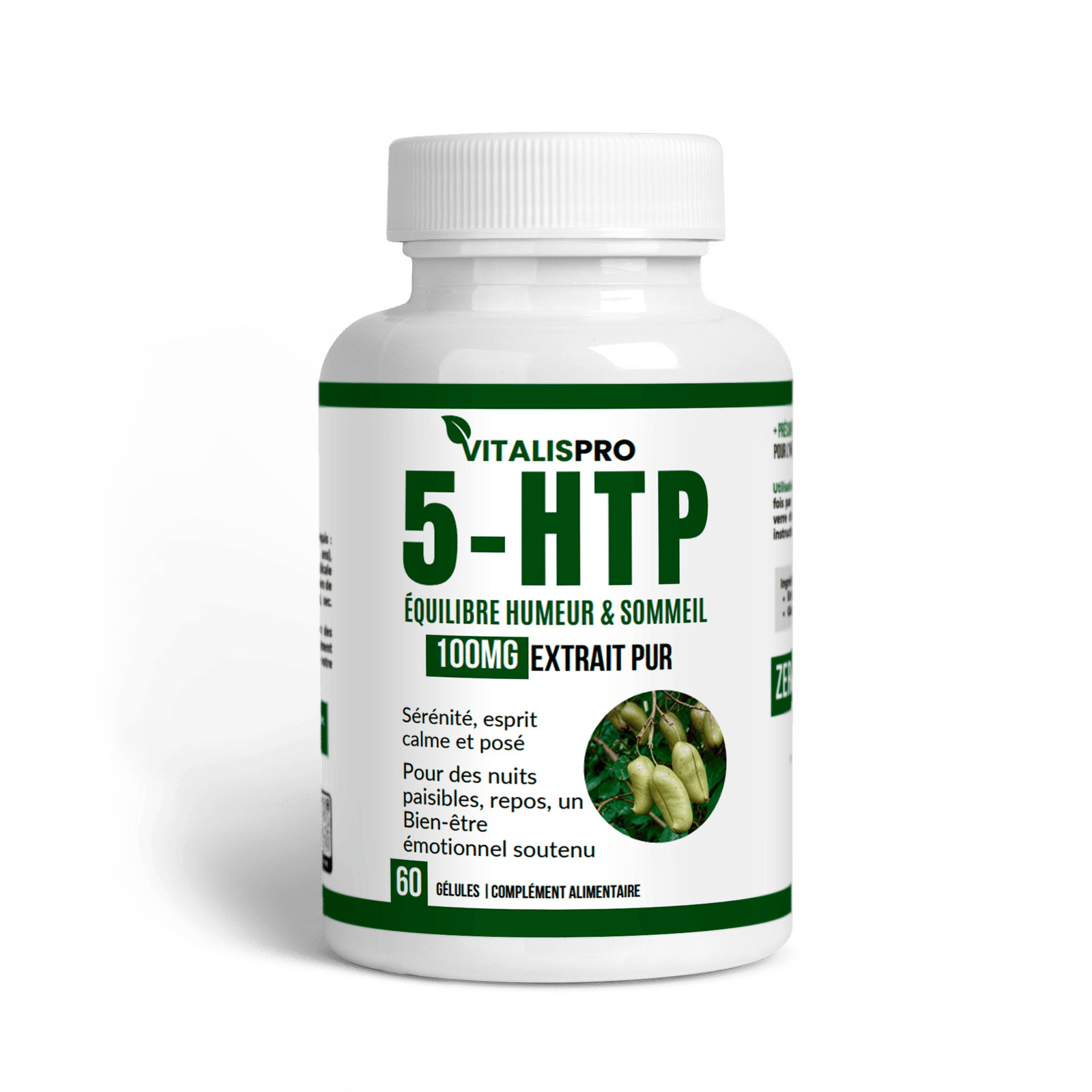
This is also why magnesium is so often associated with an evening calm routine: it accompanies the relaxation of body and mind at a pivotal moment of the day. For those who wish to reinforce this approach, adaptogenic plants such as ashwagandha, or natural 5-HTP sources such as Griffonia, are sometimes woven into the same ritual — always within a balanced lifestyle, and never as a shortcut.
How to fit it into your routine
Step one: start with the plate, not the box
Your first “magnesium intake” is your diet. Before buying any supplement, review a week of your meals honestly: where are the leafy greens, pulses and nuts missing? Where has the refined taken over from the whole? A simple rebalancing here comes before everything, and it makes whatever follows far more useful. You will find our full range in the shop.
If you decide to add a supplement, choose a readable form (bisglycinate for its digestive gentleness, for example), with a transparent formula, authorised by ONSSA. An authorised product gives you a guarantee of oversight that an item of unknown origin, entering through unofficial channels, never will. Here, clarity is part of safety.
Step three: respect the dose and consistency
Do not exceed the recommended dose on the box thinking that “more is better”: the body responds to consistency, not to shock doses. Many people choose an evening intake, with a meal and a large glass of water, to tie it to a fixed moment of the day. Any potential benefit is built through steady use over weeks, not through a passing capsule.
Step four: observe your body, then decide
After a sufficient period, assess objectively: how is your energy level? Your general sense of relaxation at the end of the day? Quietly listening to your body — without magical expectations — remains the best judge. And at any doubt or persistent symptom, consulting a healthcare professional is the priority. For any question, the VitalisPro team is available through our contact page.
Precautions, interactions and limits
No responsible discussion of a food supplement is complete without a frank section on its limits. “Natural” does not mean “safe for everyone without caution.” Magnesium is generally well tolerated in healthy adults at usual doses, but caution is required in specific situations:
- Kidney impairment or kidney disorder: the kidney regulates magnesium elimination; medical advice is essential before any supplementation.
- Pregnancy and breastfeeding: seek advice from a healthcare professional before any supplement.
- Children under 18: supplements are not intended for this age group without supervision.
- Ongoing treatments: magnesium can interact with certain medicines (including some antibiotics); space out the doses and seek advice.
- Digestive discomfort: an excess, especially with less well-tolerated forms, can cause a laxative effect. The bisglycinate form is reputed to be gentler in this respect.
The golden rule: a supplement adds; it does not fix a real imbalance on its own, and it does not diagnose or treat any condition. At any persistent or worrying symptom, consulting a healthcare professional remains the safest and first choice. We are here to accompany you with a clear, authorised product, not to replace the doctor.
Stories from our readers
These are testimonials from people who reviewed their habits and added magnesium to their routine; individual experiences that differ from one person to another, which we present as they are, without exaggeration:
“I first changed my snacks: almonds and pumpkin seeds instead of biscuits. Then I added magnesium bisglycinate in the evening, with dinner. What I appreciate is the digestive gentleness: no discomfort. I feel more settled at the end of the day.” — Nawal, Casablanca
“As an amateur athlete, I sweat a lot in summer. I built magnesium into my recovery, with good hydration. I liked the honest message from VitalisPro: no miracle promise, just support for muscle function within a lifestyle.” — Reda, Kenitra
“Ordering was simple, payment on delivery, a clear and ONSSA-authorised formula. I reordered: it has become part of my evening routine, with a herbal tea.” — Salima, Rabat
Frequently asked questions about magnesium
Conclusion: a mineral that deserves more than to be forgotten
Magnesium is a “forgotten” mineral despite its huge importance. It takes part in hundreds of vital reactions, contributes to normal muscle function, to the normal functioning of the nervous system, to normal energy-yielding metabolism and to the reduction of fatigue. With a mild shortfall now common under the pressure of modern habits, it deserves more attention than it usually receives.
Always start with the plate: almonds, seeds, leafy greens and pulses are rich, tasty sources. When the need calls for extra support, the bisglycinate form is a well-absorbed, stomach-gentle choice that many appreciate in the evening. On sleep, let us keep the honesty that defines us: a promising research signal, still to be confirmed — and a regular evening ritual remains your best ally.
In the end, what distinguishes the aware consumer is the ability to discern: to know what science affirms and what it does not affirm yet, to place the fundamentals before the add-ons, and to give the body its fair time. If you leave this guide with that mindset, we have reached our goal — whether or not you choose our Magnesium Bisglycinate. For direct contact, the VitalisPro team is available through the contact page and the our team page.
Sources and methodology
This guide relied on verifiable general scientific sources (PubMed databases, published systematic reviews) and on official bodies such as the U.S. National Library of Medicine (MedlinePlus/NIH) and the European Food Safety Authority (EFSA). We committed to presenting results at their true size: the claims cited (muscle function, nervous system, reduction of fatigue) are authorised health claims; the link with sleep is presented as a promising but inconclusive signal, and no therapeutic effect is claimed. The information here is for health education, not for diagnosis or a medical prescription.
References
- MedlinePlus (U.S. National Library of Medicine) — “Magnesium in diet”. medlineplus.gov
- European Food Safety Authority (EFSA) — authorised health claims (EU Regulation 432/2012) for magnesium (muscle function, nervous system, reduction of tiredness and fatigue). efsa.europa.eu
- The Role of Magnesium in Sleep Health: a Systematic Review of Available Literature (2022). PubMed 35184264
- Examining the Effects of Supplemental Magnesium on Self-Reported Anxiety and Sleep Quality: a Systematic Review (2024). PubMed 38817505
- Association of magnesium intake with sleep duration and sleep quality (CARDIA study). PubMed 34883514
The information in this article is provided for informational purposes for health education, drawing on verifiable general scientific references (PubMed, MedlinePlus/NIH and EFSA), and is not a substitute for consulting a qualified healthcare professional. Magnesium is a food supplement that does not replace a varied, balanced diet or a healthy lifestyle, and is not intended to diagnose, treat, cure or prevent any condition. Do not exceed the recommended dose. People with a kidney disorder, pregnant and breastfeeding women, children under 18, and people on ongoing treatments are advised to consult a professional before use. Keep out of the reach of children.
