


Vitality and natural energy
At the end of a long day — between work, city traffic and the responsibilities of home — many of us feel that our energy tank has run dry before the day is even over. Short nights, meals eaten in a hurry and chronic stress pile up, and tiredness becomes a constant companion. This is exactly where curiosity about maca begins: the Andean root whose name now comes up in every conversation about natural energy and vitality.
Between the exaggerated promises online and the quieter scientific truth, there is a gap worth crossing slowly. This in-depth guide from VitalisPro does not sell you a dream. Instead, in plain language and with sourced references, it explains what maca actually is, what studies say about its benefits for both men and women, how to choose and use it wisely within a healthy lifestyle, and where the honest limit of the evidence lies. The goal is that you leave with a decision built on knowledge, not on advertising.
Let us set a marker first: maca, known scientifically as Lepidium meyenii, is a plant of the cruciferous family — a cousin of the radish and the turnip — that grows on the high plateaus of the Peruvian Andes. Its dried roots have been eaten for centuries in traditional food, and it is classified today as a food supplement, not a medicine. This distinction is essential, and we will return to it often.
محتوى الصفحة
- 1 In brief: what you will learn
- 2 In this guide
- 3 What is maca? A plant from the heart of the Andes
- 4 What science really says about maca
- 5 The types of maca: yellow, red and black
- 6 Why the extract and dose matter more than the plant itself
- 7 Maca in the Moroccan context: fatigue and the daily rhythm
- 8 How to fit maca into your daily routine
- 9 Precautions, interactions and limits
- 10 Stories from our readers
- 11 Frequently asked questions about maca
- 12 Conclusion: what do we take from all this?
- 13 Sources and methodology
In brief: what you will learn
- Maca is an Andean root rich in carbohydrates, fibre, plant protein and minerals such as iron and zinc; it is used traditionally to support energy and vitality.
- Several studies point to encouraging signals around libido and some markers of fertility in men, and better comfort in women during menopause — with sample sizes that remain limited.
- Maca’s effect on energy is most often indirect: it works through a general sense of vitality rather than a stimulant “kick” like caffeine.
- The extract, the dose and consistency matter more than the plant’s name alone: a clear, authorised formula is better than a powder of unknown origin.
- Maca is a food supplement to fit inside a balanced routine; it replaces neither good sleep nor a healthcare professional’s advice when needed. VitalisPro products are ONSSA-authorised.
What is maca? A plant from the heart of the Andes
Maca grows on the high plateaus of the Andes, at altitudes that sometimes exceed 4,000 metres, where biting cold, wind and strong solar radiation prevail. In such a harsh environment, few plants survive; that is why maca was historically seen as a food that gives strength and endurance. The part used is the tuberous root, dried in the sun and then ground or turned into an extract.
Nutritionally, dried maca root contains a notable share of carbohydrates and fibre, alongside plant protein and amino acids, as well as minerals such as iron, zinc, calcium and potassium. It also holds distinctive plant compounds called macamides and glucosinolates, thought to be behind part of its properties. This nutritional variety partly explains its reputation as an “energy food,” even if the reality is more complex than a simple list of elements.
But what sets maca apart from any other nourishing root? The answer probably lies in the macamides: unique fatty acids found almost nowhere else, which researchers believe contribute to the observed effects. Because the concentration of these compounds varies with the type of maca, the cultivation, the drying and the extraction, two roots bearing the same name may differ enormously in their real value. This is a point we will return to when we talk about quality, because it separates a supplement worth its price from one that offers almost nothing.
A root guarded by Andean tradition
Maca has been used in Andean civilisations for thousands of years, both as food and as ritual. Generations passed down its use to support endurance at altitude and to accompany the different stages of life. This heritage does not replace modern scientific evidence, but it offers a serious hypothesis worth studying: why has the use of this root survived all these centuries? Science today tries to answer with its own tools. In fairness, though, traditional use is evidence of relative safety and longevity, not a scientific proof of a specific effect.
Maca is not a stimulant: a difference to understand
Unlike coffee or energy drinks, maca contains no caffeine and does not work by a mechanism of sharp stimulation. When people talk about “maca energy,” they most often describe a gradual sense of vitality and steadiness, over several weeks of regular use, rather than an immediate lift that fades after a few hours. Understanding this difference protects you from mistaken expectations: maca is not a magic solution for insomnia or acute exhaustion, but a supportive element to weave into a balanced lifestyle.
What science really says about maca
Here we must be honest and clear. Research on maca is promising but still in its early days: many studies use small samples or short durations, and some are funded by interested parties. Even so, several findings overlap enough to sketch a respectable preliminary picture. European scientific authorities, including the European Food Safety Authority (EFSA), have not approved a specific health claim for maca; we therefore present it within the frame of wellbeing, not treatment.4
Energy and the sense of fatigue
Many people look to maca for one reason: tiredness. Reviews of the literature suggest that maca may contribute to improving the general sense of energy and vitality in some users, most often within the context of an active lifestyle.2 This signal remains modest, however: maca does not create energy from nothing, but it seems to support a general balance in which the body feels less exhausted. The result usually appears after several weeks of consistency, not after a single dose.
Why the caution, then, if personal testimonies are so many? Because the “sense of energy” is a subjective indicator, hard to measure precisely, and influenced by many factors such as sleep, mood and even expectation itself (the placebo effect). That is why researchers insist on larger and longer studies before drawing conclusions. Our position at VitalisPro is clear and responsible: we present the signal as it is — encouraging but not certain — and we leave the decision to you after a real and consistent trial.
Vitality and fertility in men
This is the most studied area in the maca literature. A key review of the medicinal effects of maca reports work that linked its intake to an improvement in libido in healthy men, relatively independent of any effect on mood or hormones.1 In addition, a systematic review with meta-analysis on semen quality parameters noted preliminary signals on some markers such as volume, count and motility in adult men after several weeks of use.3 In short: the signal exists and is relatively consistent, but it is not a guaranteed promise for everyone.
Comfort for women during menopause
In women, part of the research focuses on the menopausal stage and what accompanies it. Work gathered in the review of maca’s effects linked its intake to an improvement in certain psychological feelings that accompany this stage, such as anxiety and low mood, in middle-aged women.1 Here again, this is about better comfort and quality of life within a natural stage, not a “treatment” of a medical condition. It is important for pregnant and breastfeeding women to avoid supplements without a professional’s advice.
Maca is not, in fact, reserved for a single age group among women: many use it simply in search of support for daily energy and vitality within a busy rhythm between work and family. The same root, the same principle: a natural formula to fit inside a balanced system. What matters is keeping expectations realistic; maca is a companion to healthy habits, not a substitute for them. For anyone who feels persistent tiredness, ruling out causes such as iron deficiency remains a priority, through a professional, before relying on any supplement.
Mood, general balance and physical performance
Maca is sometimes classed among “adaptogenic” plants, thought to help the body adapt to pressures. The evidence on this point is weaker and less abundant, but some users describe a sense of better mood balance. We treat these reports with positive caution: they are encouraging individual experiences, not a formal proof. Because the people of the Andes linked maca to the ability to work at altitude, research interest has also turned to physical performance and endurance: a few small studies noted preliminary signals, but the body of evidence remains limited and does not allow a firm claim.2
“When you read about maca, it helps to separate three layers: long traditional use, encouraging preliminary scientific signals, and exaggerated marketing promises. The wise decision stops at the second layer: we try with consistency and realism, and we listen to our bodies.”
The honesty line: what is not yet proven
Honesty requires saying it: there is no strong evidence so far that maca “burns fat,” “builds muscle” on its own, or compensates for a genuine hormonal imbalance. Likewise, the optimal doses and proven durations of use are still under study. A point often misunderstood: maca does not contain plant hormones in the sense sometimes imagined, and it does not appear to directly raise hormones such as testosterone in the blood; the effects observed on libido in men were, in fact, noted independently of any hormonal change.1 This means its likely mechanism of action is more subtle than some promote: maca works — if it works — through quiet accumulation, not a biochemical upheaval.
The types of maca: yellow, red and black
There is no “single maca.” The root is classified by its colour into three main types, each with a usage tendency in popular and scientific literature. In practice, most available supplements rely on yellow maca or a blend, because it is the most abundant and the most balanced. What matters is not chasing a rare colour, but guaranteeing the quality of the root, the purity of the extract and the honesty of the formula.
| Type of maca | What sets it apart | Common use |
|---|---|---|
| Yellow maca | The most available and common, with balanced properties | General support for daily energy and vitality |
| Red maca | Higher in some antioxidant compounds | Often linked to comfort and balance in women |
| Black maca | The rarest, with growing research interest | Studied in the context of endurance and vitality in men |
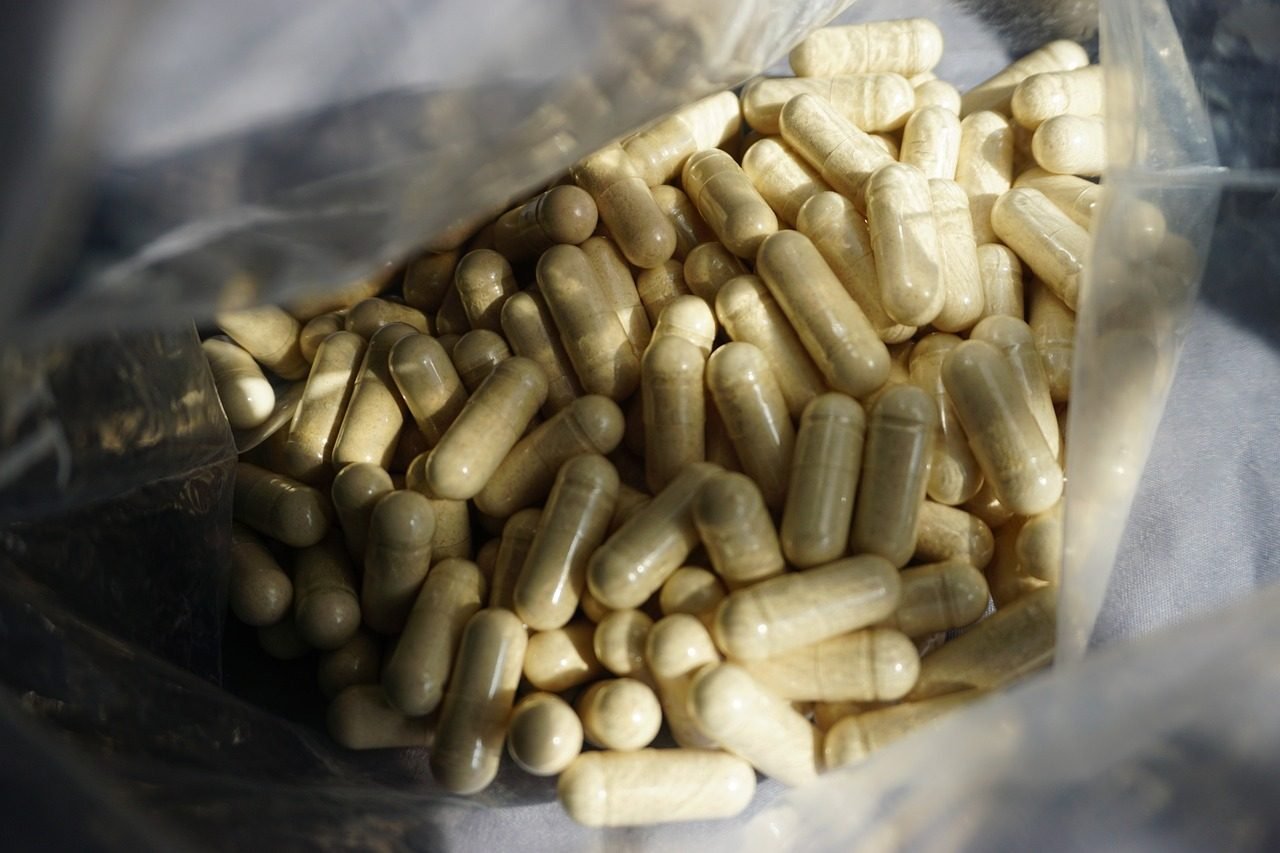
A high-quality, authorised yellow root is far better than a “black maca” of unknown origin. There is another distinction worth noting: gelatinised maca versus raw maca. The word has nothing to do with animal gelatine; it is a gentle heat process that removes part of the starch to make it easier to digest, preferred by those who feel a digestive heaviness with the raw powder. In the form of dose-controlled capsules, the matter is simpler for the user: they get a fixed, defined amount each time, without manual measuring or an earthy taste that may not suit everyone. This practical side is one reason for the popularity of maca in capsules.
Why the extract and dose matter more than the plant itself
This is a point many people overlook. The word “maca” on the label is not enough; the difference between one product and another can be huge. What makes real quality? It is measured by the purity of the extract, the honesty of the dose and regulatory authorisation — not by the promises written on the box.
The dose: the amount that matters
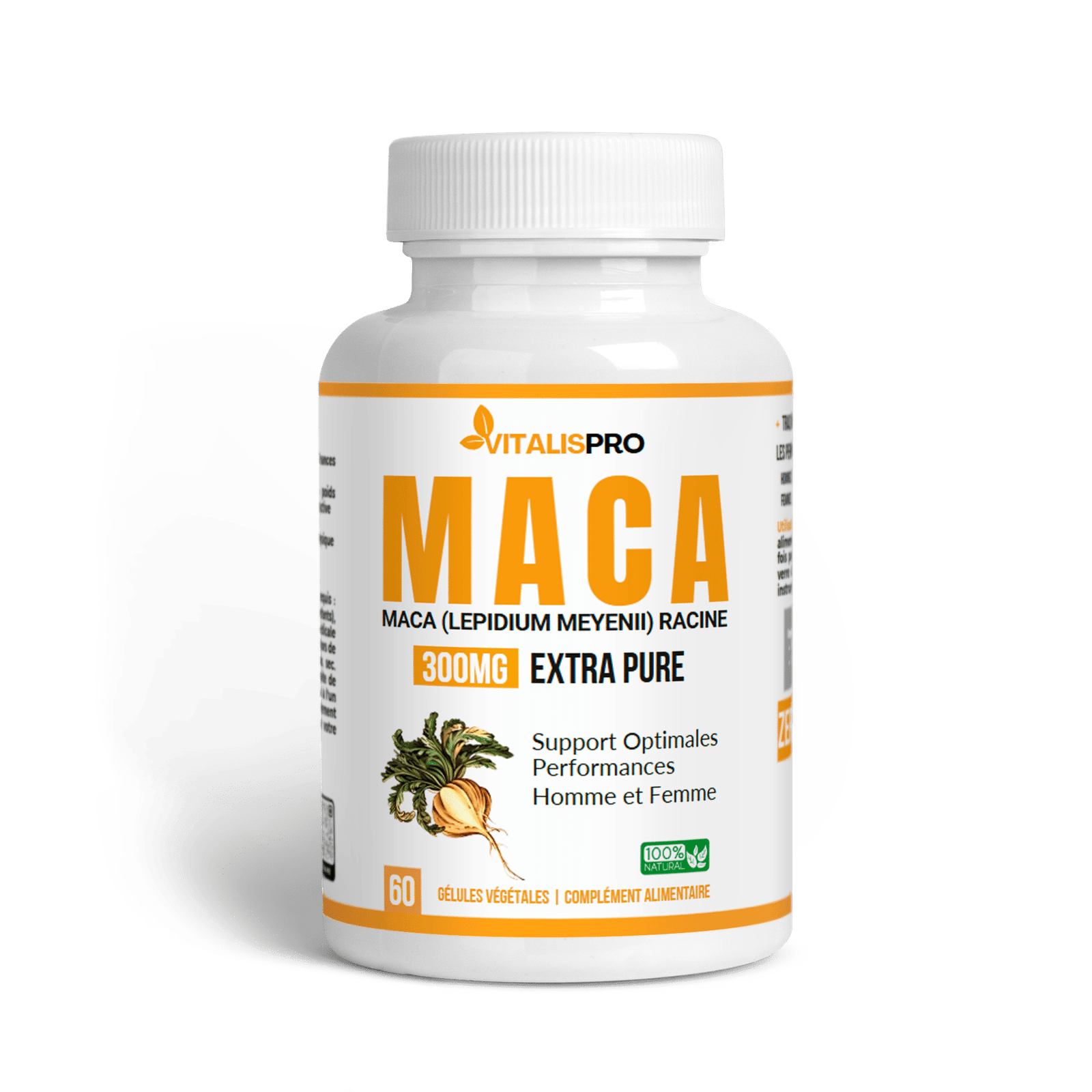
Most studies used doses generally between 1.5 and 3 grams per day of maca powder, or the equivalent in concentrated extract, spread across the day and taken with a meal. Maca by VitalisPro provides 300 mg of pure root per capsule, which lets you adjust the amount to your need by increasing the number of capsules within the recommended limit on the box. The golden principle: consistency beats a large intermittent dose. We stress here a point that concerns awareness of the Moroccan market: some consumers look for massive doses, believing they are more effective. But our products respect the amounts compatible with the Moroccan regulatory framework, and this in itself is a guarantee of safety and conformity.
How to read a maca supplement label without being misled
- The scientific name: you should see Lepidium meyenii, not just the word “energy.”
- The explicit amount per capsule (for example 300 mg), not vague proportions inside a “blend.”
- A short, clear ingredient list: the fewer the unknown additives, the greater the reassurance.
- Regulatory authorisation: a product authorised by Morocco’s National Office of Food Safety (ONSSA) gives you a guarantee of oversight.
- A trustworthy source and transparency about the offer and the price: no room for surprises.
Why insist so much on regulatory authorisation? Because the supplement market is full of products of unknown origin that enter through informal channels, with no control over the real content or the purity. When a product carries ONSSA authorisation, it means it has followed a control pathway concerning the safety of food products in Morocco. This is not a matter of form: it is the difference between knowing exactly what you put into your body and betting on the unknown. To go further, you can browse our full range in the shop.
The smarter approach is not to chase the “miracle plant,” but the considered combination of complementary ingredients according to a clear goal. For anyone seeking an integrated approach to energy and vitality in men, VitalisPro has brought together four studied traditional roots in a single formula: the Men’s Vitality Pack.

Maca in the Moroccan context: fatigue and the daily rhythm
The modern Moroccan lives an accelerated rhythm: long commutes, professional pressure, late nights and meals whose times are not always respected. Add to that the summer heat, which drains the body. In such a context, looking for energy support becomes understandable. But before any supplement, there are fundamentals that nothing can replace. Let us be realistic: many of the states of fatigue we live through do not need a supplement as much as a review of habits: an extra hour of sleep, a glass of water at the right time, a balanced meal instead of fast food.
When we lay these bricks first, any supplement we turn to — such as maca — takes on a clearer and more honest effect, because it works on a solid base and not on emptiness. This order of priorities is the heart of a responsible approach to health. Here are the pillars, arranged by practical priority, that come before any supplement:
| Pillar | Why it comes before the supplement |
|---|---|
| Enough sleep | Lack of sleep is the first source of fatigue; no supplement makes up for lost hours |
| Hydration | Mild dehydration, common in Morocco’s heat, causes tiredness and poor concentration |
| Balanced diet | Iron and vitamins from real food are the first fuel of energy |
| Regular movement | Paradoxically, moderate activity raises energy instead of draining it |
Anyone suffering from intense or persistent fatigue with no clear cause is best advised to consult a professional to rule out causes that need follow-up, such as iron deficiency. When these foundations are built, maca takes on meaning: an extra brick on a solid base, not an attempt to patch up an exhausting lifestyle.
How to fit maca into your daily routine
Maca fits easily into daily life; a capsule with the morning meal is a practical and consistent choice. Here is a simple approach, in four steps.
Step one: choose the timing
Many people prefer to take maca in the first half of the day, with breakfast or lunch, to accompany the day’s activity. Because it is not a stimulant, it does not usually disturb sleep, but starting in the morning remains the most logical choice for anyone seeking support for vitality.
Step two: respect the dose
Start with the recommended dose on the box; in the case of Maca by VitalisPro, two capsules per day with a meal and a large glass of water. Do not exceed the recommended amount thinking that “more is better”: the body responds to consistency, not to intermittent shock doses.
Step three: persistence over time
Maca is not an instant remedy. Most of those who felt a benefit spoke of it after several weeks of continuous use. So we advise a follow-up of at least two to three months before judging. In practice, a box of 60 capsules is enough for a full month; two to three boxes ensure continuous follow-up without interruption. The secret of consistency lies in tying the capsule to a fixed daily habit that is hard to forget: with the morning coffee, or alongside lunch. Many abandon the supplement after two weeks thinking “it did not work,” when they did not give it the time its cumulative mechanism of action requires.
Step four: observe, then decide
Simply note your observations: energy level, sleep quality, general state. After a sufficient period, decide objectively whether maca suits you. This realistic approach protects you both from exaggerated expectations and from giving up too early. Maca can also be paired with other supportive roots according to the goal: red ginseng for extra support of vitality and focus, or ashwagandha to accompany stress management. The principle: a clear goal, authorised ingredients, and consistency. For any question, the VitalisPro team is available through our contact page.
Precautions, interactions and limits
No responsible discussion of a food supplement is complete without a frank section on its limits and precautions. “Natural” is not an automatic synonym for “suitable for everyone in all circumstances,” and awareness of this is part of respecting your health. Maca is generally well tolerated in healthy adults at usual doses. However, caution is required in specific situations:
- Pregnancy and breastfeeding: it is advised to avoid the supplement unless recommended by a healthcare professional.
- Children under 18: supplements are not intended for this group without supervision.
- Known conditions or ongoing treatments: consult a professional before starting, to avoid any interaction.
- Mild digestive upset: it may appear at the start for some people, and usually fades with habituation and by taking maca with a meal.
Common myths to correct
Many exaggerations circulate about maca on social media, and it helps to put them in their proper place. First, maca is not a miraculous sexual stimulant as is sometimes claimed; that description is misleading, because it does not work by that mechanism and is not directed at any medical condition; at most, research points to a possible support for libido and general vitality in some healthy adults. Second, there is no “instant result”; anyone expecting an effect after a single capsule will be disappointed. Third, “more is not better”; exceeding the dose does not speed up results and may only cause digestive discomfort. Realism is the best ally of anyone trying maca seriously. The golden rule remains: a supplement adds; it does not fix a real imbalance on its own; at any doubt or persistent symptom, consulting a healthcare professional remains the safest option.
Stories from our readers
These are testimonials from people who added maca to their daily routine; individual experiences that differ from one person to another, which we present as they are, without exaggeration:
“I started maca with breakfast, and after about three weeks I noticed that the end-of-day tiredness had become lighter. No miracle, but a difference I really feel.” — Karim, Casablanca
“I was hesitant, but what I liked was the clarity of the formula and the authorisation. I have been taking it for two months, within a lifestyle I tried to improve, and I feel generally more energetic.” — Salma, Rabat
“Ordering was easy, with cash on delivery, and the capsule is easy to swallow. I appreciate that it is natural and ONSSA-authorised, and I reordered.” — Younes, Marrakech
Frequently asked questions about maca
Conclusion: what do we take from all this?
Maca is a venerable Andean root, carried by a long historical experience and encouraging preliminary scientific signals, especially on vitality and sexual health in men and on comfort in women during menopause. But it is not a magic solution: its effect is gradual and indirect, and it requires consistency and realism. The smartest thing is to see it as a supportive brick laid on solid foundations: sleep, diet, movement and stress management.
If you decide to try it, choose a clear, authorised formula from a trustworthy source — which is exactly what Maca by VitalisPro offers: pure Peruvian roots dosed at 300 mg, transparency in the ingredients, ONSSA authorisation and delivery across Morocco with cash on delivery. Real energy is built through habits; maca can be a useful companion along the way. In the end, what distinguishes the aware consumer is neither avoiding every supplement nor believing every promise, but the ability to discern: to know what the evidence says and what it does not, to choose quality over noise, and to give the trial its fair time. For direct contact, the VitalisPro team is available through our team page.
Sources and methodology
This guide relied on a review of documented general scientific sources (PubMed databases) and published systematic reviews, in addition to the guidance of official bodies such as the European Food Safety Authority (EFSA). We committed to presenting results at their true size: promising signals are presented as signals, not as definitive promises, and no therapeutic effect was claimed. Maca is a food supplement, and the information here is for health education, not for diagnosis or a medical prescription.
References
- Medicinal effects of Peruvian maca (Lepidium meyenii): a review (2020). PubMed 31951246
- Effects of maca (Lepidium meyenii Walp.) on physical performance in animals and humans: a systematic review (2024). PubMed 39796542
- Maca (Lepidium meyenii Walp.) on semen quality parameters: a systematic review and meta-analysis (2022). PubMed 36110519
- European Food Safety Authority (EFSA) — health claims and botanicals. efsa.europa.eu
The information in this article is provided for informational purposes for health education, drawing on documented general scientific references (PubMed, EFSA), and is not a substitute for consulting a qualified healthcare professional. Maca is a food supplement that does not replace a varied, balanced diet or a healthy lifestyle, and is not intended to diagnose, treat, cure or prevent any condition. Do not exceed the recommended dose. Pregnant and breastfeeding women, children under 18, and people with medical conditions or ongoing treatments are advised to consult a professional before use. Keep out of the reach of children.
