


Wellbeing & mental performance
You walk into a room and forget why you came. You read a page and realise your mind drifted away a while ago. In a world flooded with notifications, keeping a sharp memory and clear focus feels like a daily challenge. The reassuring news: mental performance is not a fixed gift. It is a skill you can support through smart habits, the right nutrition, and nutrients that science studies.
This guide from VitalisPro does not promise a “genius pill” or a miracle result. In plain language and with sourced references, it explains how memory and attention actually work, which lifestyle levers truly matter, and what research has shown — honestly, without exaggeration — about nutrients such as omega-3 (DHA) and the B vitamins, and about traditional plants and mushrooms like Lion’s Mane and Reishi. The goal is to leave with a decision built on knowledge, not on advertising noise.
Let us agree on one principle from the start: looking after your brain begins with looking after your whole body. Sleep, the plate, movement and stress management form the foundation; nutrients and plants come to complete that foundation, never to replace it. It is precisely from this realistic angle that talking about supplements begins to make sense — and not a moment before.
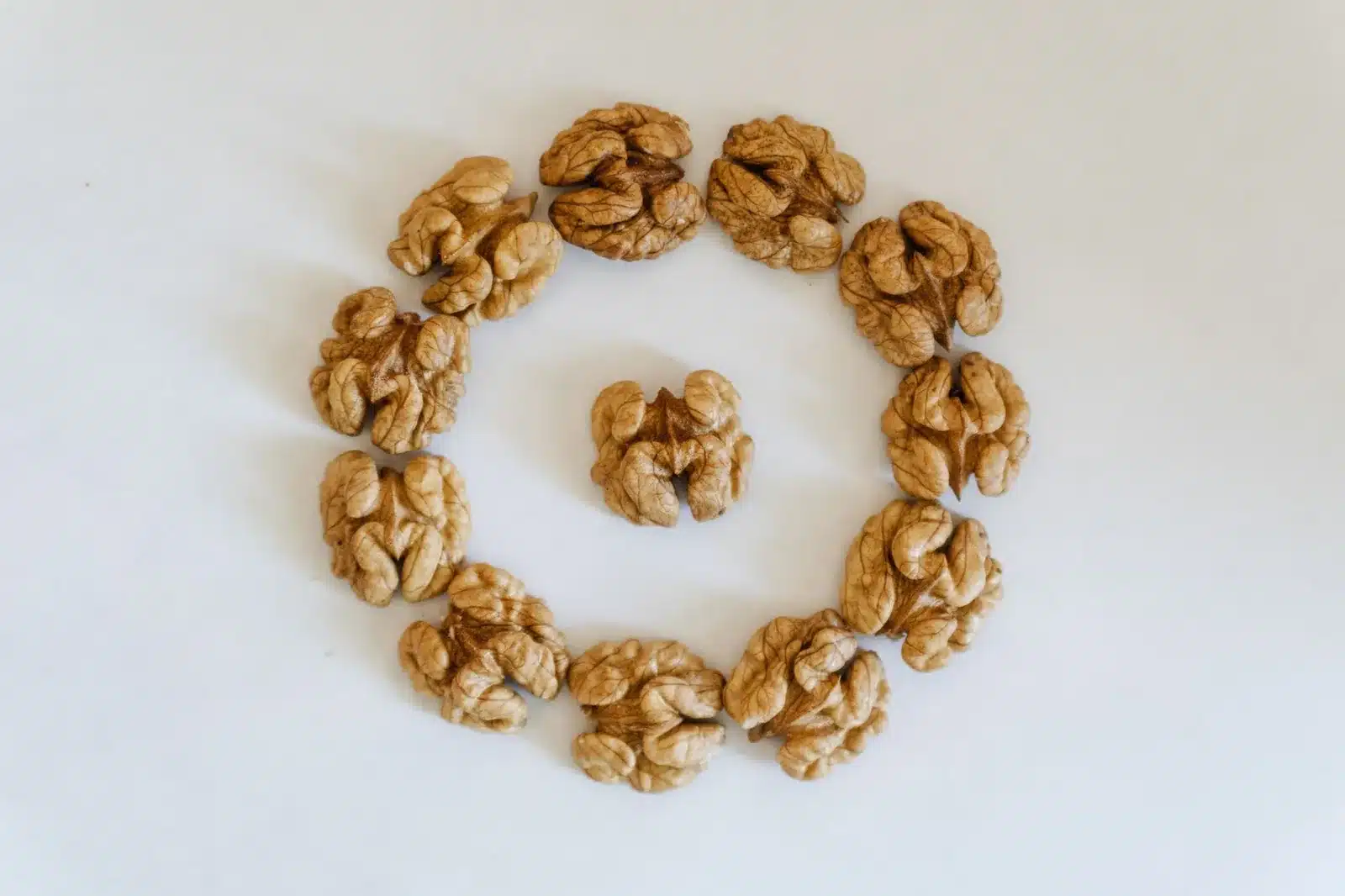
محتوى الصفحة
- 1 In brief: what you will learn
- 2 In this guide
- 3 How does your brain work?
- 4 Sleep: when your brain files away your memories
- 5 Nutrition: your brain’s fuel
- 6 Movement: a workout for body and mind
- 7 Plants and mushrooms studied for cognitive support
- 8 Digital distractions: the quiet enemy of focus
- 9 Stress and memory: a relationship to tame
- 10 Practical techniques to strengthen memory
- 11 Social relationships and mental activity
- 12 Stories from our readers
- 13 Frequently asked questions about memory and focus
- 14 Conclusion: a sharp mind, the fruit of wise habits
- 15 Sources and methodology
In brief: what you will learn
- The brain is energy-hungry: although it makes up only a small share of our weight, it consumes a large share of our daily energy, and depends on a steady supply of fuel and oxygen.
- Sleep is the number-one pillar of memory: it is during deep sleep that the brain consolidates what it learned during the day.3
- The B vitamins and omega-3 (DHA) are linked to the normal functioning of the nervous system and to normal cognitive function; DHA contributes to the maintenance of normal brain function at the recommended intake (EFSA claims).2
- Habits — regular movement, stress management, protecting attention from distraction — matter far more than any single supplement taken in isolation.
- VitalisPro products such as Lion’s Mane, omega-3 and Reishi are ONSSA-authorised food supplements, meant to fit inside a healthy lifestyle. They are not medicines and not a substitute for professional advice.
How does your brain work?
The brain is a remarkable organ: it represents only a small share of our weight, yet it consumes a considerable share of the energy we produce each day. Its good performance rests on three conditions that are simple to state and demanding to keep: a steady supply of fuel and oxygen, a balance of the chemical messengers that carry information between neurons, and enough rest to file away and fix what we learn. When any of these bases is disturbed — through lack of sleep, poor nutrition or chronic stress — focus and memory suffer straight away.
Understanding this mechanism changes everything, because it dissolves an old misunderstanding: caring for your memory is not about “bulking up your brain” with a single product. It is first about caring for the whole body that feeds it. The blood that carries glucose and oxygen, the plate that supplies the building blocks of nerve cells, the sleep that consolidates — all of this forms one system. Improving a single link while ignoring the others yields little; acting on the whole, patiently, yields a great deal.
Movement holds a place here that is often underrated. The World Health Organization notes that regular physical activity is among the factors that support cognitive function and general health, and review work has described how exercise acts on the brain and learning.6 In other words, the first “brain booster” is not in a box: it is in the consistency of your days.
For a clear, calm introduction to how memory forms and how we lose it, this educational video from TED-Ed gives a useful overview before we go into the detail:
Sleep: when your brain files away your memories

If there is one lever to remember above all, it is this: sleep is probably the most powerful — and the most neglected — factor in memory. During deep sleep, the brain does genuine filing work: it replays, sorts and consolidates what we learned during the day, then transfers it into long-term memory. Research on the “memory function of sleep” has described this active role of rest in stabilising memories.3
The practical consequence is direct: a night that is too short hampers this operation, and our capacity to remember and to concentrate declines the very next day. No nutrient and no trick lastingly makes up for a sleep debt when it comes to memory. The first “pro-memory” decision is therefore free: keep regular bedtimes, aim for a sufficient duration, and protect the last hour of the day from over-stimulating screens.
This is also why it is an illusion to expect a capsule to “repair” a focus undermined by broken nights. Nutritional support makes sense after this base is laid, not in its place. A well-rested brain benefits far more from a balanced diet and the nutrients that accompany it.
Nutrition: your brain’s fuel

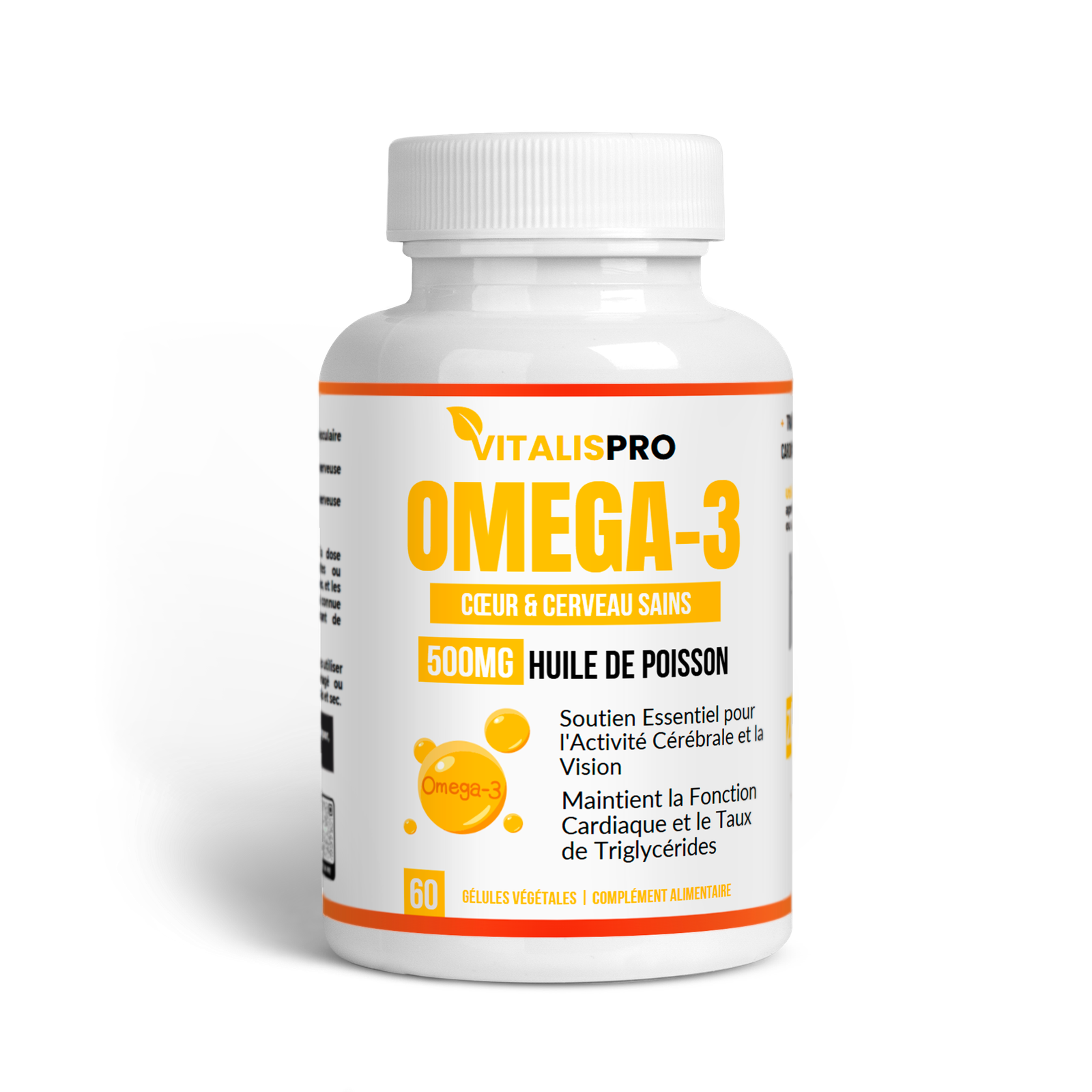
What you put on your plate is reflected in the clarity of your mind. Several families of nutrients play a documented role here. Omega-3 fatty acids, and in particular the DHA found in oily fish, are a structural component of brain cell membranes; DHA contributes to the maintenance of normal brain function when taken at the recommended dose, a claim recognised by the European Food Safety Authority (EFSA). A controlled trial also observed an improvement in memory and reaction time in young adults after DHA supplementation.2
Alongside omega-3, the B vitamins hold a key place. Several of them — B6, B9 (folate), B12 — contribute to normal psychological function, to the normal functioning of the nervous system, and to the reduction of tiredness and fatigue (EFSA claims). A landmark review detailed the mechanisms by which these vitamins support the brain, underlining the importance of a sufficient status.5 The antioxidants in berries and colourful vegetables help protect cells from oxidative stress, while whole carbohydrates give the brain steady fuel rather than the roller-coaster of fast sugar. Finally, hydration matters: even mild dehydration is enough to blunt concentration.
A general review of vitamins and minerals and their role in energy, fatigue and cognition noted that these micronutrients support the very functions a sharp mind depends on, provided intakes are adequate.1 The logic is always the same: a varied, colourful plate comes before any supplement. And when food is not enough to cover certain intakes, a clear, authorised supplement can help close the gap — for example a B-vitamin complex or magnesium glycinate, magnesium also contributing to normal psychological function and to the reduction of fatigue.
The nutrients science links to cognitive function
| Nutrient | Associated role (EFSA frame / research) | Food sources |
|---|---|---|
| Omega-3 (DHA) | Contributes to the maintenance of normal brain function | Oily fish, plant oils, supplements |
| B vitamins (B6, B9, B12) | Normal psychological function, nervous system, reduction of fatigue | Whole grains, pulses, eggs, animal products |
| Magnesium | Normal psychological function, reduction of fatigue | Nuts, leafy greens, pulses |
| Antioxidants (polyphenols, vit. C/E) | Help protect cells against oxidative stress | Berries, colourful vegetables, citrus, oils |
| Whole carbohydrates | Steady fuel for an energy-hungry brain | Whole grains, pulses, tubers |
Notice that the first column of solutions is found at the market, not the pharmacy: it is the everyday diet that draws the main lines. A supplement is never an excuse to neglect the plate; it is its considered extension, for anyone who has first tended to the fundamentals.
Movement: a workout for body and mind

Exercise does not benefit muscles alone. Regular physical activity boosts blood circulation and increases the supply of oxygen to the brain, which supports alertness and focus. Studies have described how exercise positively influences the brain and learning: movement is among the habits that keep a mind alert.6 The idea is not to aim for violent effort, but for a consistency that settles into daily life: a daily walk, a few minutes of activity that become a habit.
This point deserves emphasis because it is liberating: the most effective move for your mind costs nothing and requires no equipment. An active body often comes with a sharper mind. Here too, the supplement comes after: it completes a lifestyle in motion, it does not replace it.
Plants and mushrooms studied for cognitive support
Alongside lifestyle, several natural elements are studied for their possible role in supporting mental function. We present them for what they are: promising but incomplete leads, to be woven into an overall approach, never as guaranteed promises.
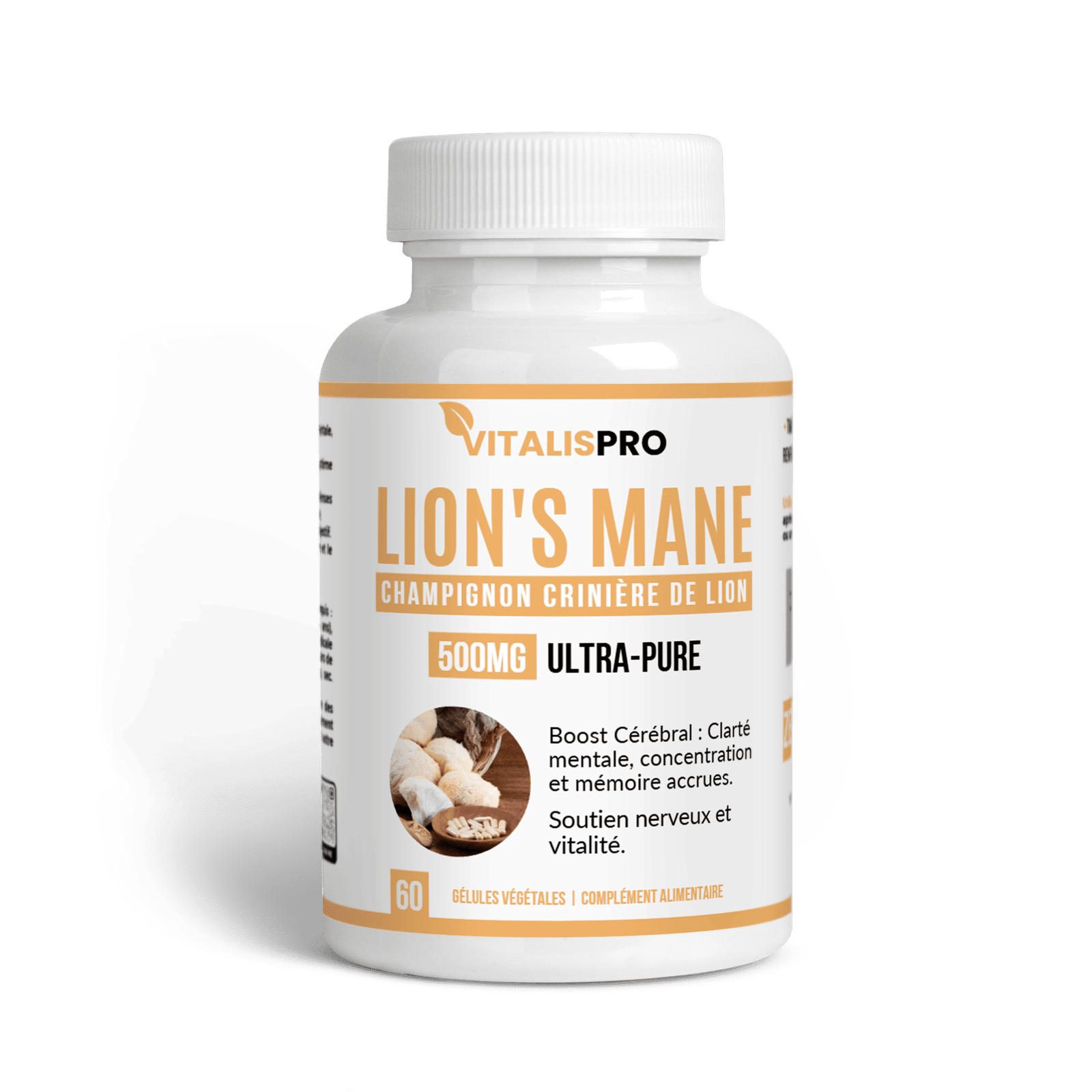
Lion’s Mane (Hericium erinaceus) is a traditional mushroom that is drawing growing interest. A double-blind, randomised clinical trial observed improving effects on cognitive scores in adults with mild cognitive impairment during use, effects that faded after stopping — an interesting signal that calls for more research.4 Laboratory work has also explored its compounds on nerve cells. None of this allows us to speak of “treatment”: it is a supportive, studied mushroom that we offer within a wellbeing frame.
Reishi (Ganoderma lucidum) belongs to the long tradition of so-called “adaptogenic” mushrooms, used to accompany general balance and calm — a ground that matters for focus, because a settled mind remembers and concentrates better. Finally, Coenzyme Q10 is a compound involved in the production of energy inside cells, which the energy-hungry brain needs. As with any plant, what matters is not only the name on the box, but the clarity of the formula, the quality of the source, and regulatory authorisation from ONSSA.
A common-sense caution is in order against “stacking” supplements. Gathering many boxes from scattered sources, assuming that “more is better,” raises the cost, increases the chance of interactions, and makes it impossible to know what is actually helping. Wisdom lies in simplicity: one or two well-considered, authorised formulas are better than a pile of obscure products. This is the spirit in which VitalisPro designs its range, which you can browse in the shop.
Digital distractions: the quiet enemy of focus
In the age of notifications, deep focus has become a rare commodity. Every interruption that cuts our attention costs us time and mental energy to return to what we were doing. Simple strategies change a lot: set aside continuous work blocks away from the phone; turn off non-essential notifications; and handle one task at a time rather than jumping between several. Attention is a skill that is trained, exactly like any other. Protecting your focus from distraction is sometimes more powerful than any nutrient.
This is not about demonising technology, but about taking back control. Deciding when you are reachable, rather than being reachable all the time, gives the brain the conditions for deep work. This frame also protects sleep, because late, stimulating screens are one of the first disruptors of falling asleep — and we have seen how much sleep matters for memory.
Stress and memory: a relationship to tame
Passing stress can sometimes sharpen attention, but chronic stress exhausts the brain and weighs on memory and focus. When the body stays in a constant state of alert, the capacity to learn and to fix information is affected. That is why stress management — through breathing, movement and enough rest — is not a luxury: it is an essential part of supporting mental performance. A settled mind is often a sharper mind.
This is also the ground where adaptogenic mushrooms such as Reishi find their traditional place: not to “treat” anything, but to accompany a lifestyle that seeks balance and calm. Combined with soothing habits, such support fits into an overall approach that is patient and coherent.

To place all of this into a concrete routine, this educational video from TED-Ed revisits why a good night’s sleep matters so much for the brain, learning and attention:
Practical techniques to strengthen memory
Beyond lifestyle and nutrition, there are mental techniques whose effectiveness is studied for supporting memory, and which cost nothing. Weaving them into the way you learn can be more powerful than any supplement, because they act directly on the very mechanism of memorisation:
- Spaced repetition: reviewing information at increasing intervals, rather than cramming it all at once; it is one of the most effective methods for lastingly anchoring what you learn.
- Association and visualisation: linking new information to a strong mental image or to knowledge you already hold, to give it a “handle.”
- Teaching others: explaining what you have just learned consolidates it; you retain better what you had to put into your own words.
- Regular breaks: the brain needs rest periods to organise what it has just taken in; working in blocks broken up by real breaks beats long, unbroken hours.
These techniques share one thing: they respect the way memory works, instead of forcing it. Combined with enough sleep and protected attention, they turn learning into a durable habit, not an exhausting race.
Social relationships and mental activity
One factor often surprises: social connection matters for keeping the mind sharp. Interacting with others stimulates the brain in many ways — it draws on attention, memory, and the understanding of language and emotion. Conversely, prolonged isolation can weigh on mood and mental sharpness. Keeping up relationships, engaging in group activities and learning new skills all help keep the mind active and challenged.
The brain, in short, behaves like a muscle: it thrives on challenge and variety. Diversifying your mental and social activities is an investment in long-term mental clarity — an investment that, like the other pillars of this guide, is built through small, repeated decisions.
Stories from our readers
These are testimonials from people who reviewed their habits and added nutritional support to their routine; individual experiences that differ from one person to another, which we present as they are, without exaggeration:
“I first worked on my sleep and cut evening notifications. Within a few weeks, my focus at work clearly improved. I added omega-3 along the way. No miracle, but a difference I genuinely feel.” — Yassine, Casablanca
“What I liked was the honest message: it talks about habits before talking about capsules. I have been taking Lion’s Mane for two months, alongside a more regular routine, and I feel steadier when I study.” — Salma, Rabat
“Ordering was easy, payment on delivery, and the formulas are clear and ONSSA-authorised. I appreciate the transparency, and I reordered.” — Khalid, Marrakech
Frequently asked questions about memory and focus
Conclusion: a sharp mind, the fruit of wise habits
Memory and focus are not a fixed gift, but two skills you support through smart habits. The central message of this guide fits in one image: mental performance is the fruit of a system. Regular sleep that consolidates information, a balanced diet that gives the brain its fuel and building blocks such as omega-3, regular movement that boosts circulation, stress management, and attention protected from distraction. Add to that studied mental techniques and social connection that keeps the mind stimulated.
Natural supportive elements — such as Lion’s Mane, omega-3 and Reishi — come to complete this foundation, not to replace it. When you bring these habits together with patience and consistency, you gradually build a sharper, clearer mind. Mental clarity is a daily investment, built through small, wise decisions that accumulate over time. For direct contact, the VitalisPro team is available through the contact page and the our team page.
Sources and methodology
This guide relied on general, verifiable scientific sources (PubMed databases), published reviews and trials, as well as official bodies such as the World Health Organization (WHO) and the European Food Safety Authority (EFSA). We committed to presenting results at their true size: promising signals are presented as signals, not as definitive promises, and no therapeutic effect is claimed. The information here is for health education, not for diagnosis or a medical prescription.
References
- Vitamins and Minerals for Energy, Fatigue and Cognition: a narrative review of the biochemical and clinical evidence (2020). PubMed 31963141
- DHA supplementation improved both memory and reaction time in healthy young adults: a randomised controlled trial (2013). PubMed 23515006
- Diekelmann S, Born J. The memory function of sleep, Nature Reviews Neuroscience (2010). PubMed 20046194
- Improving effects of Hericium erinaceus (Lion’s Mane) on mild cognitive impairment: a double-blind placebo-controlled clinical trial (2009). PubMed 18844328
- Kennedy DO. B Vitamins and the Brain: Mechanisms, Dose and Efficacy — a Review (2016). PubMed 26828517
- Hillman CH et al. Be smart, exercise your heart: exercise effects on brain and cognition (2008). PubMed 18094706
The information in this article is provided for informational purposes for health education, drawing on general, verifiable scientific references (PubMed, WHO and EFSA), and is not a substitute for consulting a qualified healthcare professional. Cognitive-support products are food supplements that do not replace a varied, balanced diet or a healthy lifestyle, and are not intended to diagnose, treat, cure or prevent any condition. Do not exceed the recommended dose. Pregnant and breastfeeding women, children under 18, and people with medical conditions or ongoing treatments are advised to consult a professional before use. Keep out of the reach of children.
