


Wellbeing and natural balance
Inside our intestines lives an invisible, fascinating world: trillions of micro-organisms that make up what science calls the gut microbiome. For a long time we saw bacteria only as enemies to fight. Modern research has drawn a far more nuanced picture: a large share of these bacteria is helpful, even essential to the balance of our digestive system. This is where the word “probiotics” comes in — meaning the live good bacteria.
This guide from VitalisPro promises you no miracle and claims to “fix” nothing. In plain language and with sourced references, it explains what probiotics really are, how good bacteria contribute to digestive balance, what research has shown about strains such as Lactobacillus and Bifidobacterium, the difference between prebiotics and probiotics, and where the honest limit of the evidence lies. The goal is that you leave with a decision built on knowledge, not on a trend.
Let us agree on one principle from the start: the gut is not a simple pipe that needs to be “re-seeded” with an outside product. It is a living, dynamic ecosystem in constant dialogue with what we eat and how we live. Our job is not to “cure” it with some wonder capsule, but to give it the conditions in which a diverse, balanced microbiome can thrive. It is precisely from this realistic angle that talking about probiotics begins to make sense, and not a moment before.
محتوى الصفحة
- 1 In brief: what you will learn
- 2 In this guide
- 3 The gut microbiome: a living ecosystem
- 4 Probiotics: a precise definition
- 5 How good bacteria contribute to digestive balance
- 6 Prebiotics or probiotics: do not confuse them
- 7 Where to find good bacteria in our food
- 8 The gut-brain axis: beyond digestion
- 9 Probiotics in the Moroccan context
- 10 The fundamentals before any supplement
- 11 When and how to fit probiotics into your routine
- 12 Precautions, interactions and limits
- 13 Stories from our readers
- 14 Frequently asked questions about probiotics
- 15 Conclusion: balance above all
- 16 Sources and methodology
In brief: what you will learn
- The gut microbiome is a living ecosystem of trillions of micro-organisms; its diversity and balance are at the heart of a digestive system that works with ease.
- Probiotics are live micro-organisms that, when given in adequate amounts, are studied for the contribution they may bring to the balance of the flora; what matters is the specific strain and its quantity, not just the word on the box.
- Do not confuse probiotics (the good bacteria) with prebiotics (the fibres that feed them): it is their combination that best supports a balanced flora.
- The fundamentals — a fibre-rich diet, hydration, enough sleep and regular movement — matter far more than any single supplement.
- VitalisPro products such as the Probiotics and the Digestion Pack are ONSSA-authorised food supplements, meant to fit inside a healthy lifestyle. They are not medicines and not a substitute for professional advice.
The gut microbiome: a living ecosystem
The gut microbiome is a vast community of micro-organisms — bacteria and others — that inhabits our digestive tract, especially the large intestine. Their number is estimated to rival that of the body’s own cells. This community is no passive tenant: it takes part in vital processes such as the fermentation of fibre, the production of certain vitamins, and the support of the intestinal barrier. When this ecosystem is diverse and balanced, the digestive system tends to work more smoothly. Preserving this balance is the very heart of gut health.
Let us bring the picture closer with a simple image. Imagine a garden filled with a wide variety of plants. When diversity is rich, the garden is robust, better resists imbalance, and regulates itself. When a single species takes over everything, the whole becomes fragile. Our microbiome works in much the same way: diversity is a sign of good health, and our role as gardener is not to uproot everything and replant, but to tend a fertile soil — through diet, hydration and lifestyle — so that helpful species settle in for the long term.
This shift in perspective is recent. Where we once saw only microbes to eliminate, research today describes a constant dialogue between our habits and this inner ecosystem. The World Health Organization stresses the importance of dietary diversity within a healthy lifestyle, which in turn supports the diversity of the gut microbiome. The wisdom, then, is not to hunt for a product that “fixes” the gut, but to feed a favourable terrain every day.

Probiotics: a precise definition
According to the reference scientific definition, probiotics are live micro-organisms that, when administered in adequate amounts, are studied for the contribution they may bring to the host.2 Not every bacterium is a “probiotic”: these are specific strains whose properties have been characterised. Among the best-known genera are Lactobacillus and Bifidobacterium. The essential point is that the strain matters: the studied property is tied to a specific strain and its amount, not to the mere word “probiotic” printed on a box.
This nuance has practical consequences. Two products may show the same word on the label yet differ deeply in the strains used, their quantity and the clarity of the formula. That is why transparency of strain and dose is a quality criterion, far more telling than marketing vocabulary. A product with a clear composition gives you what you actually think you are buying, while a preparation of vague origin may deliver only a fraction of what it claims.
A word of honesty is called for here, and it is part of our commitment to clarity: European scientific authorities, including the European Food Safety Authority (EFSA), have not accepted the term “probiotic” itself as a health claim.6 So we present probiotics for what they are: live good bacteria, long studied in the context of flora balance, to be woven into a broader wellbeing approach — and not as a remedy for anything.
How good bacteria contribute to digestive balance
Good bacteria carry out several studied roles in the digestive system. They help ferment the fibre the body cannot digest on its own, producing compounds useful to the cells of the intestine. They take part in maintaining a balance within the microbial community, so that unwanted species do not gain the upper hand. This balance is reflected in digestive comfort and regularity of transit. A reference scientific review examined the effects of probiotics, prebiotics and synbiotics on human health, and it is available on PubMed.7
Let us be precise about the scope of this work: the research describes contributions to balance and comfort, not a treatment. The level of evidence varies greatly with the strains, doses and populations studied, and many results are specific to a given strain and cannot be generalised. The honest reading is to present these signals as signals — promising but bounded — and to place good bacteria within a bigger picture: one supportive element among others, in service of a diverse microbiome.
Why the “strain and dose” matter more than the name on the box
A point many people overlook: the word “probiotics” on the packaging is not enough. What matters is which strains are present, in what amount, and whether the formula stays clear through to its use-by date. Two boxes with the same title can offer very different experiences. This difference between a product worth its price and one that offers nothing is the heart of the quality principle we commit to. That is why we always insist on regulatory authorisation from ONSSA: it is not a formality, but a control pathway that concerns the safety and conformity of the product.
Prebiotics or probiotics: do not confuse them
These two terms are often confused, though they mean distinct things. Probiotics are the live good bacteria themselves. Prebiotics, on the other hand, are the particular fibres these bacteria feed on: their “food.” A prebiotic, according to scientific consensus, is a substrate selectively used by the host’s micro-organisms to bring it a benefit.3 They are found in foods such as onion, garlic, banana, oats, pulses and many vegetables.
The smartest idea is to combine the two: good bacteria (probiotics) and food that supports their survival and maintenance (prebiotics). This complementarity — sometimes called a “synbiotic” — supports a balanced gut environment more effectively than focusing on just one of the two. In practical terms, supplying live ferments without feeding the terrain is like sowing without watering. That is why a fibre-rich plate remains the base, and the supplement is added to it, not a replacement for it.
“The best thing you can do for your flora is not to look for a capsule that “fixes” it, but to feed a diverse terrain every day. Good bacteria do not need a superhero from the outside; they need fibre, consistency, and a lifestyle that lets them thrive.”
Where to find good bacteria in our food
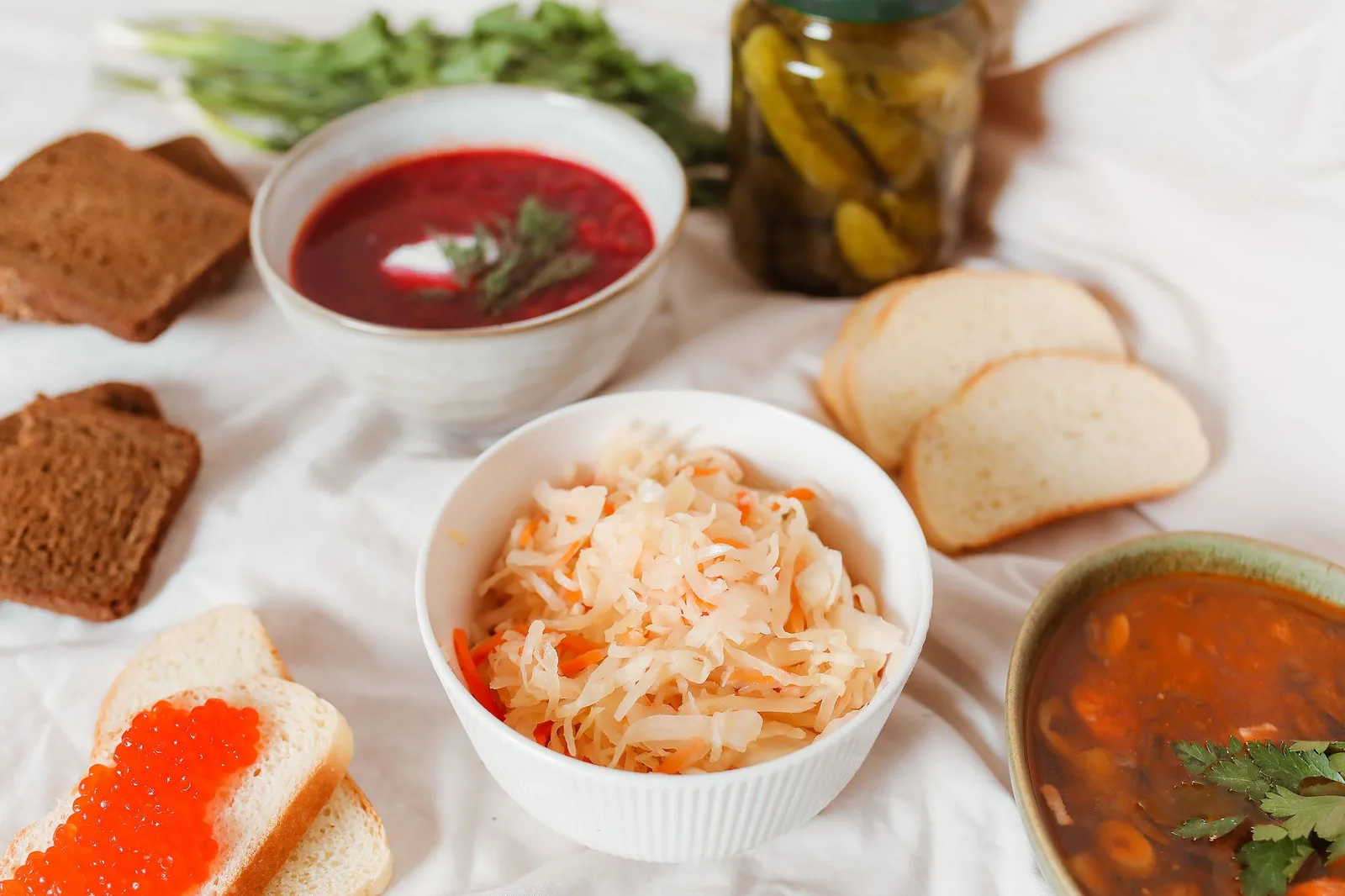
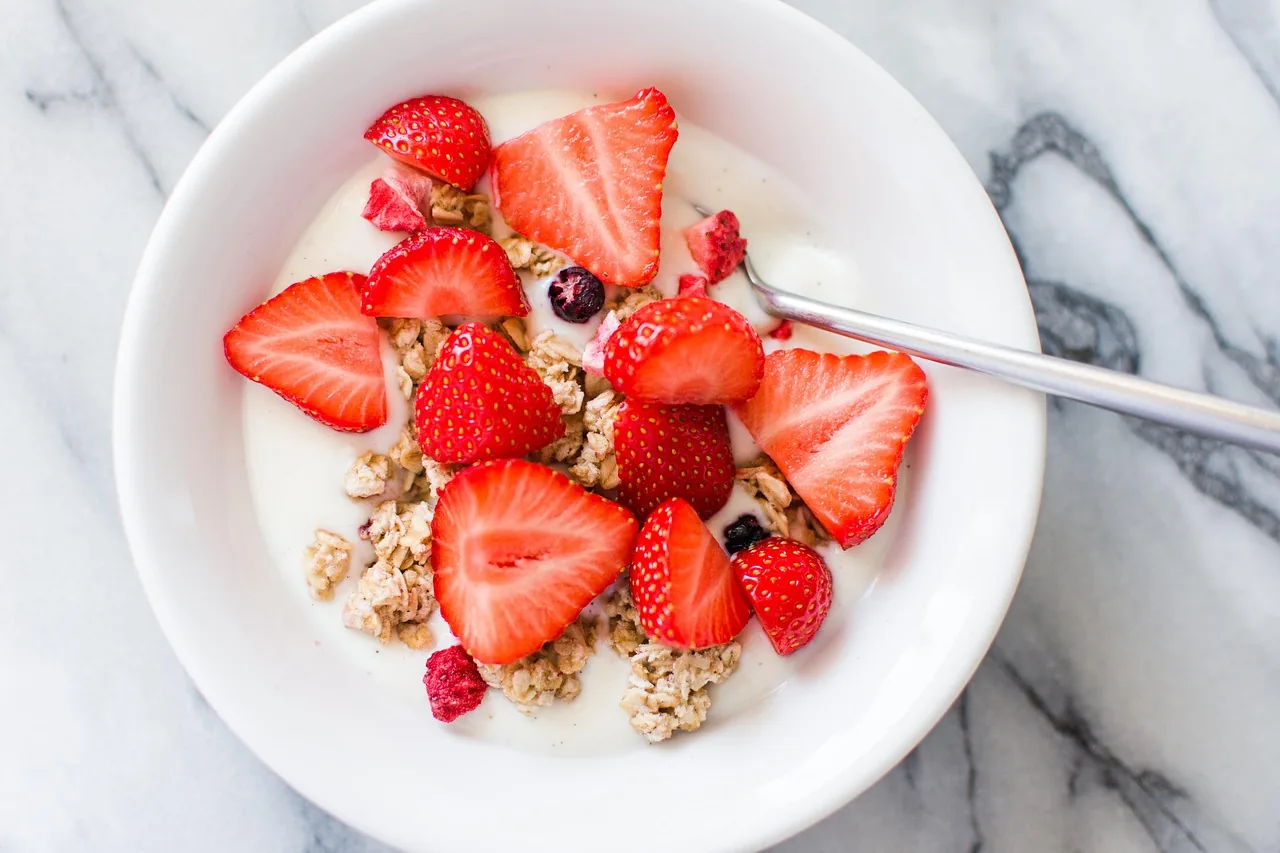
Fermented foods are the traditional natural source of good bacteria. Among the best known are plain, unsweetened yoghurt (lben, raïb), kefir, and traditionally fermented vegetables. These foods were part of ancient cuisines around the world long before science described them as it does today. A scientific review specifically examined yoghurt and other fermented foods as sources of favourable bacteria, a work available on PubMed.5
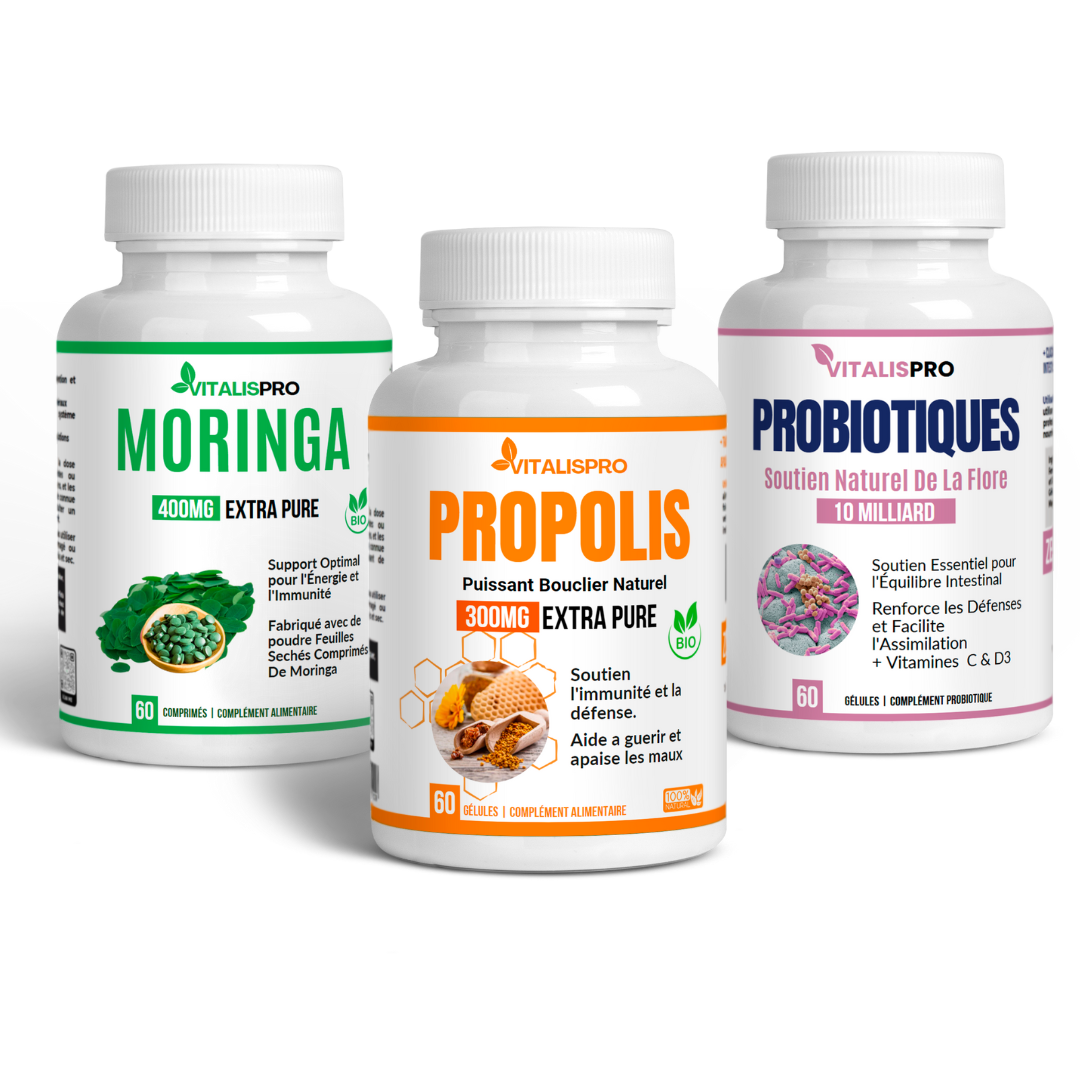
Weaving some of these foods into your diet, alongside fibre-rich foods, is a simple, concrete step to support a diverse, balanced microbiome, naturally. There is no need to overhaul your habits: a plain yoghurt at breakfast, a serving of vegetables at every main meal, some pulses across the week. For anyone who wants, alongside this dietary base, a formula with clear strains and a defined amount, VitalisPro offers its Probiotics, as well as a Digestion Pack combining propolis, probiotics and moringa. The full range is visible in our shop.
The gut-brain axis: beyond digestion
One of the most exciting areas of recent research is what is called the “gut-brain axis.” The work describes a two-way communication between the digestive system and the brain, in which the gut microbiome plays a studied role. This explains why the importance of gut balance goes beyond digestion alone. A review published in a major physiology journal details this complex relationship, while calling for further research to understand its mechanisms; it is referenced on PubMed.4
The point is certainly not to exaggerate, nor to suggest that good bacteria act as a mood treatment. This is an active, still-incomplete field of research that must be presented with caution. What we can safely take from it is that gut health is part of a wider picture of the body’s overall balance — which explains the growing interest in caring for the microbiome. Curiosity and caution at once: that is the balance we try to convey to you in every line.
When do people take an interest in probiotics?
Many turn to probiotics in periods when they feel the need to support their digestive balance: while travelling, during a change of diet, or after phases when meal timing and dietary variety have drifted. The idea is not that probiotics “fix everything,” but that they are one element of support for the diversity of the microbiome, within a complete, healthy lifestyle. The foundations — a fibre-rich diet, good hydration, enough sleep, regular movement — remain the first pillar, and good bacteria come to complement them, not replace them.
Probiotics in the Moroccan context
Traditional Moroccan cuisine has known fermented foods and natural leaven in beldi bread and in traditional dairy products such as lben. But the shift toward industrial, heavily sterilised foods, and the decline of fibre in some urban eating patterns, can be reflected in the diversity of the microbiome. Returning to traditional fermented foods, and increasing fibre-rich vegetables and pulses, is a simple step that supports a healthy gut environment, within a balanced, mindful lifestyle.
There is a lovely continuity here between heritage and modern knowledge: there is no need to import foreign “diets” to look after your flora. Lben, harira rich in pulses, seasonal salads and the vegetables of our markets already form a precious base. Giving these dishes back the place they have lost to fast food and ultra-processed products is, in itself, one of the best services you can render your microbiome. The supplement, for its part, is added to this table — it never replaces it.
To go further, our shop presents our full range dedicated to daily wellbeing, and our team remains available through the contact page for any question. Careful reading before any decision will give you a clearer picture of what suits you.
The fundamentals before any supplement
Before even thinking about a capsule, there are pillars whose effect outweighs any single supplement. We have arranged them for you by practical priority:
| Pillar | Why it matters to the flora | A practical step |
|---|---|---|
| Fibre and varied plants | They feed the good bacteria and support their diversity | Vegetables, fruit and pulses every day |
| Fermented foods | A traditional source of live good bacteria | Plain yoghurt or lben a few times a week |
| Adequate hydration | Water accompanies transit and digestive comfort | Regular glasses throughout the day |
| Regular movement | Physical activity supports transit and overall balance | A daily walk, even a moderate one |
| Moderation with ultra-processed foods | Chronic excess impoverishes dietary diversity | Cut back on added sugars and industrial meals |
| Enough sleep | Rest is part of the body’s overall balance | Consistent sleep times |
Notice that none of these pillars costs any real money: fibre, water, walking and sleep are within everyone’s reach. This is a paradox worth pausing on: the strongest thing you can offer your flora is not a product you buy, but small daily decisions you make. That is why we always insist on placing the supplement in its correct spot: a step that comes after the fundamentals, not before, and for anyone who chooses to add extra support consciously and by conviction.
When and how to fit probiotics into your routine
Step one: start with the plate, not the box
Your first “flora supporter” is your plate. Before buying any supplement, review a week of your meals honestly: where is the fibre, where are the fermented foods, and where are the vegetables and water missing? A simple adjustment here comes before everything, and it makes whatever follows far more useful. Good bacteria need a nourished terrain to settle in.
If you decide to add a supplement, choose a formula with clear strains and a defined amount, authorised by ONSSA, from a source that is transparent in what it offers and in its price. An authorised formula gives you a guarantee of oversight that a product of unknown origin, entering through unofficial channels, cannot. Clarity here is part of safety.
Step three: respect the dose and consistency
Do not exceed the recommended dose on the box thinking that “more is better”: the body responds to consistency, not to shock doses. Probiotics are usually used within a programme followed over several weeks before any assessment, alongside a fibre-rich diet. Tie the intake to a fixed daily habit so you do not forget it, and let time do its work.
Step four: observe your body, then decide
After a sufficient period, assess objectively: how is your digestive comfort? Your regularity, your general sense of lightness? Quietly listening to your body — without magical expectations — is the best judge. And at any doubt or persistent symptom, consulting a healthcare professional remains the priority. For any question, the VitalisPro team is available through our contact page.
Precautions, interactions and limits
No responsible discussion of a food supplement is complete without a frank section on its limits. “Natural” is not an automatic synonym for “suitable for everyone in all circumstances,” and awareness of this is part of respecting your health. Supplements containing good bacteria are generally well tolerated in healthy adults at usual doses, but caution is required in specific situations:
- Pregnancy and breastfeeding: it is advised to seek a healthcare professional’s advice before any use.
- Children under 18: supplements are not intended for this group without supervision.
- Weakened immune system, existing condition or ongoing treatment: consult a professional before starting.
- Digestive sensitivity at the start: some people feel a slight, transient discomfort in the first days; introducing gradually can help.
We add a practical reminder that is often forgotten: do not start several new supplements at the same time. If you begin them together, it becomes hard to know what helped you, what did nothing, and what may have caused any discomfort. The smarter method is to introduce one element at a time, giving it enough time to observe before adding another. This calm, gradual approach protects both your health and your wallet.
The golden rule: a supplement adds; it does not fix a real imbalance on its own, and it does not diagnose or treat a condition. At any persistent or worrying digestive symptom, consulting a healthcare professional remains the safest and first choice; and we are here to accompany you with a clear, authorised product, not to replace the doctor.
Stories from our readers
These are testimonials from people who reviewed their habits and added flora support to their routine; individual experiences that differ from one person to another, which we present as they are, without exaggeration:
“After a trip that had upset my eating, I felt heavy and irregular. I did not look for a miracle: I brought back vegetables and plain yoghurt, and added the probiotics daily. After a few weeks my digestive comfort improved. No magic, but a difference I can feel.” — Nadia, Casablanca
“What I liked was the honest message: no promise of a cure, just support within a lifestyle. I have been following the Digestion Pack for two months, with more fibre on my plate, and I feel more at ease day to day.” — Karim, Rabat
“Ordering was easy and payment was on delivery, and the formula is clear and ONSSA-authorised. I appreciate that it is natural and transparent, and I reordered.” — Salima, Marrakech
Frequently asked questions about probiotics
Conclusion: balance above all
After this exploration of the gut’s hidden world, the picture becomes clearer. Probiotics are neither a “magic remedy” nor a mere marketing trend: they are live good bacteria, studied for their contribution to the balance of the flora when supplied with clear strains and quantities. Their interest is completed when they are combined with the prebiotics that feed them, within a lifestyle rich in fibre.
Dietary and lifestyle foundations remain the first pillar of gut health, and good bacteria come to complement them, not replace them. When you look at your microbiome as a garden that needs balanced care — diversity, food and patience — you support your digestive balance in a conscious, lasting way, far from both exaggerated promises and neglect.
In the end, what distinguishes the aware consumer is neither avoiding every supplement nor believing every promise, but the ability to discern: to know what science says and what it does not, to place the fundamentals before the add-ons, and to give the body its fair time. If you leave this guide with that mindset, we have reached our goal. For direct contact, the VitalisPro team is available through the our team page and the contact page.
Sources and methodology
This guide relied on a review of documented general scientific sources (PubMed databases), published scientific consensus statements and systematic reviews, in addition to official bodies such as the U.S. National Center for Complementary and Integrative Health (NIH/NCCIH), the World Health Organization (WHO) and the European Food Safety Authority (EFSA). We committed to presenting results at their true size: promising signals are presented as signals, not as definitive promises, and no therapeutic effect was claimed. The information here is for health education, not for diagnosis or a medical prescription.
References
- U.S. National Center for Complementary and Integrative Health — “Probiotics: Usefulness and Safety” page. nccih.nih.gov
- Hill C. et al. — ISAPP consensus statement on the scope and appropriate use of the term “probiotic” (2014). PubMed 24912386
- Gibson G.R. et al. — ISAPP consensus statement on the definition and scope of prebiotics (2017). PubMed 28611480
- Cryan J.F. et al. — The Microbiota-Gut-Brain Axis (review, Physiological Reviews, 2019). PubMed 31460832
- Yogurt and other fermented foods as sources of health-promoting bacteria (review, 2018). PubMed 30452699
- European Food Safety Authority (EFSA) — health claims. efsa.europa.eu
- Effects of Probiotics, Prebiotics, and Synbiotics on Human Health (review, Nutrients, 2017). PubMed 28914794
The information in this article is provided for informational purposes for health education, drawing on documented general scientific references (PubMed, NIH, WHO and EFSA), and is not a substitute for consulting a qualified healthcare professional. Probiotics are food supplements that do not replace a varied, balanced diet or a healthy lifestyle, and are not intended to diagnose, treat, cure or prevent any condition. Do not exceed the recommended dose. Pregnant and breastfeeding women, children under 18, and people with medical conditions or ongoing treatments are advised to consult a professional before use. Keep out of the reach of children.
