


Energy and wellbeing after 40
Once we pass the age of 40, many of us notice a quiet shift: a slower recovery after exertion, a sense that our “charge” no longer holds quite as it used to, an urge to nap that creeps in after lunch. Behind this very concrete impression lies a precise biological mechanism at work in the heart of every one of our cells. At the centre of that mechanism sits a molecule with a slightly technical name: coenzyme Q10, one of the most studied elements in the field of cellular energy. What exactly is this compound? And why does interest in it grow as the years go by?
This guide from VitalisPro promises neither an “elixir of youth” nor a miracle recharge. Instead, in plain language and with verifiable sources, it explains what coenzyme Q10 really is, how it takes part in producing energy inside your cells, why your body’s natural production slows with the years, and what research has shown — as well as what it has not yet shown. The goal is that you leave with a decision built on knowledge, not on advertising noise.
Let us agree on one principle from the start: coenzyme Q10 is not a magic wand that erases the years. It is a very real biological link in the chain that turns what you eat into usable energy. To understand it is to stop chasing exaggerated promises and start caring for your energy in a smarter way, in tune with your age and your lifestyle.
محتوى الصفحة
- 1 In brief: what you will learn
- 2 In this guide
- 3 What is coenzyme Q10?
- 4 Mitochondria: your cells’ power plants
- 5 Why does its level change with age?
- 6 Coenzyme Q10 and vitality: what does the research say?
- 7 The heart, the most energy-hungry organ
- 8 Its food sources
- 9 How to fit a coenzyme Q10 supplement into your routine
- 10 Supplement quality: what makes the difference
- 11 Coenzyme Q10 in the Moroccan context
- 12 Precautions, interactions and limits
- 13 Stories from our readers
- 14 Frequently asked questions about coenzyme Q10
- 15 Conclusion: energy at the heart of the cell
- 16 Sources and methodology
In brief: what you will learn
- Coenzyme Q10 (ubiquinone) is a molecule the body makes naturally, present in almost every cell and concentrated in the organs that are hungriest for energy.
- It plays a key role inside the mitochondria, the cell’s “power plants,” by taking part in the chain of reactions that produces cellular energy; it is also known for its antioxidant properties.
- The body’s natural production of coenzyme Q10 peaks in youth and then tends to decline with age, which is one reason interest in it grows after 40.
- The fundamentals — a balanced diet, regular physical activity, hydration and enough sleep — remain the base; a supplement is added to them, never a replacement for them.
- VitalisPro’s Coenzyme Q10 100 mg is an ONSSA-authorised food supplement, meant to fit inside a healthy lifestyle. It is not a medicine and not a substitute for professional advice.
What is coenzyme Q10?
Coenzyme Q10, also known as ubiquinone, is a “vitamin-like” compound that the body produces itself and that is found in almost every cell. Its name “ubiquinone” actually comes from the word “ubiquitous”: it is everywhere. It is especially concentrated in the most active, energy-hungry organs, such as the heart, the liver and the kidneys. Its main role plays out inside the mitochondria, where it takes part in the chain of reactions that makes the energy the cell uses.1
Alongside this energy function, coenzyme Q10 is also studied for its antioxidant properties: it is one of the fat-soluble molecules that take part in protecting cells against oxidative stress, that natural process of wear linked, among other things, to energy production and ageing. A key review published in Trends in Cell Biology details these various biological roles and underlines just how central this discreet molecule is to cellular function.3
Let us hold on to a simple image: if the cell is a small factory, coenzyme Q10 is one of those indispensable “intermediaries” that let the assembly line run smoothly. Without it, the reactions that turn food into energy would not proceed with the same efficiency. It is precisely this strategic place that explains the attention researchers and cellular-energy specialists give it.
Mitochondria: your cells’ power plants
To understand the importance of coenzyme Q10, we first need to get acquainted with the mitochondria. These tiny structures housed inside our cells are responsible for producing the energy that powers every one of our vital functions — from the beating of the heart to the contraction of the smallest muscle, by way of the silent work of the brain. They are readily nicknamed the cell’s “power plants,” and this is no idle metaphor: it is truly there that energy conversion takes place.
The chemical reactions that turn the contents of our plate into usable energy need “carriers” such as coenzyme Q10 to proceed properly. In simple terms: when the mitochondria are working at full capacity, we feel more energetic; when they struggle, fatigue sets in more easily. That is why the elements that take part in their smooth functioning attract so much interest in the field of cellular energy. It is no coincidence that coenzyme Q10 comes up so often the moment we talk about vitality over the years.
Why does its level change with age?
The body’s natural production of coenzyme Q10 peaks in youth and then tends to decline gradually as we grow older. An older, often-cited study on the composition of human and animal tissues documented this drop in coenzyme Q10 concentrations over the years in several organs.2 This natural decline is one of the reasons interest in the molecule grows precisely after the age of 40.
The idea is not that the compound “vanishes” overnight, but that the body’s ability to make it slows down. It is a little like a workshop that keeps producing, but at a somewhat less brisk pace than in its early days. That is why, at this stage of life, many people take an interest in how to support meeting their needs — through food first, and where relevant through a supplement — as part of a more mindful attention to cellular energy.
This observation deserves to be placed in its proper perspective, though. An age-related decline is not a disease, and it does not mean a supplement will “fix” anything. It simply means that as the years pass, paying attention to the pillars of your energy becomes a matter of common sense. The supplement fits within this logic of accompaniment, alongside solid lifestyle habits, and not in their place.
Coenzyme Q10 and vitality: what does the research say?
Let us be honest about the state of knowledge: the picture is interesting, but nuanced. A systematic review with meta-analysis of randomised controlled trials assessed the effect of coenzyme Q10 supplementation on the perception of fatigue; it pooled several trials and reported signals in favour of a reduction in the sense of fatigue in certain populations, while calling for larger and better-standardised further work.4 A signal therefore exists, but it is not definitive proof: the difference between the two is exactly what separates sober knowledge from a hasty promise.
Other work has looked at the role of coenzyme Q10 in exercise tolerance and muscle strength, dimensions that touch closely on the everyday sense of energy.5 Here again, the findings are explored cautiously by researchers, and we remain in the realm of ongoing research rather than established certainties. That is why we present coenzyme Q10 for what it is: a real biological molecule, studied with interest, whose use is one of wellbeing and energy support, not the treatment of any condition.
This caution is not affectation: it is at the heart of the honesty we owe the reader. European scientific authorities, including the European Food Safety Authority (EFSA), have not approved a specific health claim for coenzyme Q10.6 We therefore speak of supporting cellular energy within a healthy lifestyle, and never of treatment. Far from weakening the message, this rigour is precisely what gives it its value.
Ubiquinone and ubiquinol: two forms of one molecule
You will sometimes come across two close words: ubiquinone and ubiquinol. These are not two different substances, but two forms of the same molecule, which the body naturally converts from one to the other as it needs. Ubiquinone is the “oxidised” form, the most classic and the most studied over time; ubiquinol is its “reduced” form. For most people, the point is not to settle a technical debate, but to choose a product with a clear concentration and a transparent origin, and then to stay consistent. Because coenzyme Q10 is fat-soluble, it is often recommended to take it with a meal containing healthy fats, to favour its absorption.
The heart, the most energy-hungry organ
The heart is one of the organs that consume the most energy in the entire body: it beats without pause, day and night, for a whole lifetime. It is also one of the tissues where coenzyme Q10 is most concentrated, which has made it a subject of study in the context of supporting energy production within this tireless muscle. The scientific interest here lies in the molecule’s role in making energy at the scale of the heart’s cells — a matter of physiology, not a promise of treatment.
Let us stress this point clearly: these elements remain a support within a heart-friendly lifestyle, never a substitute. A balanced diet and regular physical activity remain the essential pillars. The World Health Organization reminds us, in fact, that regular physical activity is among the most solid foundations of cardiovascular health and general energy. No capsule will replace a daily walk, sensible meals and restorative sleep: the supplement enriches this foundation, it does not build it.
Its food sources
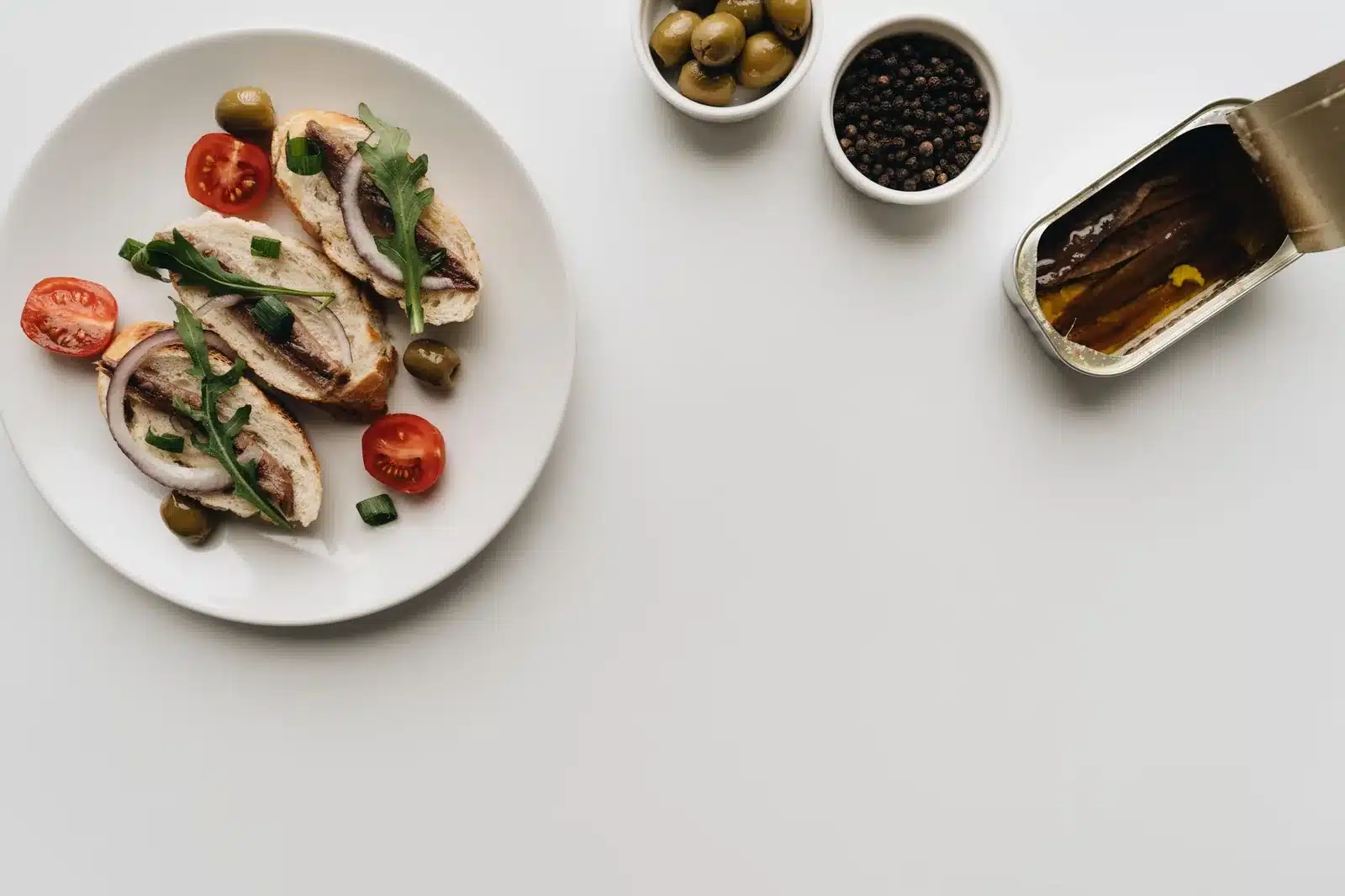
Coenzyme Q10 is found naturally in several foods, but in varying amounts. Among its best sources are fatty fish (such as sardines and mackerel), meats, nuts and seeds, as well as some vegetable oils and leafy greens. This is good news: several of these foods have a rightful place in everyday Moroccan and Mediterranean cooking.
That said, the amounts provided by food remain relatively modest, which explains the interest some people take in supplements, particularly with age. The soundest logic is clear: a varied diet including these foods always forms the base on which any possible addition rests. The supplement does not replace a good plate; it may complement it, consciously, for those who wish.
How to fit a coenzyme Q10 supplement into your routine
Step one: start with the plate and the lifestyle
Your first “energy supporter” is your lifestyle. Before buying any supplement, honestly review a week of your habits: where is sleep missing, where does sedentary time hide, and where could your diet gain in balance? A simple adjustment here comes before everything, and it makes whatever follows far more useful. Coenzyme Q10 is not an answer to an exhausting lifestyle; it is a complement to a lifestyle already well cared for.
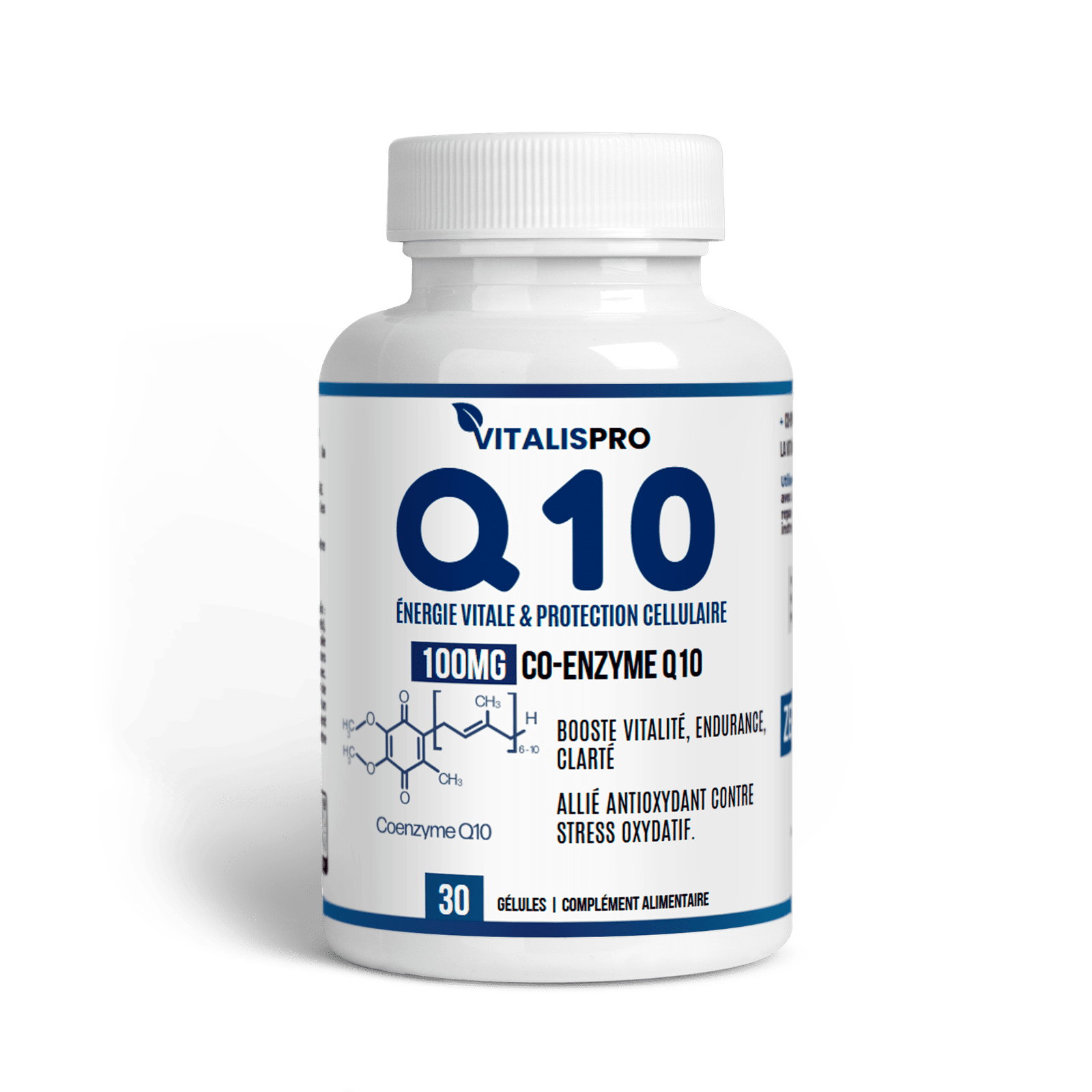
If you decide to add a supplement, choose a formula with a legible concentration (for example 100 mg), authorised by ONSSA, from a source that is transparent in what it offers and in its price. An authorised supplement gives you a guarantee of oversight that a product of unknown origin, entering through unofficial channels, cannot. Clarity here is part of safety.
Step three: respect the dose, consistency and timing
Coenzyme Q10 is generally used as part of a steady programme, because its effects are gradual and do not always appear immediately. As it is fat-soluble, it is often recommended to take it with a meal containing healthy fats, to improve its absorption. Many people prefer to take it in the first half of the day. Respect the dose stated on the box: the body responds to consistency, not to shock doses. As always, patience and steadiness matter more than the search for an instant result.
Step four: observe your body, then decide
After a sufficient period, assess objectively: how is your recovery after exertion? Your general sense of energy through the day? Quietly listening to your body — without magical expectations — remains the best judge. And at any doubt, or if you are on a treatment, consulting a healthcare professional remains the priority. For any question, the VitalisPro team is reachable through our contact page.
Supplement quality: what makes the difference
As with many supplements, the quality of coenzyme Q10 products varies. Factors such as the concentration of the active ingredient, the purity of the material and the manufacturing process influence the real value of the product. A product with a clear, defined concentration (such as 100 mg), a reliable origin and regulatory authorisation has nothing in common with obscure products arriving through unofficial channels.
Transparency about concentration, source and manufacturing therefore deserves your full attention when evaluating a supplement. Clarity, here, is not a marketing detail: it is a guarantee of what you actually get. It is the quality principle VitalisPro commits to, and that is why we always insist on authorisation from ONSSA: it is not a formality, but a control pathway that concerns the safety and conformity of the product.
Coenzyme Q10 in the Moroccan context
No discussion of energy can be judged in isolation from lifestyle, and the Moroccan context has its own character. The pace of the big cities, long working days, the summer heat that pushes us to move less, and food sometimes eaten in a hurry: all of these weigh on our daily energy. After 40, paying attention to your fundamentals becomes a genuine matter of wellbeing, not just a passing concern.
The good news is that our culinary heritage is full of assets. Fish from our coasts, olive oil, dried fruit and nuts, seasonal vegetables and pulses are part of our tables; it is often enough to give them back the place they have lost to fast food and processed products. Here are a few practical markers to support your daily energy:
| Pillar | Why it matters for energy | A practical step |
|---|---|---|
| Enough sleep | Rest is when the body genuinely recharges its reserves | Consistent sleep times, even at the weekend |
| Regular physical activity | Movement supports metabolism and vitality | A daily walk, even a moderate one |
| Foods that are sources of coenzyme Q10 | Fatty fish, nuts and seeds provide it naturally | Two servings of fatty fish per week |
| Adequate hydration | Water accompanies every process in the body | Regular glasses throughout the day, especially in summer |
| Moderation with excess | Chronic excess strains the metabolic work of the body | Cut back on fried foods and processed sweets |
To go further, our shop presents our whole range dedicated to everyday wellbeing, including coenzyme Q10. Careful reading before any decision will give you a clearer picture of what suits you, at your own pace and according to your lifestyle.
Precautions, interactions and limits
No responsible discussion of a food supplement is complete without a frank section on its limits. “Natural” is not an automatic synonym for “suitable for everyone in all circumstances.” Coenzyme Q10 is generally well tolerated in healthy adults at usual doses, but caution is required in specific situations:
- Pregnancy and breastfeeding: it is advised to avoid supplements unless recommended by a healthcare professional.
- Children and teenagers under 18: supplements are not intended for this group without supervision.
- Ongoing treatment: some people taking particular medications take an interest in coenzyme Q10; these individuals in particular should consult a qualified healthcare professional before any use, as interactions are possible.
- Known medical condition: seek a professional’s advice before starting, to tailor the decision to your situation.
We add a practical reminder that is often forgotten: do not start several new supplements at the same time. If you begin them together, it becomes hard to know what helped you, what did nothing, and what may have caused any discomfort. The smarter method is to introduce one element at a time, giving it enough time to observe. This calm, gradual approach protects both your health and your wallet. The golden rule: a supplement adds; it does not diagnose or treat a condition, and at any persistent symptom, consulting a healthcare professional remains the safest and first choice.
Stories from our readers
These are testimonials from people who reviewed their habits and added coenzyme Q10 to their routine; individual experiences that differ from one person to another, which we present as they are, without exaggeration:
“At 47, I felt my recovery after exercise was no longer the same. I did not look for a miracle: I reviewed my sleep, went back to walking, and added coenzyme Q10 at lunch. After a few weeks, I feel more steady in my energy. No magic, but a difference I can feel.” — Khalid, Casablanca
“What I liked was the honest message: no exaggerated promises, just support within a lifestyle. The formula is clear, at 100 mg, and ONSSA-authorised. I take it in the morning with breakfast, and I reordered.” — Naïma, Rabat
“Ordering was easy, with cash on delivery, and the product arrived quickly. I appreciate the transparency about concentration and origin; it is exactly what I was looking for after 40.” — Rachid, Marrakech
Frequently asked questions about coenzyme Q10
Conclusion: energy at the heart of the cell
At the end of this journey, the picture comes into focus. Coenzyme Q10 is not an “elixir of youth,” as some catchy headlines sometimes suggest, but a real biological compound that plays a central role in producing cellular energy. The slowing of its natural production with age explains the growing interest in it after 40, particularly in the context of supporting everyday energy and vitality.
The smart approach treats it as a supporting ally within a complete lifestyle — a balanced diet rich in its natural sources, regular physical activity and quality sleep — and not as a substitute for these foundations. Choose a product with a clear concentration and a reliable origin, take it with a meal containing fats, and show consistency and patience.
When you combine an understanding of the science with realistic expectations, you support your cellular energy in a conscious way, suited to your stage of life, far from exaggerated promises. Whether or not you choose our products, if you leave this guide with that mindset, we have reached our goal. For direct contact, the VitalisPro team is available through our team page and our contact page.
Sources and methodology
This guide relied on a review of documented general scientific sources (PubMed databases) and published reviews, in addition to official bodies such as the U.S. National Institutes of Health (NIH), the European Food Safety Authority (EFSA) and the World Health Organization (WHO). We committed to presenting results at their true size: promising signals are presented as signals, not as definitive promises, and no therapeutic effect was claimed. The information here is for health education, not for diagnosis or a medical prescription.
References
- U.S. National Institutes of Health, Office of Dietary Supplements (NIH ODS) — “Coenzyme Q10” fact sheet. ods.od.nih.gov
- Kalén A. et al. — Age-related changes in the lipid compositions of rat and human tissues (decline of coenzyme Q10 with age), 1989. PubMed 2779364
- “Understanding Ubiquinone” — a review of coenzyme Q10 (ubiquinone) biology, Trends in Cell Biology, 2016. PubMed 26827090
- Effectiveness of coenzyme Q10 supplementation for reducing fatigue: a systematic review and meta-analysis of randomised controlled trials, Frontiers in Pharmacology, 2022. PubMed 36091835
- The role of coenzyme Q10 in exercise tolerance and muscle strength, Archives of Physiology and Biochemistry, 2025. PubMed 40411469
- European Food Safety Authority (EFSA) — health claims. efsa.europa.eu
The information in this article is provided for informational purposes for health education, drawing on documented general scientific references (PubMed, NIH, EFSA, WHO), and is not a substitute for consulting a qualified healthcare professional. Coenzyme Q10 is a food supplement that does not replace a varied, balanced diet or a healthy lifestyle, and is not intended to diagnose, treat, cure or prevent any condition. Do not exceed the recommended dose. Pregnant and breastfeeding women, children under 18, and people with medical conditions or ongoing treatments are advised to consult a professional before use. Keep out of the reach of children.
