


Wellbeing and natural balance
Zinc may be the most important mineral that we talk about the least. We reach for it at the first cough of autumn, then forget it for the rest of the year. Yet this quiet trace element takes part in hundreds of reactions in the body, from supporting immunity to maintaining normal skin. And despite being present in many foods, covering our needs is not always guaranteed.
This in-depth guide from VitalisPro promises you no miracle. In plain language and with verifiable sources, it explains what zinc actually does in the body, why some of us fall short without knowing it, and how to support your zinc level in a conscious, balanced way. We will carefully separate what science has recognised — the approved health claims — from what is merely marketing promise.
Let us set one principle from the start: zinc is not a “magic shield” that makes you invincible against germs. It is an essential cog in a complex machine. It works as part of a team — alongside vitamin C, vitamin D, sleep and a varied diet. Understanding this logic of synergy is already to stop hunting for a single fix, and to start reasoning correctly.
محتوى الصفحة
- 1 In brief: what you will learn
- 2 In this guide
- 3 Why your body needs zinc
- 4 Zinc and immunity: a normal function to support
- 5 Zinc and skin: the mineral of normal skin
- 6 Why might you fall short on zinc?
- 7 Dietary sources of zinc
- 8 Synergy: why zinc does not work alone
- 9 Zinc through the seasons
- 10 Wise use: moderation is the key
- 11 Stories from our readers
- 12 Frequently asked questions about zinc
- 13 Conclusion: zinc, one cog in a bigger picture
- 14 Sources and methodology
In brief: what you will learn
- Zinc is an essential trace element: the body needs it only in small amounts, yet it is involved in more than a hundred enzymatic reactions and cannot do without it.
- Under the health claims recognised at European level, zinc contributes to the normal function of the immune system and to the maintenance of normal skin, as well as to the protection of cells from oxidative stress.4
- Zinc never works alone: it acts in synergy with vitamin C, vitamin D, biotin and other elements. No single nutrient builds strong immunity on its own.
- The best strategy starts on the plate: seafood, meats, seeds and legumes often cover much of your needs; a supplement comes in as back-up, when it is genuinely needed.
- Moderation is the golden rule: at very high doses over the long term, excess zinc can upset the balance of other minerals such as copper. More is not better.
- VitalisPro products — Zinc Gluconate, Vitamin C 500 mg and Biotin 5000 — are ONSSA-authorised food supplements, meant to fit inside a healthy lifestyle. They are not medicines and not a substitute for professional advice.
Why your body needs zinc
Zinc is an essential trace element. The word “trace” means the body needs it only in very small amounts; the word “essential” means it cannot make it and must receive it from food. Small amount does not mean small importance: after iron, zinc is the second most abundant metal in the body, and it takes part in more than a hundred enzymatic reactions.
What does it actually do? It is involved in making and repairing DNA, in cell division, in the structure of many proteins, and in regulating gene expression through special motifs known as “zinc fingers.” In other words, it is a background worker: invisible, but indispensable to the building and upkeep of the body. The MedlinePlus medical encyclopaedia (U.S. National Library of Medicine) details its role and its dietary sources.1
Among its best-documented functions, three come up again and again: it contributes to the normal function of the immune system, to the maintenance of normal skin, hair and nails, and to the protection of cells from oxidative stress. These wordings are not chosen at random: they are the health claims recognised at European level, the ones science has judged sufficiently supported to be stated.4
Let us bring it closer with a simple image. Picture a vast construction site running day and night: thousands of specialised workers, tools and blueprints. Zinc is not the wall or the frame; it is more like the set of keys that lets hundreds of enzymatic locks open and function. Without that set of keys the site does not collapse all at once, but it slows, stumbles, and loses efficiency. That is why a sufficient, regular intake matters — without turning it into a daily obsession.
Trace element does not mean endless reserve
A point often overlooked: the body does not store zinc in large amounts, unlike some fat-soluble vitamins. This means a regular intake from food matters more than a one-off “hit.” It is one more argument in favour of a varied, consistent plate, rather than a frantic chase after the supplement of the moment. Quiet consistency always beats occasional excess.
Zinc and immunity: a normal function to support
Of all zinc’s roles, its relationship with immunity is the most studied. Zinc contributes to the normal function of the immune system: it takes part in the development and activity of the cells that make up our natural defences, notably certain white blood cells. A scientific review in Nutrients describes it nicely as a “gatekeeper” of immune function: it does not “supercharge” the defences, it makes sure they work correctly.2
This nuance is crucial, and it separates serious information from a sales pitch. Zinc does not make an already-healthy immune system “stronger”; it is one of the elements that allow that system to do its job normally. That is why a correct zinc status matters: not to create super-immunity, but to keep a link from missing in the chain. A review published in Frontiers in Nutrition stresses how much zinc’s effects on the immune system depend on a person’s starting status.3
Zinc must also be placed in its ecosystem. Immunity is not the business of a single nutrient: it depends on a whole set — vitamin C, vitamin D, restorative sleep, regular physical activity, stress management and a balanced diet. The World Health Organization reminds us that a balanced dietary pattern is the foundation of overall health.6 No element builds strong immunity in solitude; it is the whole that counts.
“Zinc is not the switch that turns immunity on. It is more like one of the fuses without which the circuit will not run normally. The goal is not to stockpile it, but to avoid falling short — a quiet nuance, but one that changes everything.”
For a general, accessible look at how zinc fits into the wider question of immune defences, this educational explainer offers a calm overview:
Zinc and skin: the mineral of normal skin
Zinc’s other great domain is the skin. Under the recognised health claims, zinc contributes to the maintenance of normal skin, as well as of normal hair and nails.4 It is no accident that this mineral comes up so often in conversations about beauty “from within”: it takes part in cell division and tissue renewal, two processes at the heart of skin health.
But be careful not to over-read this. “Contributing to the maintenance of normal skin” does not mean “treating” a skin condition, nor “clearing up” a skin problem. It means that zinc is one of the elements the skin needs to stay in its normal working state. Any persistent condition is a matter for a healthcare professional, not a supplement. This honesty is not a legal precaution: it is at the heart of the respect we owe the reader.
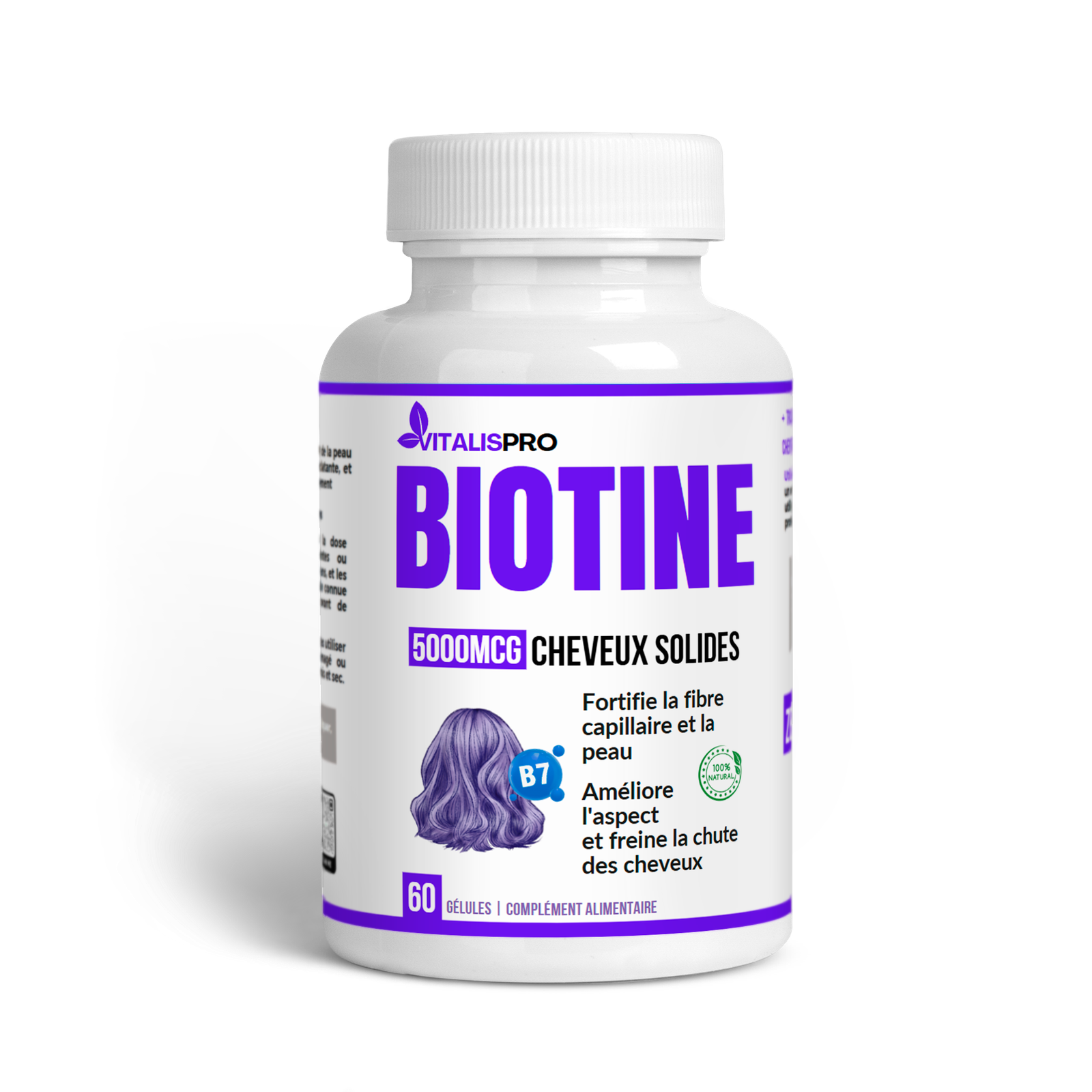
Here too, the logic of synergy applies. Skin is not nourished by a single nutrient: alongside zinc stand vitamin C, which contributes to normal collagen formation — the skin’s support protein — and biotin (vitamin B8), which contributes to the maintenance of normal skin and hair. Combining these elements, within a varied diet, forms a coherent approach to beauty from within, one that complements — never replaces — a gentle external care routine.
In other words, if you are interested in zinc “for the skin,” think team rather than soloist. Zinc lays one brick, vitamin C lays another, biotin a third, and it is the whole — built first on the plate — that supports skin and appendages in good condition. We will return to these combinations in the section on synergy.
Why might you fall short on zinc?
Zinc is present in many foods: so why do some people receive less of it than they think? Several factors combine, and it is worth knowing them in order to reason correctly, without falling into needless worry.
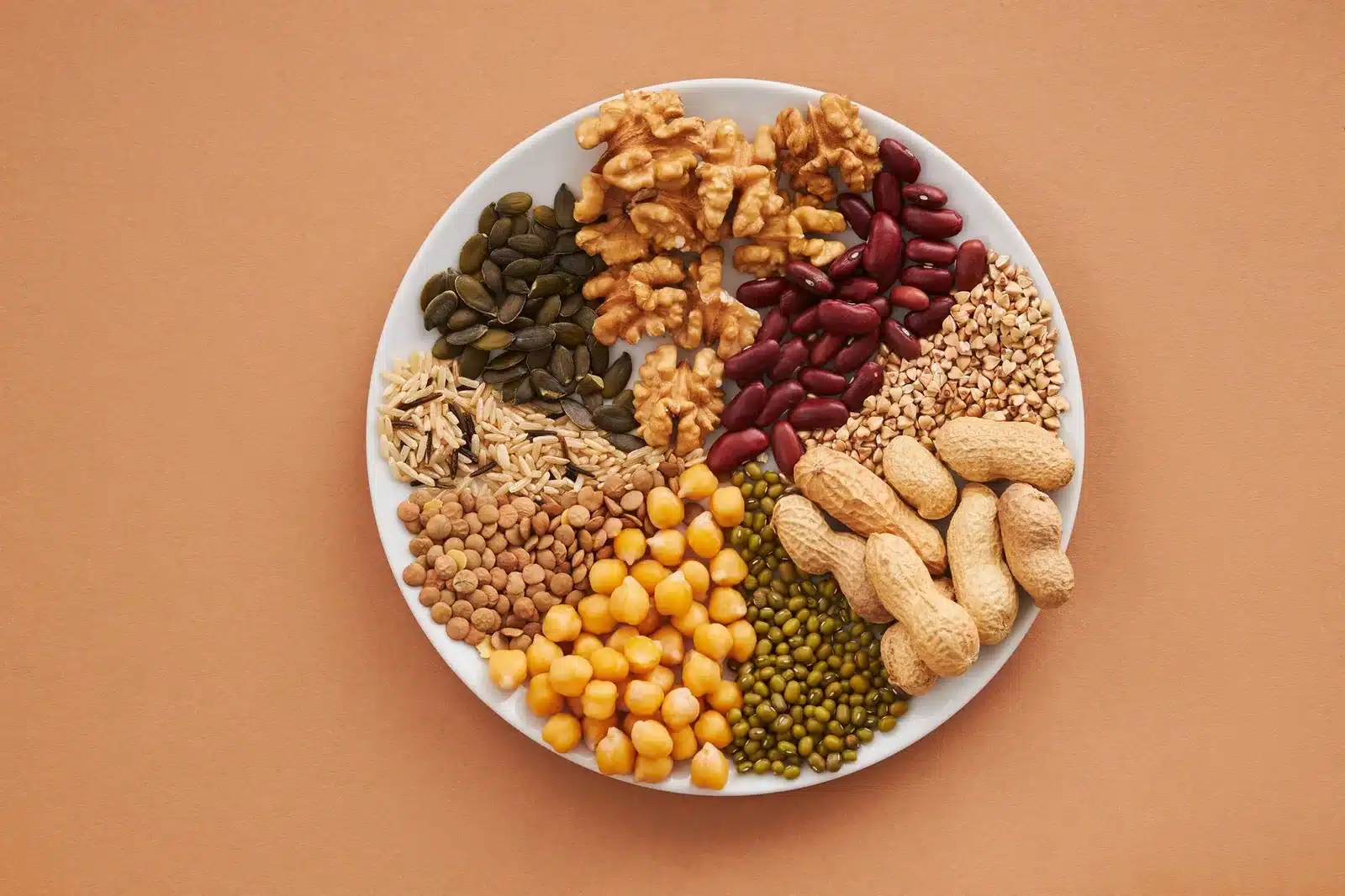
- A dietary pattern low in meat, seafood and seeds. These are the richest and best-absorbed sources; a diet that neglects them can lower the real intake.
- Weaker absorption from plant sources. Some grains and legumes contain compounds called phytates, which can hinder zinc absorption. Mostly plant-based diets therefore call for a little more attention to variety and quantity.
- Certain life stages raise the need. Growth, pregnancy or breastfeeding, and advancing age change micronutrient requirements: a review published in Nutrients shows that these needs shift across the whole life course.5
- A processed, monotonous diet. The more repetitive and industrial the plate, the less it naturally covers the range of micronutrients, zinc included.
These factors explain why some people benefit from paying attention to their zinc intake, without any need to dramatise. The wise approach is not to supplement “just in case” at random, but first to look at your plate: do you regularly find sources of zinc there? If the answer is no, two levers exist — enrich the diet, then, if needed, add a clear and measured supplement. We will look at both.
Dietary sources of zinc
The best strategy always starts on the plate. Before thinking about any supplement, it is worth knowing the foods that naturally provide zinc, and how the body absorbs them. Here is a reference table, ranked by richness and paired with a practical tip for each family:
| Food family | Zinc richness | The practical tip |
|---|---|---|
| Oysters and seafood | Very rich — oysters are the most concentrated source | An occasional serving provides a great deal; vary it with the other sources |
| Red meat and poultry | Rich and well absorbed | Favour reasonable portions within balanced meals |
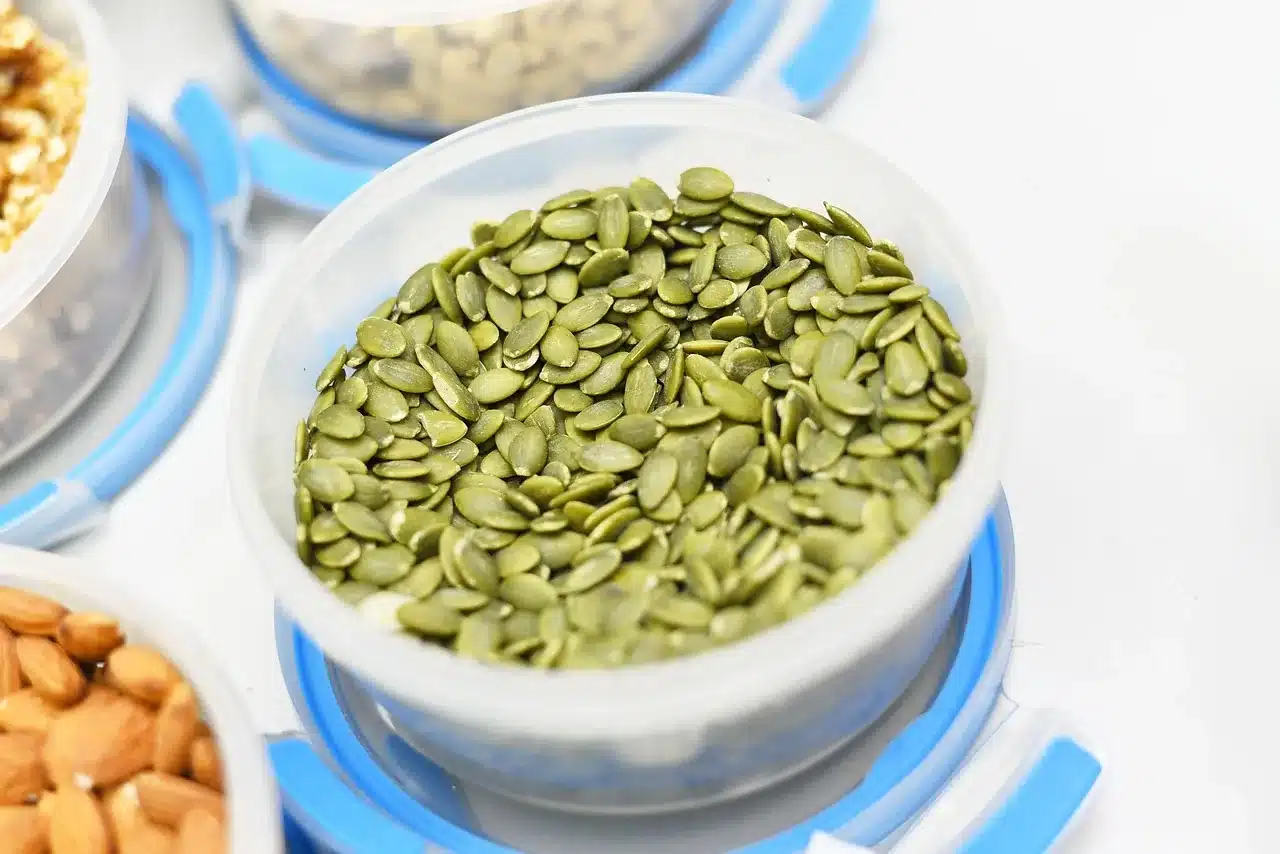
| Pumpkin and sunflower seeds | Good plant source | Sprinkle over salads, soups and yoghurt; soak or lightly toast |
| Legumes (chickpeas, lentils, beans) | Moderate plant source | Soak then cook well to reduce phytates and improve absorption |
| Nuts and tree nuts | Moderate source | A small handful a day as a nourishing snack |
| Cheese, eggs and dairy | Moderate source | Easy to fit into daily meals to top up the intake |
One practical tip is worth repeating: soaking legumes and whole grains before cooking can improve absorption of the zinc they contain, by reducing the effect of phytates. It is an old culinary wisdom — found in many traditions, including Moroccan cooking with its chickpeas soaked overnight — that here finds a nutritional justification. Regularly varying these sources supports your zinc level naturally, and the concentrated sources come in as back-up, on demand.
You will find this section useful, too, as a lens for reviewing your week: look back over your meals of the last seven days and spot where zinc appears. If the sources are scarce, a simple rebalancing — a handful of seeds here, soaked legumes there — often comes before and outweighs any purchase of a supplement.
Synergy: why zinc does not work alone
One of the most important ideas in nutrition is synergy: nutrients work together, not in isolation. Zinc is a clear example. On the immune front, it acts alongside vitamin C and vitamin D; on the skin front, it teams up with vitamin C, which contributes to normal collagen formation, and with biotin. Each has its role; it is their combination, against a background of a varied diet, that draws a coherent approach.
Vitamin C deserves a special place here. It contributes to the normal function of the immune system and to the protection of cells from oxidative stress, just like zinc, and it takes part in normal collagen formation for the skin. Zinc and vitamin C thus form a classic duo: two contributors to the same normal function, complementing rather than duplicating each other. It is precisely within this logic that a considered supplementation makes sense.
The opposite logic — random “stacking” of boxes — is to be avoided. Piling up many supplements from obscure sources, convinced that “more is better,” raises the bill, increases the risk of interactions and makes it impossible to know what is actually helping. Wisdom is clarity: a few complementary, well-chosen and well-dosed elements are worth more than ten unreadable boxes. This is the philosophy that guides the design of our formulas: to give you what you need, with transparency.

For anyone who wants to cover this synergy simply, pairing Zinc Gluconate with Vitamin C 500 mg forms a coherent duo to support normal immune function, while Biotin 5000 completes the skin-and-hair side. All within a balanced lifestyle, never as a replacement for a varied plate.
Zinc through the seasons
Interest in zinc peaks in the transitional seasons and in periods of changing weather, when the body faces more seasonal challenges. Many people then look to support their natural defences, and zinc, as a contributor to normal immune function, logically returns to the conversation. This is a good instinct — provided we do not make it a purely seasonal reflex.
Because supporting your immunity is not a one-off gesture that begins at the first autumn chill. It is the fruit of consistent habits throughout the year: regular sleep, a balanced diet, movement, good hydration and stress management. Zinc and the other supporting elements come to complement this solid base; they do not make up for a whole year of neglect in a few capsules taken in a hurry.
There is a healthy way to think about seasonality: not as a moment to “make up” for everything, but as a useful reminder to return to the fundamentals. Boosting the share of vegetables, seeds and zinc sources on the plate, going to bed earlier, moving a little each day — that is the real seasonal support. A clear, measured supplement is added to it for those who wish, consciously, and not as a magic wand. To explore our range, the VitalisPro shop presents all our products designed in this spirit.
Wise use: moderation is the key
Zinc is a mineral the body needs in small amounts, and moderation is essential here. At very high doses over the long term, excess zinc can upset the balance of other minerals, in particular copper, with which it shares certain absorption pathways. It is the perfect illustration of a simple principle: in micronutrition, more is not better.
The golden rule is therefore to respect the recommended doses stated on the packaging, without trying to “force” the effect with higher amounts. The body responds to consistency and balance, not to shock doses. A zinc supplement is usually taken with a meal, with a large glass of water, to limit any possible digestive discomfort and to tie it to a stable daily habit.
And a precaution that applies to any supplement: if you are on medication, if you are pregnant or breastfeeding, or if you have a particular condition, speak to a qualified healthcare professional before adding zinc or any other supplement. This article is informational and is not intended to diagnose or to replace medical advice. When in doubt, consulting remains the first reference.
This short educational clip sums up the same balanced message well — zinc is helpful, but there is no benefit in overdoing it:

A last word on quality: the word “zinc” on a box is not enough. What matters is the form of the mineral (gluconate is valued for its good absorption), the clarity of the stated dose and the regulatory authorisation. That is why we always insist on ONSSA certification: it is not a formality, but a control pathway that concerns the safety and conformity of the product you put into your body.
Stories from our readers
These are testimonials from people who reviewed their plate and added zinc to their routine, within a balanced lifestyle; individual experiences that differ from one person to another, presented as they are, without exaggeration:
“At every change of season I felt tired and fragile. I did not look for a miracle: I added seeds and legumes to my meals, and took zinc with vitamin C. I feel calmer facing winter, without promising anything magical.” — Nawal, Casablanca
“What I liked was the honest message: no exaggerated promise, just clear support within good daily habits. I have been taking zinc and biotin for skin and hair for two months, and I appreciate that everything is ONSSA-authorised.” — Salma, Rabat
“Ordering was simple, with cash on delivery. The zinc gluconate formula is clear and well dosed. I reordered, and I recommend starting, as I did, with the plate.” — Younes, Marrakech
Frequently asked questions about zinc
Conclusion: zinc, one cog in a bigger picture
Zinc is a mineral of small quantity but great impact. It contributes to the normal function of the immune system, to the maintenance of normal skin, hair and nails, and to the protection of cells from oxidative stress. But its true value appears within a whole approach, never as a lone hero. Always start with the plate: meats, seafood, seeds and legumes often cover your needs naturally.
And when extra support makes sense, choose a clear dose, a well-absorbed form and an authorised formula, while respecting moderation — because more is not better. Pair zinc with its natural partners: vitamin C for immunity and collagen, biotin for skin and hair, within a lifestyle that gives pride of place to sleep, movement and balance. Zinc Gluconate by VitalisPro fits precisely into this philosophy.
In the end, what distinguishes the aware consumer is the ability to discern: to know what science states (the recognised claims) and what it does not, to place the fundamentals before the add-ons, and to give the body the time and consistency it deserves. If you leave this guide with that mindset, we have reached our goal, whether or not you choose our products. For direct contact, the VitalisPro team is available through the contact page.
Sources and methodology
This guide relies on general, verifiable scientific sources (PubMed databases), on published reviews, and on official bodies such as the U.S. National Library of Medicine (MedlinePlus), the European Food Safety Authority (EFSA) and the World Health Organization (WHO). We committed to presenting results at their true size: the claims used are those recognised at European level, and no therapeutic effect was claimed. The information here is for health education, not for diagnosis or a medical prescription.
References
- MedlinePlus (U.S. National Library of Medicine) — “Zinc in diet.” medlineplus.gov
- Zinc as a Gatekeeper of Immune Function (review, Nutrients, 2017). PubMed 29186856
- Dietary and Physiological Effects of Zinc on the Immune System (review, 2021). PubMed 34255547
- European Food Safety Authority (EFSA) — health claims (zinc: immune system, skin, oxidative stress). efsa.europa.eu
- Immune Function and Micronutrient Requirements Change over the Life Course (review, Nutrients, 2018). PubMed 30336639
- World Health Organization (WHO) — “Healthy diet.” who.int
The information in this article is provided for informational purposes for health education, drawing on verifiable general scientific references (PubMed, MedlinePlus, EFSA and WHO), and is not a substitute for consulting a qualified healthcare professional. Zinc, vitamin C and biotin are food supplements that do not replace a varied, balanced diet or a healthy lifestyle, and are not intended to diagnose, treat, cure or prevent any condition. Do not exceed the recommended dose. Pregnant and breastfeeding women, children under 18, and people with medical conditions or ongoing treatments are advised to consult a professional before use. Keep out of the reach of children.
