


Wellbeing and natural balance
In the rush of Moroccan days — endless commutes, screens that never switch off, responsibilities piling up — the same quest keeps surfacing for many of us: to find a little calm and better manage everyday stress. Among the plants that have returned to the spotlight, ashwagandha stands out: a venerable root from traditional Indian Ayurvedic medicine, now under the researcher’s lens. What does the science actually say?
This guide from VitalisPro promises you no miracle, and it does not claim to “treat” anxiety or anything else. In plain language and with sourced references, it separates scientific facts from marketing exaggeration. You will understand what an adaptogenic plant really is, why withanolides interest researchers so much, what recent clinical trials have observed around perceived stress, and where the honest limit of the evidence lies — so your decision rests on knowledge, not on noise.
Let us set a clear frame from the start: ashwagandha is neither a magic wand nor a passing fad. It is a traditional plant element, studied with growing interest, best understood inside a balanced lifestyle — enough rest, calm eating, regular movement, and real moments of relaxation. It is precisely from this realistic angle that talking about a supplement begins to make sense, and not a moment before.
محتوى الصفحة
- 1 In brief: what you will learn
- 2 In this guide
- 3 What is ashwagandha, and why the interest?
- 4 Withanolides: the key behind ashwagandha
- 5 What does the research say about stress?
- 6 Ashwagandha, a sense of calm and evening rest
- 7 Ashwagandha in the Moroccan context
- 8 How to use ashwagandha: dose and consistency
- 9 Who is it for? Precautions, interactions and limits
- 10 Stories from our readers
- 11 Frequently asked questions about ashwagandha
- 12 Between tradition and science: a balanced conclusion
- 13 Sources and methodology
In brief: what you will learn
- Ashwagandha (Withania somnifera) is a root from Ayurvedic medicine, classed among the adaptogenic plants: botanicals thought to help the body adapt to the various pressures of daily life.
- Its active compounds, the withanolides, are concentrated in the root; their content (the standardisation of the extract) is one of the main quality markers of a supplement.
- Several recent randomised controlled trials report promising signals on perceived stress and anxiety; these results remain inconclusive and call for more research — we speak of supporting calm, never of treatment.
- The fundamentals — sleep, a balanced diet, physical activity, breathing and relaxation — matter far more than any capsule taken on its own.
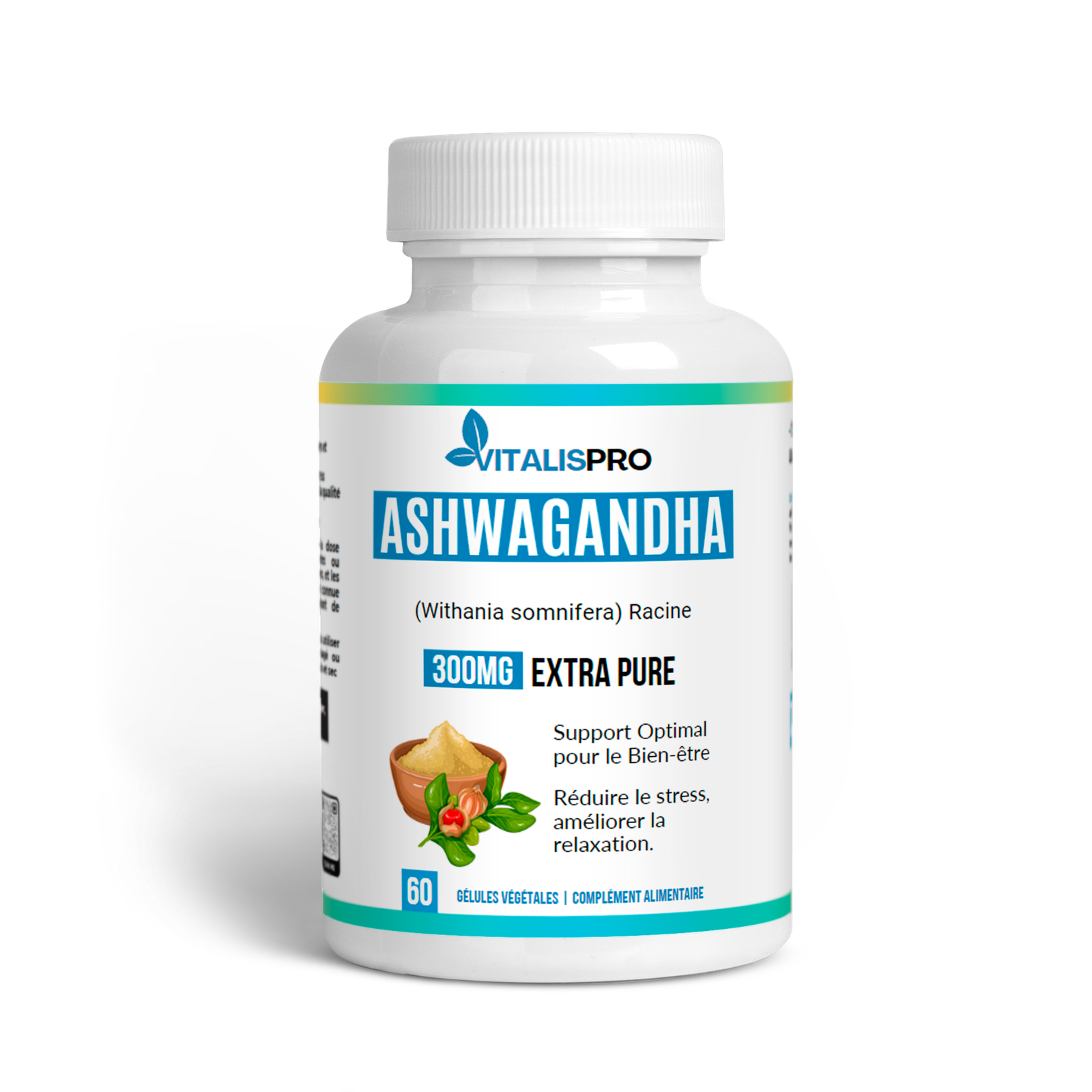
- VitalisPro’s Ashwagandha 300 mg is an ONSSA-authorised food supplement, meant to fit inside a healthy lifestyle; it is not a medicine and not a substitute for professional advice. Caution in pregnancy, breastfeeding, thyroid disorders, or ongoing treatment.
What is ashwagandha, and why the interest?
Ashwagandha, whose scientific name is Withania somnifera, is a root plant rooted in the tradition of Indian Ayurveda for centuries. It is sometimes nicknamed “Indian ginseng,” although it belongs to an entirely different botanical family. What draws the attention of researchers today is the active compounds it contains — the withanolides — responsible for most of its studied effects. Its species name itself (somnifera) evokes a historical link with rest and relaxation: an old cultural association, not an absolutely proven property.
Ashwagandha is placed in the category of so-called adaptogenic plants: a term for botanicals thought to help the body cope better with different forms of pressure — physical, mental or environmental. The idea of an “adaptogen” is not a promise of superpowers; it is a working hypothesis that science examines with both interest and caution. European authorities, including the European Food Safety Authority (EFSA), have not approved a specific health claim for this plant, so we present it as a traditional wellbeing element, not as a remedy.5
Why this renewed interest? Because everyday stress has become a shared concern, and many people look for natural anchors to cultivate a sense of calm without slipping into unhealthy habits. Ashwagandha, with its ancient history and its ongoing modern research, holds a particular place in that conversation. Still, it must be set at its true size: neither a cure-all nor a gimmick, but an old root that science is studying seriously.
Adaptogen: what does the word actually mean?
The word “adaptogen” appears everywhere, often drained of its meaning. Originally, it describes the idea that a plant may help the body regain its balance in the face of a strain, without pushing it abruptly one way or the other. It is an appealing notion, and ashwagandha is one of its most studied examples. But appealing does not mean proven one hundred percent: the research is advancing, the signals are encouraging, and honesty means presenting this category as a living field of study, not as a truth set in stone.

Withanolides: the key behind ashwagandha
If one name sums up the scientific interest in this root, it is the withanolides: a family of distinctive plant compounds concentrated in the ashwagandha root. Their quantity and profile vary with the plant variety, its age, and the way it is grown and then prepared. That is why the quality of a finished supplement is directly tied to the concentration of these compounds: two powders bearing the same name can be very different in practice.
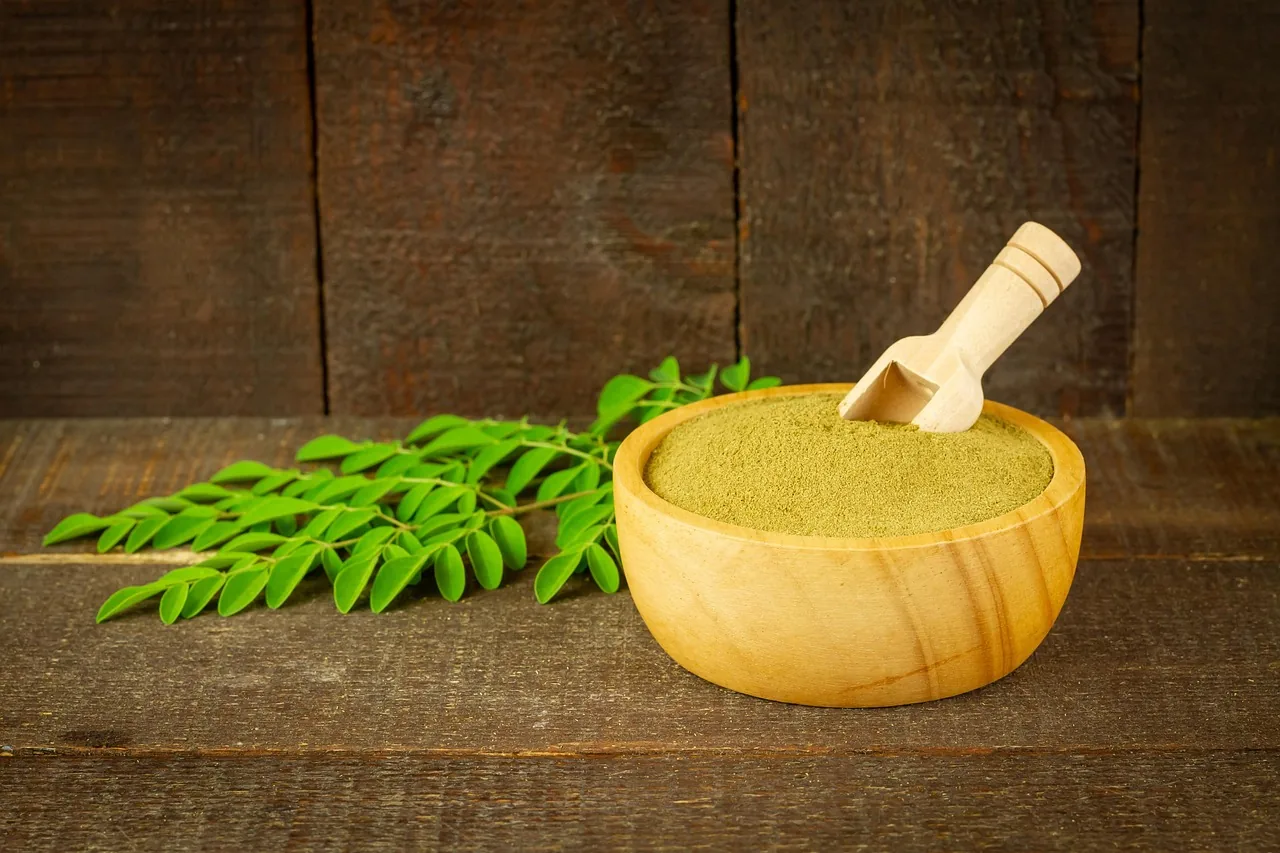
Much research links the withanolide content to the strength of the effects observed in studies. This is what makes the standardisation of the extract — that is, a guaranteed and declared withanolide content — a central criterion for seriously evaluating a product. When you read an ashwagandha label, that percentage is one of the most telling quality indicators, far more than the mere word “ashwagandha” printed on the box.
“The plant’s name on the packaging tells you almost nothing; what matters is what is inside the capsule. An extract with a clear withanolide content gives you what you actually think you are buying — a powder of uncertain origin does not.”
This is also why we always insist on regulatory authorisation from ONSSA. It is not an administrative formality: it is a control pathway that concerns the safety of the product, its conformity, and the honesty of what is stated. Between a clear, authorised, traceable extract and a powder arriving through unofficial channels, the difference is not cosmetic: it concerns directly what your body receives.
What does the research say about stress?
This is the most studied area: the relationship between ashwagandha and the general sense of stress and everyday tension. Let us be precise and honest: the picture is promising but inconclusive. Several well-conducted clinical trials have observed that ashwagandha might help support a sense of calm in people going through periods of accumulated pressure, with monitoring of the usual stress markers. The idea is not that it grants “immunity” against life’s tensions, but that it might help the body adapt to them more evenly.
A systematic review with meta-analysis gathered the available trials on ashwagandha, stress and anxiety, and concluded with encouraging results while explicitly calling for more high-quality studies before any firm claim.2 This is exactly the nuance that separates sober knowledge from a hasty promise: a signal exists, but a signal is not conclusive proof, and confusing the two would be dishonest toward the reader.
On the side of individual trials, a randomised, double-blind, placebo-controlled trial evaluated an ashwagandha root extract and reported a drop in perceived-stress scores as well as associated measures among participants in the active group.3 Another randomised trial, using a high-concentration full-spectrum root extract, likewise observed a reduction in stress and anxiety indicators in adults, with a tolerability profile judged favourable over the study period.4 These results converge, and it is precisely this convergence that makes the plant interesting.
So why stay cautious if the signals point the same way? Because rigorous science carefully distinguishes the levels of evidence: a small study does not carry the weight of a large one, an isolated result does not carry that of a review pooling dozens of studies, and an effect measured over a few weeks says nothing about the very long term. Most of the trials, moreover, ran over limited durations and specific populations. Our job is to place every signal at its correct rank — neither inflating it to sell, nor burying it out of excess caution.
So let us hold the accurate wording: ashwagandha may help the body adapt to stress and support a sense of calm, according to promising but incomplete research. It does not “treat” anxiety, depression or any condition; those situations are a matter for a healthcare professional, and this purely educational article aims to arm you with good questions, not to make a diagnosis.
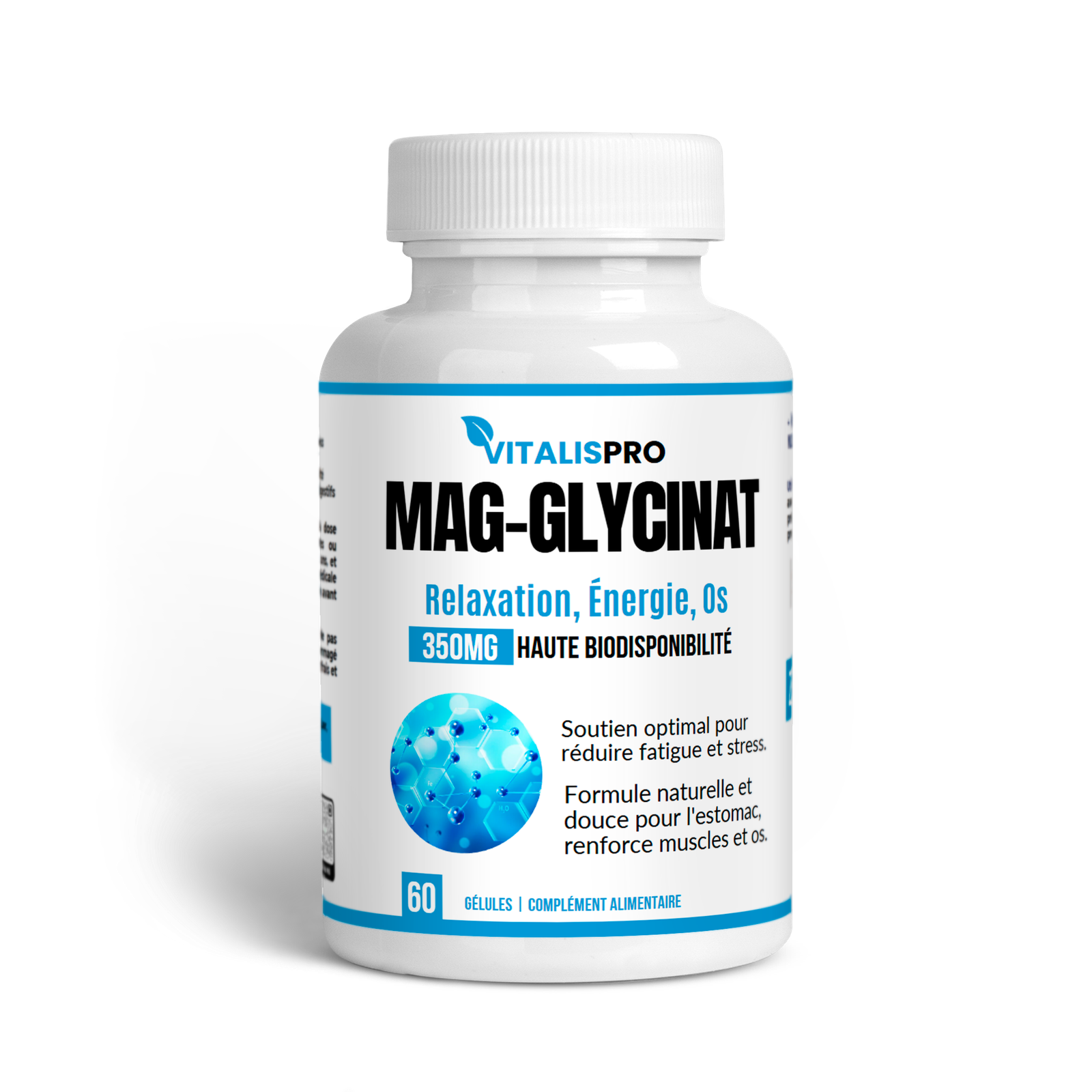
This pairing is not incidental: magnesium is among the few nutrients for which health claims are officially recognised, notably its contribution to the normal function of the nervous system and to the reduction of tiredness and fatigue. Combining a solid nutritional base (like magnesium) with a traditional plant element (like ashwagandha) illustrates our philosophy well: build the foundation before adding the supporting supplement.
Ashwagandha, a sense of calm and evening rest
Beyond stress, ashwagandha is studied for its possible role in supporting relaxation and the quality of night-time rest. Many users choose it in the evening, as part of a calm ritual that helps the body shift toward rest. Even so, we must keep a cool head: the research on this aspect, too, is still developing, and a capsule cannot be presented as a guaranteed solution to difficult nights.
Let us recall a truth too often forgotten: serenity and quality rest rest first on the foundations of lifestyle. The World Health Organization stresses that mental health and emotional balance rely on daily pillars — regular sleep, physical activity, social ties, stress management — before any outside input; its resources on the subject are available on the WHO website.6 Plant elements come to complement these foundations, never to replace them.
Concretely, evening ashwagandha fits best inside a wind-down routine: cutting screens before bed, dimming the light, allowing a quiet moment, breathing slowly. Taken alone, without this frame, it works no wonders. Woven into a set of consistent habits, it can become a pleasant supportive element — a piece of the puzzle, not the whole puzzle.
Ashwagandha in the Moroccan context
No discussion of stress management can be judged apart from real life, and the Moroccan context has its own character. The fast pace of large cities, professional pressure, the length of commutes and days: all of it pushes many people to look, at the end of the day, for a natural anchor to regain their calm without turning to unhealthy habits. It is in this climate that a growing interest in adaptogenic plants like ashwagandha appears.
But let us keep the right order of priorities. After a tense day, your body does not need a “shock solution,” it needs a calm return to the fundamentals: a light dinner, a little walking, a disconnection from screens, and a bedtime at a stable hour. This gradual return does far more for your serenity than any capsule taken in desperation. Ashwagandha, within this frame, is a complement to the approach, not a shortcut that replaces it.
There are also lovely local habits that point in this direction: the ritual of shared tea at the end of the day, moments of family togetherness, the evening walk through the neighbourhood. There is no need to import “methods” from elsewhere: it is often enough to give these simple, soothing gestures their place back, and to add to them, if one chooses consciously, a clear and authorised plant support. To explore our range dedicated to everyday wellbeing, our shop presents all of our formulas.
How to use ashwagandha: dose and consistency
Ashwagandha is usually used within a programme followed over several weeks, because its effects build gradually and do not always appear from the first dose. Many users prefer to take it in the evening, for its nature associated with relaxation; others take it with a meal for better digestive comfort. The golden rule is to respect the recommended dose on the box: with supplements, “more” is not a synonym for “better.”
We have summarised the practical reference points in this table: these are principles of responsible use, not an individual prescription:
| The reference point | Why it matters | A practical step |
|---|---|---|
| Respect the label dose | The body responds to consistency, not to shock doses | Follow exactly the dosage stated on the box |
| Choose the right time | Ashwagandha is often linked to evening relaxation | Take it in the evening, or with a meal for digestive comfort |
| Rely on duration | Effects build over several weeks | Keep a regular programme before assessing |
| Aim for a standardised extract | The withanolide content makes the quality | Prefer a clear formula authorised by ONSSA |
| Lay the foundations first | The supplement supports a lifestyle, it does not replace it | Sleep, diet, movement, relaxation above all |
| Observe, then decide | Each person reacts differently | Assess your feeling objectively after a sufficient period |
A last piece of common sense: patient consistency, not large doses, makes the difference in responsible use. If you start several new supplements at the same time, you will no longer know what helped you and what did nothing. Introducing one element at a time, giving it time to observe, protects both your health and your budget. For any question, the VitalisPro team is available through our contact page.
Who is it for? Precautions, interactions and limits
Ashwagandha appeals above all to people going through periods of mental pressure or accumulated fatigue tied to work and responsibilities, or to those looking for a natural anchor for a sense of calm and a more restful evening. But “natural” is not an automatic synonym for “suitable for everyone,” and awareness of its limits is part of respecting your health. This plant does not suit everyone, and caution is required in several specific situations:
- Pregnancy and breastfeeding: ashwagandha is not advised; it should be avoided unless recommended by a healthcare professional.
- Thyroid disorders: ashwagandha may influence certain parameters; in the case of a known thyroid condition or associated treatment, medical advice is essential before any use.
- Children and under-18s: supplements are not intended for this age group without supervision.
- Ongoing treatments (notably sedatives, immunosuppressants, thyroid medication): consult a professional, as some interactions are possible.
- Autoimmune disease or an existing condition: seek medical advice before starting.
Let us add a simple principle: a supplement adds; it does not on its own fix a real imbalance, does not diagnose and does not treat a condition. If you experience persistent distress, anxiety that weighs on your daily life, or established sleep problems, consulting a healthcare professional remains the safest and first choice; ashwagandha is not meant to replace it. We are here to accompany you with a clear, authorised product, not to replace the doctor.
Stories from our readers
These are testimonials from people who reviewed their habits and added ashwagandha to their evening routine; individual experiences that differ from one person to another, which we present as they are, without exaggeration:
“With the pace of work, I ended my days tense, unable to switch off. I did not look for a miracle: I cut screens in the evening, added a walk, and took ashwagandha with dinner. After a few weeks, I feel calmer in the evening. No magic, but a difference I can feel.” — Nadia, Casablanca
“What I liked was the honest message: no promises of a cure, just support within a lifestyle. I have been taking ashwagandha for two months, alongside habits I tried to improve, and my evenings are calmer.” — Karim, Rabat
“Ordering was easy, with cash on delivery, and the formula is clear and ONSSA-authorised. I appreciate the transparency, and I reordered.” — Sanaa, Marrakech
Frequently asked questions about ashwagandha
Between tradition and science: a balanced conclusion
At the end of this journey, the picture sums up clearly. Ashwagandha is not a magic wand that erases life’s pressures, but neither is it a mere passing fad. The truth sits in the middle: an ancient root, carried by growing research that suggests a possible role in supporting calm and the ability to adapt to the pace of daily life — all within a frame of scientific modesty that calls for further study.
The wise approach uses it as a supportive element within a complete lifestyle — quality rest, a balanced diet, regular movement and relaxation practices — and not as a substitute for these foundations, which remain the true keystone. If you choose to add it, opt for a clear, authorised formula from a transparent source, such as VitalisPro’s Ashwagandha 300 mg, possibly alongside a magnesium glycinate for the nervous system or a reishi for the evening routine.
In the end, what distinguishes the aware consumer is not avoiding every supplement nor believing every promise, but the ability to discern: to know what science says and what it does not, to place the fundamentals before the add-ons, and to give the body its fair time. If you leave this guide with that mindset, we have reached our goal, whether or not you choose our products. For direct contact, the VitalisPro team is available through the contact page and the our team page.
Sources and methodology
This guide relied on a review of documented general scientific sources (PubMed databases) and published systematic reviews, in addition to official bodies such as the U.S. National Library of Medicine (MedlinePlus), the European Food Safety Authority (EFSA) and the World Health Organization (WHO). We committed to presenting results at their true size: promising signals are presented as signals, not as definitive promises, and no therapeutic effect was claimed. The information here is for health education, not for diagnosis or a medical prescription.
References
- MedlinePlus (U.S. National Library of Medicine) — “Ashwagandha” page. medlineplus.gov
- Effects of ashwagandha on stress and anxiety: a systematic review and meta-analysis (2024). PubMed 39348746
- Stress-relieving and pharmacological actions of an ashwagandha extract: a randomised, double-blind, placebo-controlled trial (2019). PubMed 31517876
- Safety and efficacy of a high-concentration full-spectrum ashwagandha root extract in reducing stress and anxiety: a randomised trial (2012). PubMed 23439798
- European Food Safety Authority (EFSA) — health claims and botanicals. efsa.europa.eu
- World Health Organization — mental health: strengthening our response. who.int
The information in this article is provided for informational purposes for health education, drawing on documented general scientific references (PubMed, MedlinePlus, EFSA and WHO), and is not a substitute for consulting a qualified healthcare professional. Ashwagandha is a food supplement that does not replace a varied, balanced diet or a healthy lifestyle, and is not intended to diagnose, treat, cure or prevent any condition. Do not exceed the recommended dose. Ashwagandha is not advised for pregnant or breastfeeding women or for under-18s; people with a thyroid disorder, an autoimmune disease, a medical condition or ongoing treatment are advised to consult a professional before use. Keep out of the reach of children.
