


Vitality and natural nutrition
Do you wake up already tired, and does your energy sink well before noon? You are not alone. More and more people in Morocco are looking for natural nutritional support to carry a busy day, without miracle promises. One name keeps coming up: moringa. A traditional plant with a remarkable nutritional density, easy to fold into the day.
This guide from VitalisPro looks at moringa (Moringa oleifera) from a concrete, everyday angle: how it supports energy, natural defences and nutrition, how to use it sensibly, and where the honest limit of the evidence lies. We are not selling a miracle or an “instant fix.” We are giving you what you need to decide with knowledge, on the basis of verifiable sources.1
Let us agree on one clear principle from the start: moringa is not a medicine, and it does not “make” energy out of nothing. It is a supportive food, dense in nutrients, that makes full sense inside a balanced diet, enough sleep and regular activity. It is one piece of the picture, not the whole picture.
محتوى الصفحة
- 1 In brief: what you will learn
- 2 In this guide
- 3 What is moringa, in brief?
- 4 Why moringa has entered the daily routine
- 5 Moringa and energy: natural support for vitality
- 6 Moringa and natural defences: a nutritional ally
- 7 A concentrated nutritional density
- 8 How to fit moringa into your day
- 9 Precautions, interactions and limits
- 10 Stories from our readers
- 11 Frequently asked questions about moringa
- 12 Conclusion: a simple daily habit, with discernment
- 13 Sources and methodology
In brief: what you will learn
- Moringa (Moringa oleifera) is a traditional food prized for its nutritional density: vitamins, minerals, plant protein and antioxidants gathered in a small amount.
- It provides iron and B-group vitamins, nutrients that contribute to normal energy-yielding metabolism and to the reduction of tiredness, which is why moringa for energy makes sense within a healthy lifestyle.
- Its leaves contain vitamin C and plant antioxidants; vitamin C contributes to the normal function of the immune system, making moringa a logical nutritional support rather than a treatment.
- The evidence is, for the most part, promising but preliminary: moringa is a supportive supplement, never a substitute for a varied diet, sleep and the advice of a healthcare professional.
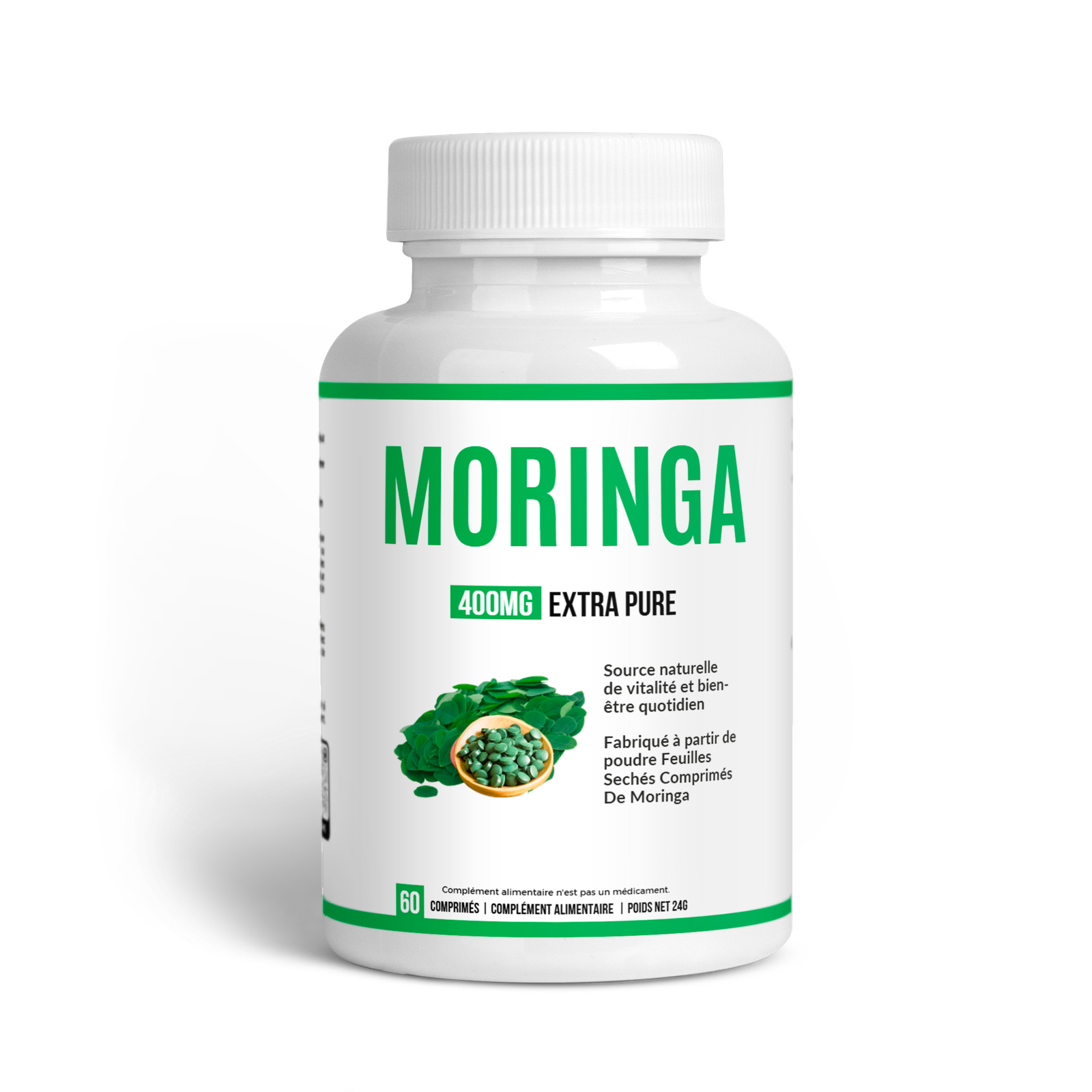
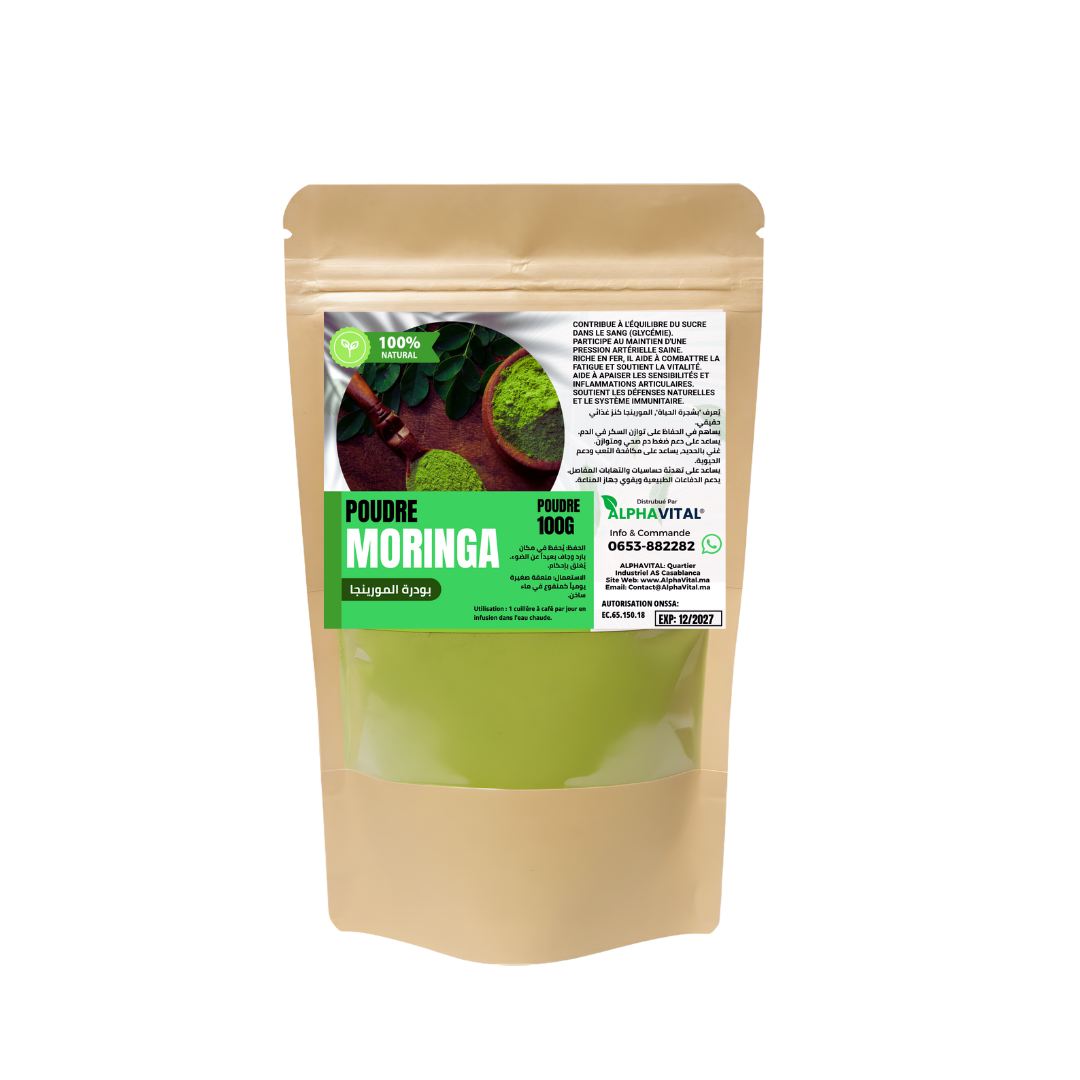
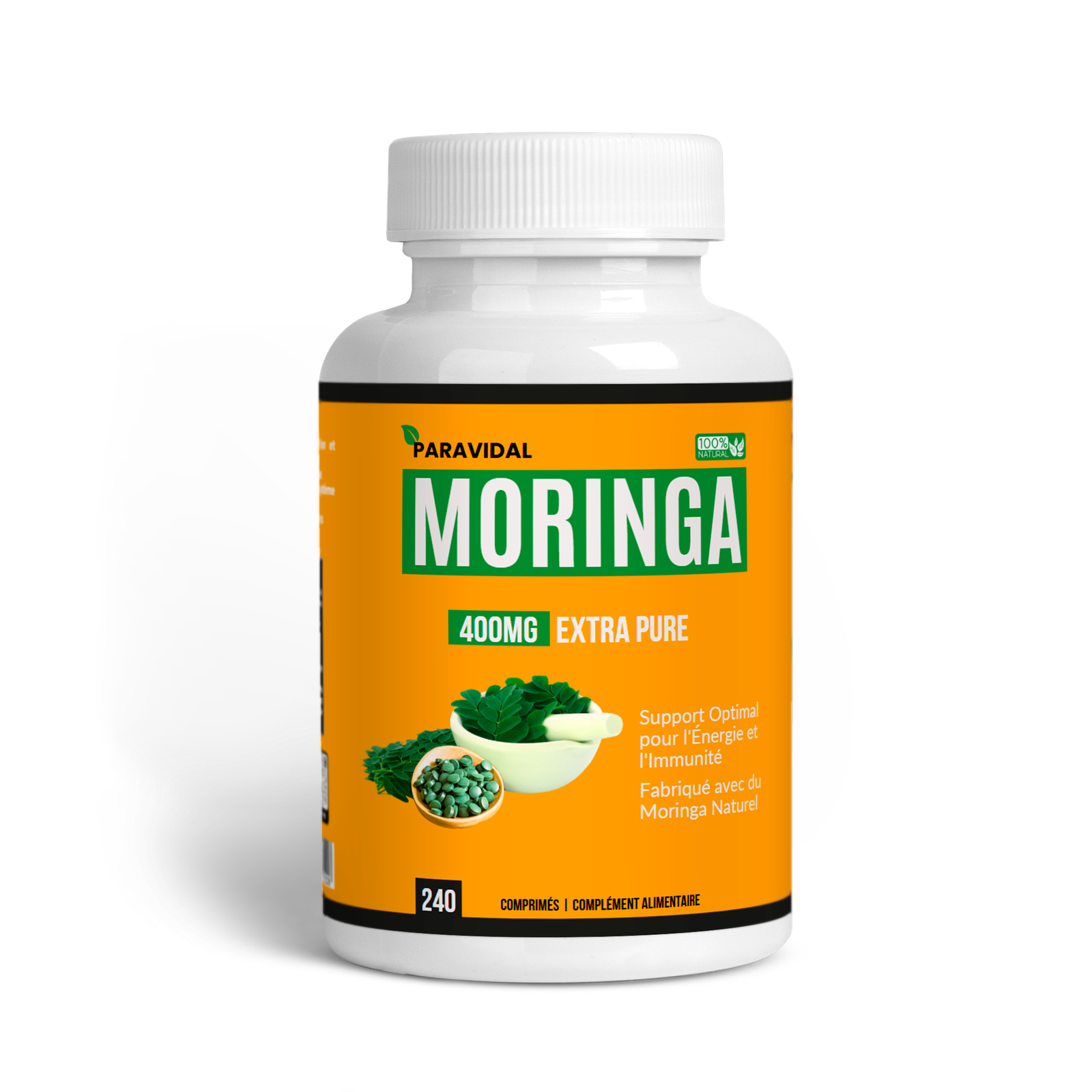
- VitalisPro moringa products — 400 mg tablets, organic powder and the large 240-tablet format — are ONSSA-authorised food supplements, meant to fit inside a balanced daily life.
What is moringa, in brief?
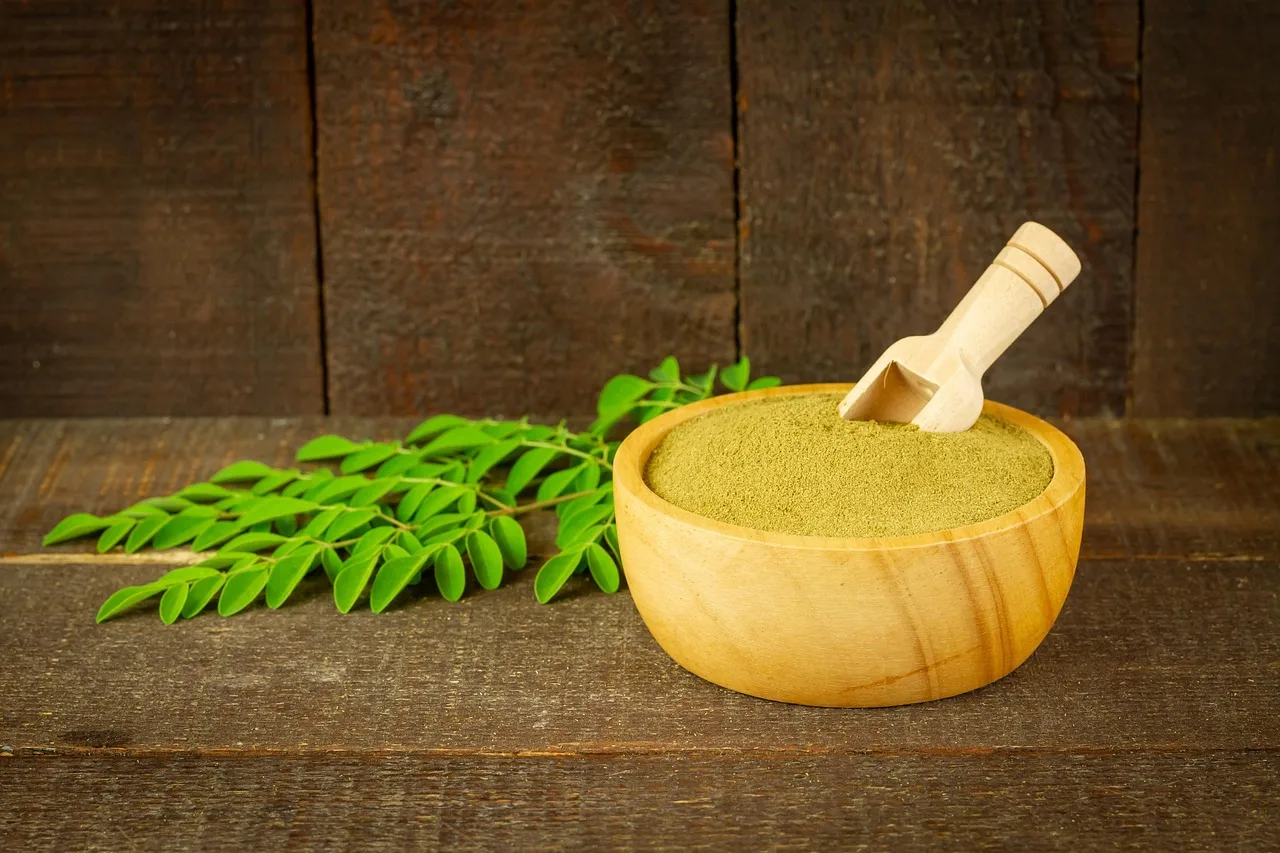
Moringa (scientific name: Moringa oleifera) is a fast-growing tree, native to the Indian subcontinent and now cultivated across many warm regions of the world. It has long been nicknamed the “miracle tree” in popular culture, but we prefer a soberer description: a plant food with high nutritional density. It is chiefly its dried leaves, ground into powder or pressed into tablets, that matter for daily nutrition.
What sets moringa apart is the concentration and variety of the elements it brings together: vitamins (including A and C), minerals (iron, calcium, potassium), plant protein, amino acids, and a fine range of plant antioxidants such as flavonoids and polyphenols.3 It is this combination, more than any single nutrient, that explains its “superfood” status in everyday language. The word is appealing, but it should be handled with measure: no food, however rich, replaces a balanced lifestyle on its own.
It helps to remember where this plant comes from. Traditionally, almost every part of moringa has been used — leaves, seeds, pods and bark — in the kitchens and folk practices of several warm regions. Today, modern nutrition focuses mainly on the leaves, because they offer the best balance between nutritional richness and safety of use at usual doses. That is why the supplements you find as tablets or powder are, in the vast majority, made from the leaf.
Let us stay clear-eyed about the level of evidence, though. An updated review of the activities of Moringa oleifera notes that the research is abundant and promising, but that much of it comes from laboratory and animal studies rather than large clinical trials in humans.1 In other words: there is a serious base, but it invites us to speak of nutritional support, not guaranteed therapeutic effects. That is exactly the line we hold in this guide: to present each piece of data at its true rank, without inflating it to sell, nor downplaying it to seem cautious.
Why moringa has entered the daily routine
The pace of life in Moroccan cities has quickened: long working hours, meals eaten in a hurry, repeated coffees to make up for a dip in energy. In this context, many people look to a moringa supplement as a simple nutritional addition that complements the diet, never replaces it. Moringa’s main advantage is precisely that it gathers several nutrients into a small amount, whether as tablets or as powder.
The key is to understand its role realistically. Moringa does not “create” vitality by magic: it contributes within dietary moderation, restorative sleep and regular movement. Believing a capsule will offset an exhausting lifestyle is an illusion that always disappoints. Tucked into an already healthy routine, however, it takes on real meaning: an extra brick laid on a solid base.
It is also a matter of consistency. Supportive nutrients work in a cumulative way: what matters is regularity over weeks, not a one-off dose. That is why so many people tie moringa to a fixed daily moment — breakfast, for instance — so as not to forget it and to give it time to find its place.
There is also a cultural dimension worth naming. In many Moroccan homes, the everyday plate has grown heavier and quicker at once: more processed foods, less time to cook, and long gaps between hurried meals. In that reality, a simple, clear nutritional addition can be a sensible reflex — provided it is understood as a support, not as permission to neglect the basics. The point is never to buy your way out of an unbalanced week, but to add a considered brick once the foundations are in place.
Moringa and energy: natural support for vitality
The question we hear most often is about the benefits of moringa for energy. The measured answer: moringa is rich in iron and B-group vitamins, nutrients that take part in the body’s energy-producing processes.3 Iron in particular helps reduce tiredness when intake is insufficient — a common situation, especially among women.
This mechanism is recognised by scientific authorities: under the health-claims framework of the EFSA, iron contributes to normal energy-yielding metabolism and to the reduction of tiredness, while several B vitamins also support energy metabolism.4 By providing these nutrients, moringa fits logically into an approach that supports vitality — provided we keep a sense of proportion.
That is why many turn to moringa for energy as part of a morning ritual, rather than reaching for more stimulants. The logic is different in an important way: a coffee stimulates in the moment and then fades, whereas a steady nutritional contribution works in the background, helping the body have the elements it needs for its own reactions. Moringa does not compete with a good breakfast, then: it accompanies it.
But one essential point bears repeating: if tiredness is persistent or severe, it may hide a cause that deserves assessment by a healthcare professional. A lasting dip in form is not solved with a capsule; it first calls for understanding what is going on. A food supplement cannot then be enough, and it never replaces medical advice. That, too, is responsible use: knowing when nutritional support makes sense, and when to turn to a professional.
“Moringa is not an artificial jolt. It is a steady nutritional contribution that helps the body have what it needs — as long as the rest follows: the plate, sleep and movement.”
Moringa and natural defences: a nutritional ally
Moringa leaves contain vitamin C as well as plant antioxidants such as flavonoids and polyphenols. Vitamin C is a nutrient recognised for its contribution to the normal function of the immune system: this is a documented relationship approved by the EFSA.4 Antioxidants, for their part, help the body cope with the oxidative stress linked to lifestyle and environment.
A review of the safety and efficacy of Moringa oleifera observed that leaf extracts show the highest antioxidant activity among the different parts of the plant, with good tolerance in human studies at usual doses.2 This makes moringa a coherent nutritional support for the natural defences, within a complete and healthy lifestyle — and not as a standalone remedy.
It also helps to understand what oxidative stress is, without jargon. Every day, the body’s normal functioning — but also pollution, tobacco or an unbalanced diet — produces unstable molecules. The antioxidants supplied by food help the body keep its balance against these molecules. Moringa, rich in antioxidant compounds, fits into this supportive logic — just like the colourful fruits and vegetables that should remain the first source.
Here too the nuance is crucial. To “support” the natural defences through good nutrition is not the same as to “protect” against illness. Moringa provides nutrients that take part in overall balance; it does not replace a varied diet, healthy habits, or medical follow-up when that is needed. It is one more contribution, placed on a foundation that remains the priority.
A concentrated nutritional density
What truly sets moringa apart is its status as a nutrient-dense food: a small amount carries a fine variety of elements. Its leaves bring together plant protein, calcium, potassium, vitamins A and C, on top of antioxidants.3 This diversity is exactly what makes it a practical daily supplement for those whose meals are not always perfectly balanced.
To make that richness more concrete, here are the main nutrients associated with moringa leaf and the matching EFSA-approved reference — without over-interpretation:
| Key nutrient | What it brings | Approved reference (EFSA) |
|---|---|---|
| Iron | A mineral present in moringa leaf | Contributes to the reduction of tiredness and to normal energy-yielding metabolism |
| Vitamin C | A water-soluble antioxidant vitamin | Contributes to the normal function of the immune system |
| B-group vitamins | Cofactors in many reactions | Contribute to normal energy-yielding metabolism |
| Plant antioxidants | Flavonoids and polyphenols from the plant | Help the body cope with everyday oxidative stress |
| Calcium and potassium | Essential minerals | Take part in the body’s normal functioning |
This table reads with one simple rule: it is the nutrients that carry these recognised contributions, and moringa is of interest because it gathers them in a single food. So we attribute no “magical” virtue to the plant itself: we honestly describe what its components bring, strictly within the framework of authorised claims.
Even so, moringa remains a supplement, never a substitute for food. The rule reaffirmed by the World Health Organization is clear: genuine dietary diversity remains the base, and supplements come to support it, not to replace it. No powder, however rich, lastingly makes up for an unbalanced plate.
Moringa for skin and hair in the daily routine
Many people ask about moringa for hair and skin. The nutritional logic is simple: the elements that support the body in general — vitamins A and C, zinc, antioxidants — are indirectly reflected in the health of skin and hair, within an overall healthy lifestyle. Do not expect instant results or cosmetic miracles, but a cumulative support that fits into a consistent routine of nutrition, hydration and sleep.
It is worth being precise here, because skin and hair are areas where marketing often overpromises. No single ingredient rebuilds hair or transforms skin on its own. What good nutrition does is provide the raw materials the body draws on, day after day. Seen this way, moringa is one contributor among several — useful, but modest — and its place is inside a broader picture that also includes sleep, water and a varied plate.
How to fit moringa into your day
There are many ways to use it, so choose the one that best fits your routine. The main ways to use moringa are:
- Tablets or capsules: the simplest option for a busy life — a clear, easy-to-follow dose. This explains the popularity of moringa tablets and capsules.
- Powder with milk: a teaspoon of moringa powder in a glass of warm milk, a morning classic for anyone looking for moringa with milk.
- Powder with yoghurt or juice: softens its grassy taste and folds it smoothly into breakfast.
- Moringa tea: a light, warm infusion for those who prefer a drink.
Which form should you choose? It depends mostly on your lifestyle. Tablets suit busy days and travel: the dose is fixed and easy to follow, which helps consistency. The powder offers more flexibility and a tastier fit at breakfast, once you get used to its grassy flavour. As for the large 240-tablet format, it is aimed at those who take moringa over the long term, or share it at home: an economical, practical choice over time.
In practice, it is best to start with a moderate dose (half a teaspoon of powder, or one tablet depending on the product’s strength), then adjust gradually. Consistency over several weeks matters more than a high dose, because supportive nutrients act cumulatively. Usually take moringa with a meal and a large glass of water, and tie it to a fixed daily habit so you do not forget it. Always follow the dose stated on the box. To explore all the formats, our shop brings together the whole range.
Price alone is not the right criterion: what matters is the clarity of the source, regulatory authorisation and the accuracy of the dose. A powder of unknown origin may contain only a trace of what you think you are buying, while a product with a clear formula gives you what is actually stated. That is why we always insist on authorisation from ONSSA: it is not a formality, but a control pathway that concerns the safety and conformity of the product.
Precautions, interactions and limits
Moringa is generally well tolerated by many people at usual doses, but no supplement is free of precautions. Among the points most often raised about moringa side effects in cases of excess:
- Mild digestive upset (bloating, looser stools) at high doses, especially at the very start, which is why it is worth starting gently.
- Pregnancy and breastfeeding: safety data are insufficient; it is best to avoid moringa and seek the advice of a healthcare professional.
- Caution with treatments for blood sugar or blood pressure: because of possible interactions, anyone concerned with moringa and blood sugar should not adjust anything alone, but discuss it with a professional.
- Never replace a prescribed treatment with moringa, and observe how your body responds when you begin.
This is not an alarming list, but an invitation to conscious use. “Natural” does not mean “suitable for everyone in all circumstances,” and being aware of this is part of respecting your health. And one last practical tip: do not start several new supplements at the same time, so you can tell clearly what helps you and what suits you.
A quality note matters just as much as a safety note. The value of a moringa is not in a flashy label but in the clarity of its source and dose, and in regulatory oversight. A product bought informally, of unknown origin, gives you no such guarantee; an authorised formula, with a stated strength, lets you know exactly what you are taking and adjust it sensibly. This is why we treat authorisation not as a marketing badge, but as a genuine part of using a supplement responsibly.
The golden rule stays the same: a supplement adds; it does not fix a real imbalance on its own, and it does not diagnose or treat. At any persistent or worrying symptom, consulting a healthcare professional remains the priority. For any question, the VitalisPro team is reachable through our contact page.
Stories from our readers
These are testimonials from people who added moringa to their daily routine; individual experiences that differ from one person to another, presented as they are, without exaggeration:
“I ran on coffee all morning. I added a moringa tablet at breakfast, expecting nothing magical. After a few weeks my mornings feel steadier, and I drink less coffee. Not a miracle, but a real difference.” — Sanae, Casablanca
“What I liked was the honest message: nutritional support, not a promise of cure. I have been putting a spoon of moringa powder in my morning yoghurt for two months, while trying to eat and sleep better. I feel more energetic.” — Khalid, Fès
“Ordering was easy with cash on delivery, and the formula is clear and ONSSA-authorised. The large 240-tablet format lasts us a long time at home. I appreciate that it is natural and transparent.” — Nadia, Marrakech
Frequently asked questions about moringa
Conclusion: a simple daily habit, with discernment
Moringa is a dense traditional food that can support your energy, your natural defences and your daily nutrition, provided you fold it into your routine with regularity and moderation. But it remains a supportive supplement, not a medicine, and it does not do away with a varied diet, sleep or movement. Vitality is built through habits, not through promises.
VitalisPro commits to offering a moringa that is clear in its source and dose, ONSSA-authorised, at a transparent price, with cash on delivery across Morocco. Start with a moderate dose, follow the label, and consult a healthcare professional when needed. If you leave this guide with that discernment, we have reached our goal — whether or not you choose our products. For direct contact, the team is available through the our team page.
Sources and methodology
This guide relied on a review of documented general scientific sources (PubMed databases) and published reviews, in addition to official bodies such as the European Food Safety Authority (EFSA) for the health-claims framework. We committed to presenting results at their true size: promising signals are presented as signals, not as definitive promises, and no therapeutic effect was claimed. The information here is for health education, not for diagnosis or a medical prescription.
References
- Moringa oleifera: An Updated Comprehensive Review of Its Pharmacological Activities, Ethnomedicinal, Phytopharmaceutical Formulation, Heavy Metal, and Phytochemistry (2023). PubMed 36768420
- Review of the Safety and Efficacy of Moringa oleifera (2015). PubMed 25808883
- Health benefits of Moringa oleifera (2014). PubMed 25374169
- European Food Safety Authority (EFSA) — health claims (iron, vitamin C, B vitamins). efsa.europa.eu
The information in this article is provided for informational purposes for health education, drawing on documented general scientific references (PubMed, EFSA), and is not a substitute for consulting a qualified healthcare professional. Moringa is a food supplement that does not replace a varied, balanced diet or a healthy lifestyle, and is not intended to diagnose, treat, cure or prevent any condition. Do not exceed the recommended dose. Pregnant and breastfeeding women, children under 18, and people with medical conditions or ongoing treatments are advised to consult a professional before use. Keep out of the reach of children.
